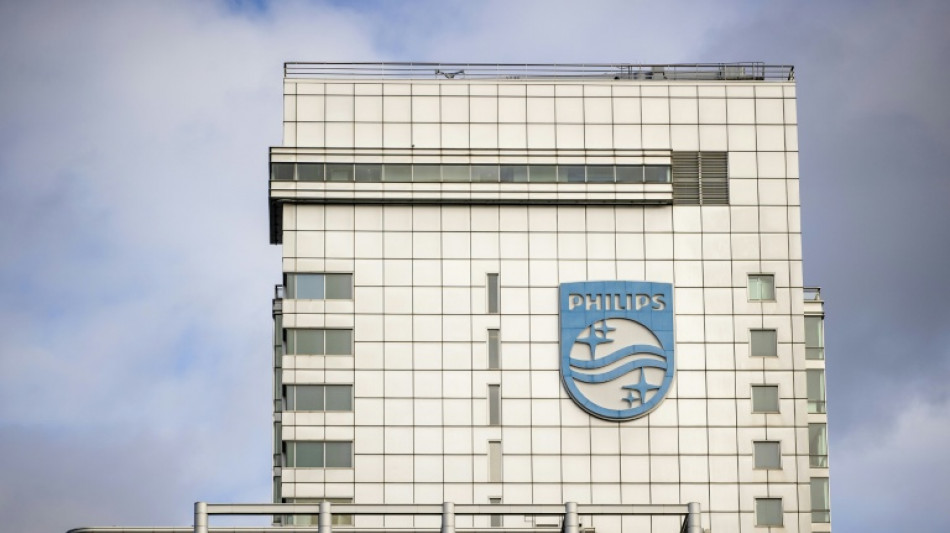
Philips profits double in first quarter / Photo: Sem van der Wal - ANP/AFP

 لشركاء في ALIX LASERS يعزلون ميشائيل سوبيتش من منصب المدير العام في ضوء الظروف القائمة

 MTN’s Telkom Acquisition: Consolidation, Competition, and Regulatory Conditions

 فلسطين تحصد جائزتي "أفضل أثر عالمي" وريادة الأعمال في مسابقة إنجاز العرب

 Kubayi Warns Residents to Vacate Hijacked Buildings as State Prepares Seizures

Philips said Wednesday its first-quarter profits had doubled, maintaining its sales forecasts as the Dutch electronics and medical device manufacturer seeks to turn the page on a scandal involving faulty sleep machines.
Net profits came in at 146 million euros ($171 million), compared with a net profit of 72 million euros in the same quarter last year and 397 million euros in the fourth quarter of 2025.
"We delivered a good start to 2026... reflecting disciplined execution against our plan in an uncertain macro-environment," chief executive Roy Jakobs said in a statement.
The firm stuck to its full-year sales forecast of growth between 3.0 and 4.5 percent in 2026, which it said incorporated possible uncertainties from US tariffs.
In the first quarter, it recorded sales of 3.9 billion euros, compared with 4.1 billion euros in the first three months of 2025.
Sales were driven by strong performance in Europe and North America, said Jakobs.
In February, Philips posted its first annual profit after three straight years of losses, turning in a better-than-expected gain of 897 million euros.
Once famous for making lightbulbs and televisions among other products, Amsterdam-based Philips in recent years has sold off subsidiaries to focus on medical care technology.
Since 2021, the company has been battling a series of crises over its DreamStation machines for sleep apnoea, a disorder in which breathing stops and starts during sleep.
Millions of devices were recalled over concerns that users were at risk of inhaling pieces of noise-cancelling foam and fears it could potentially cause cancer.
In April 2024, it announced it had reached a $1.1 billion deal to settle US lawsuits over the faulty machines.
U.Shaheen--SF-PST