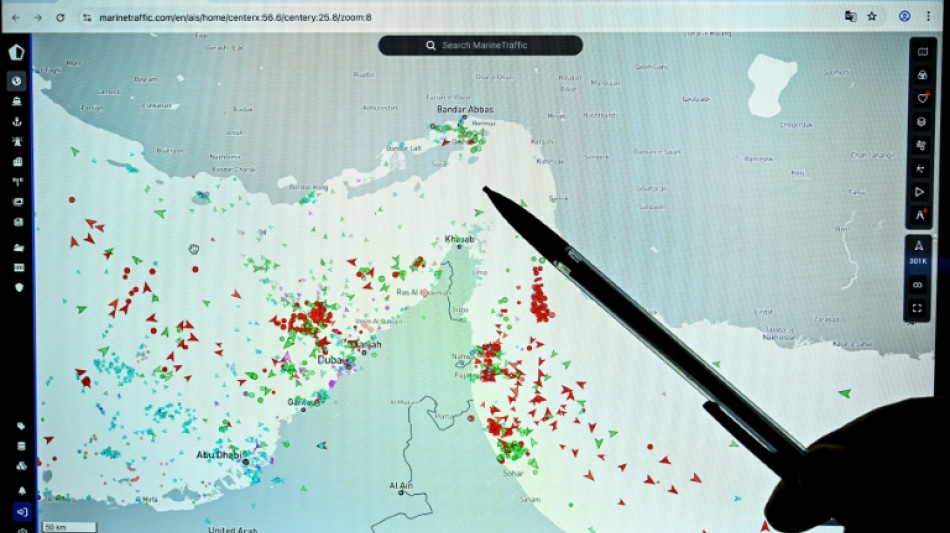
Grain, steel, fertiliser blocked by Hormuz closure: data / Photo: JULIEN DE ROSA - AFP

 Leaders visit Pacific atoll at frontline of climate change

 Yemen's Houthis claim striking Riyadh airport, other Saudi sites

 Best-selling British author Jeffrey Archer dies aged 86

 Military plane crash kills 32 in Nigeria

 Olise powers France to win over Belgium in Nations League

 High-flying Blazy turns to birdlife at Chanel

 Riyadh's allies pledge troops as Yemen, Saudi Arabia attack Houthis

 Clashes erupt outside Kosovo parliament over war crimes court

 Milan's Saelemaekers suffers ankle setback, faces lengthy spell out

 Rubio arrives in Iceland to push for greater US presence in Arctic

 Putin allows Italy's UniCredit to sell part of Russian business

 Djokovic into China Open final as Medvedev out for hitting fan with ball

 ICC unseals arrest warrants for Taliban education ministers

 Modric hopes fans back Croatia against Spain after England shame

 Bolsonaro rides right-wing surge into Brazil's election runoff

 Turkey blocks X account of British reporter

 Ukraine says using AI robot guns to shoot down new Russian drones

 At Oct 7 memorial, Netanyahu says will be no Hamas rule in Gaza

 Ukraine blames Russia for deadly sinking of Turkish ship in Black Sea

 UN rights council slams Taliban's 'oppression' of women

 Norway eyes partial ban of smart glasses

 Two dead after ship catches fire, sinks in Black Sea

 Spain's PM calls snap election after housing bill defeat

 STARCARES Equips Seven Foster Homes for Children and Young People in Tanzania

 Alleged Indian leader of neo-Nazi child abuse ring goes on trial in Paris

Besides oil and gas, Iran's blockade of the Strait of Hormuz has choked off shipments of crucial goods and raw materials to world markets.
Overall volumes of dry bulk goods fell from 7.5 million tonnes in February to 1.3 million tonnes in March, according to data from maritime intelligence firm AXSMarine -- an 83-percent decline.
Here are five measures of the impact on commodities based on data from the firm, since the war started with US and Israeli attacks on Iran on February 28.
- Bulk commodities: down 93% -
Within dry goods, "bulk commodities" exports include raw materials such as limestone for cement-making, sulphur for fertilisers and industrial chemicals, and gypsum for construction, agriculture and manufacturing.
Overall shipments of this class of commodities through the strait fell 93 percent in March compared with February, from nearly five million tonnes to just 326,000.
- Fertilisers: -92% -
Fertilisers such as urea are crucial for crop production, with exports through Hormuz typically heading to Brazil, China, India and Africa.
Fertiliser shipments through the passage fell 92 percent from over a million tonnes in February to just 82,000 in March.
- Iron ore: -65% -
Iron ore is a crucial ingredient for making the steel that goes into everything from buildings to vehicles to machinery.
Exports of iron ore through the strait fell by 65 percent in March from the month before, from over 530,000 tonnes to 186,000.
- Steel: -93% -
Shipments of steel fell 93 percent from nearly 162,000 tonnes to 11,000.
- Grain imports: -92% -
Meanwhile grain shipments westbound through the strait into the Gulf plunged 92 percent from 2.3 million tonnes to 196,000.
AXSMarine told AFP that a significant share of the goods shipped in March were unknown cargos due to disruptions and manipulation of ships' signals in the conflict zone.
O.Salim--SF-PST