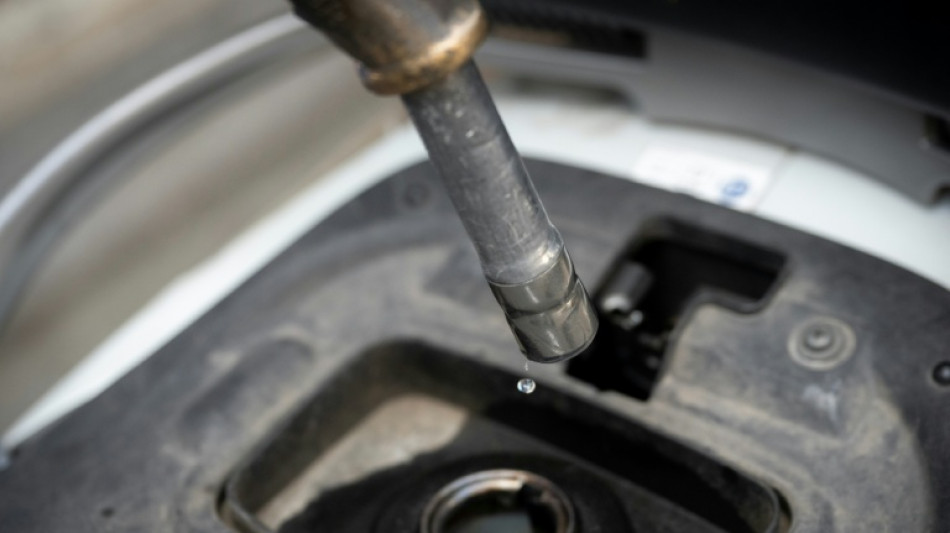
Countries act to limit fuel price rise, cut consumption / Photo: Tiziana FABI - AFP/File

 Ready, set, snooze: Sleep-deprived Japanese compete for best-rested

 Falcons thump Saints 45-24 as New Orleans marks Katrina anniversary

 Tuvalu govt adviser says Australia overstepped in pre-COP visit

 Asian stocks mixed despite tech-led Wall St record

 Tens of thousands expected in Paris for high school protests

 AI borrowing binge rattles US markets

 Young Canadians sue government over alleged climate failures

 White Sox down Guardians to take 2-0 series lead
 NHL record-breaker Ovechkin says current season will be his last
 France roar back in Nations League as Italy beat Turkey
 Messi readies for final farewell in Argentina send-off
 Esposito seals Italy win over Turkey in Nations League

 Russia downplays plague reports as Trump offers US help

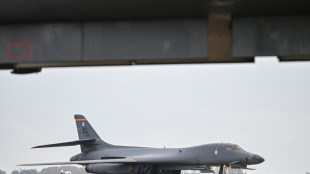 Trump says US moved bombers from UK base after 'threats'
 Brazilian stocks surge to record after Bolsonaro election lead

 Leaders to visit Pacific atoll at frontline of climate change

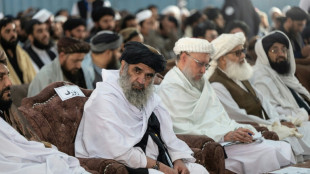 ICC gives more details about arrest warrants for Taliban ministers
 Nigeria's Tinubu confirms 32 dead after military plane crash

 'Reckless' AI firms can't control models, says whistleblower

 Switching on brain cells: the Nobel-winning science of optogenetics
 Quebec votes as separatist surge poses test for Canada PM

 Euro slides as concerns about French debt mount

 Former Trump press secretary Leavitt joins Fox News

 Djokovic advances to China Open final as Medvedev out for hitting fan with ball

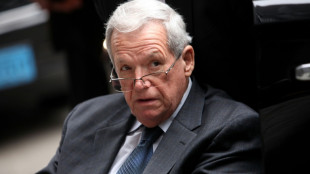 Disgraced former US House speaker dies at 84

The surge in fuel prices triggered by the war in the Middle East has prompted countries to take measures to limit the financial impact on consumers and businesses.
Countries have also moved to reduce consumption, especially when they have limited reserves.
Here are some of the measures that have been adopted:
- Tax cuts and aid -
Some countries are targeting the price of fuel in order to limit the impact of the rise of crude oil prices on consumers and businesses.
Spain has launched a five-billion-euro ($5.8-billion) plan that reduces the value added tax (VAT) on fuel which should result in a reduction of 30 euro cents per litre.
A similar measure is in place in Portugal and has been announced in Sweden.
Since US-Israeli attacks on Iran set off the war on February 28 a number of countries such as Croatia, Hungary, South Korea and Thailand have set price limits on fuel.
Vietnam has waived customs duties on fuel imports through the month of April.
Japan is using subsidies to refiners to ensure the pump price of petrol stays around 170 yen ($1.07) per litre, having hit a record 190.8 yen in the middle of the month.
Taiwan uses a mechanism that absorbs 60 percent of increases.
China on Monday limited the amount that fuel prices may rise at the pump.
Greece has earmarked 300 million euros ($347 million) in relief for households and farmers in April and May to help them cope with rising fuel prices.
Morocco has put in place a special direct subsidy for road transport firms.
Brazil has announced temporary measures to limit fuel price increases, including suspending taxes on diesel fuel.
Germany has banned service stations from raising prices more than once per day.
- Stocks, rationing, restrictions -
The war is also forcing countries to dip into their strategic stocks and take other measures to avoid shortages, including rationing and reducing travel.
The 32 member countries of the International Energy Agency (which includes the G7 nations) have released a record amount from their strategic reserves.
Bangladesh has imposed rationing.
Egypt has limited non-essential travel by government employees.
The Philippines has reduced ferry services and prices of local public transport have risen.
India, the world's number two importer of liquefied petroleum gas which is used to produce cooking gas, has prioritised supplies for households.
South Korea's ruling party said the country will lift a cap on coal-powered generation capacity set at 80 percent and boost the use of nuclear power to about the same level.
- Reducing energy consumption -
Other countries are introducing measures to reduce fuel consumption.
Thailand is encouraging government employees to work from home, while Vietnam is encouraging employers to do so.
Indonesia is looking at imposing one day of working from home for government employees, while the Philippines has gone further, introducing a four-day work week for government employees.
In Thailand, the temperature in public buildings has been raised to 26 degrees Celsius (79F) to reduce electricity consumption for air conditioning.
Vietnam is encouraging people to ride bicycles, share rides and use public transport.
Bangladesh shut universities and brought forward the Eid holidays, the end of the Muslim holy month of Ramadan, to limit electricity consumption.
It also cancelled decorative light displays on government buildings on Eid and those scheduled for Independence Day celebrations on March 26 and asked shopping malls to do the same.
Countries are also looking at importing Russian crude after the United States temporarily suspended sanctions in mid-March.
G.AbuHamad--SF-PST