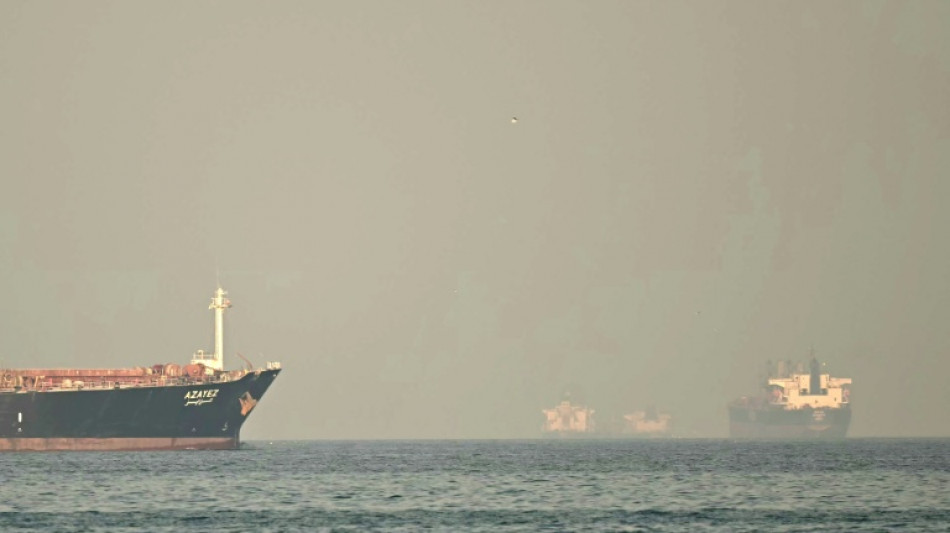
Ships in Gulf risk shortages on board, industry warns / Photo: Giuseppe CACACE - AFP

 The alleged murder by US marine on Okinawa: five things to know

 End of an era as Messi prepares to hang up Argentina boots

 Superstar duo headline strong New Zealand squad for Rugby League World Cup

 South Korea warns of possible AI use in banking hacks

 EU vows AI rules will protect Europeans. Will they?

 Myanmar leader to visit Malaysia after migrant returns begin

 Germany's AfD poised to preside over state assembly for first time
 Australia's opposition vows 'largest cut to immigration' in country's history
 Ready, set, snooze: Sleep-deprived Japanese compete for best-rested

 Falcons thump Saints 45-24 as New Orleans marks Katrina anniversary

 Tuvalu govt adviser says Australia overstepped in pre-COP visit

 Asian stocks mixed despite tech-led Wall St record

 Tens of thousands expected in Paris for high school protests

 AI borrowing binge rattles US markets

 Young Canadians sue government over alleged climate failures

 White Sox down Guardians to take 2-0 series lead
 NHL record-breaker Ovechkin says current season will be his last
 France roar back in Nations League as Italy beat Turkey
 Messi readies for final farewell in Argentina send-off
 Esposito seals Italy win over Turkey in Nations League

 Russia downplays plague reports as Trump offers US help

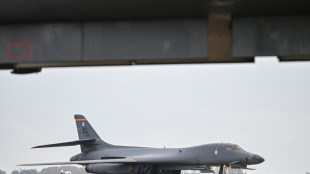 Trump says US moved bombers from UK base after 'threats'
 Brazilian stocks surge to record after Bolsonaro election lead

 Leaders to visit Pacific atoll at frontline of climate change

 ICC gives more details about arrest warrants for Taliban ministers
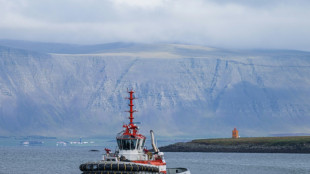
Thousands of seafarers face dwindling supplies of fuel and water as they wait on board, stranded by the Middle East war, a key shipping body warned Tuesday as it urged governments to help get maritime traffic flowing again.
John Stawpert is marine director of the London-based International Chamber of Shipping (ICS), which represents the world's national shipowner associations and over 80 percent of the world merchant fleet.
Here is an edited version of his interview with AFP ahead of an emergency meeting of the UN's International Maritime Organisation in London on Wednesday and Thursday.
- What is the impact on crews? -
"There are 20,000 seafarers on board 3,000 vessels of different types trapped in the Persian Gulf.
"Our biggest concern at the moment is the impact of an ongoing war on the stores on board the ships. We're already seeing some issues reported about fuel oil supplies. We've also got concerns about the ability of some of those ships to produce potable water.
"It's obvious things like food and water, in the first instance, and then seeing if there is a way to supply them with fuel, notwithstanding that if you can't move things by ship, it makes that incredibly difficult.
"We need to work with flag-states... but we also need to work with the regional states to come up with a solution that ensures these ships can be resupplied."
- Are military escorts welcome? -
"Potentially, yes, but it depends on the terms of the support that's being provided.
"It's not just thinking in terms of hardware on the water. It's also the information and intelligence... (available) to ships, which can help with that threat assessment that is ultimately what will decide whether ships move or not.
"The issue we have at the moment, and this is one of the reasons why we haven't seen very many ships at all move, is that it's not clear what the targeting criteria are for vessels going through those waters."
Escorts "would depend on what is being provided by whom and to whom. Really I think what we need is a solution that meets the needs of all ships, rather than just say, individual flags."
- What must governments do? -
"If we can persuade states, through some mechanism, to provide a channel effectively for those ships to get out of the region, then that would be hugely beneficial.
"Hopefully some states will step up and say they will provide some guarantee of safety to shipping that would give us the confidence that we could move through the Strait again.
"We would like to see serious consideration of some means to facilitate the movement of vessels out of the affected region as a priority. We'll be raising this at the International Maritime Organization tomorrow (Wednesday)."
L.Hussein--SF-PST