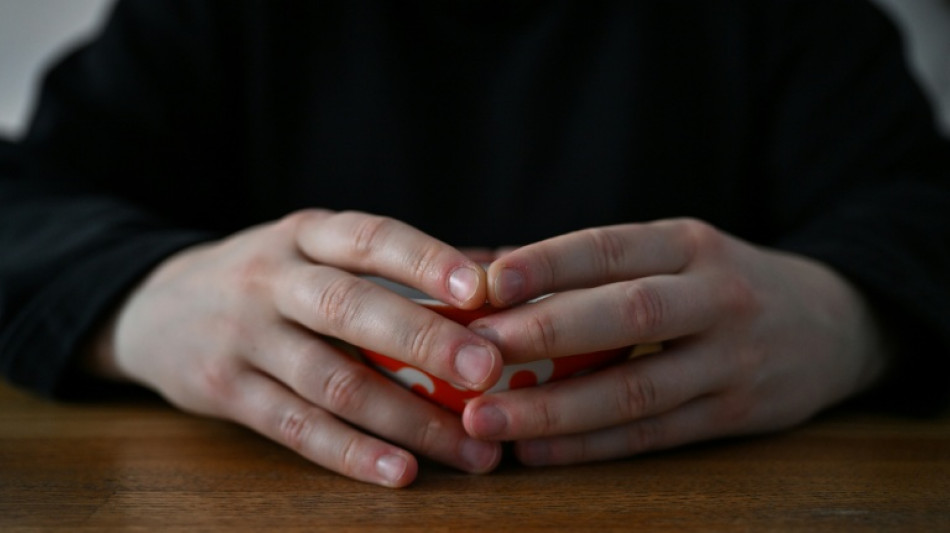
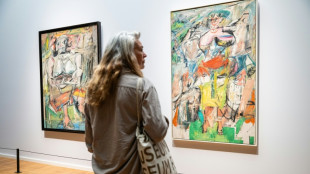
The silent struggle of an anti-war woman in Russia / Photo: Hector RETAMAL - AFP

 'The sound keeps coming back': children maimed in Ethiopia's Tigray clashes
 Paris Women's Fashion Week: the key trends
 i-payout Introduces a New Approach to Payments, Closing the Beneficiary Information Gap

 New Generation of Crypto Miners Released by ASICID

 New investor forecasts LIV Golf teams could be worth $100 mn each
 Shakira, Pique return to court over children visit arrangements
 Nobel physics prize hails 'ghostly messengers' from space
 France's Mistral unveils latest model in sovereign AI push
 Stocks climb as oil prices retreat
 Vstock Transfer Names Securities Industry Veteran Erica Goodstein General Counsel and Chief Compliance Officer

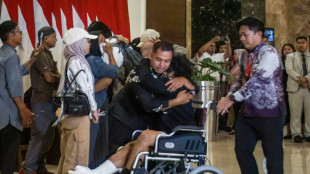 Four Indonesian seamen return home after Somali pirate ordeal
 Crisis-striken Haiti postpones elections
 Germany arrests ex-spy chief on suspicion of giving secrets to foreign powers
 Djokovic wins China Open after de Minaur retires
 IMF warns cost-of-living shocks cause 'lasting deterioration' in affordability
 Alcaraz wins Japan Open for first title since injury return
 'We're working to keep football clean', Turkish minister says

 FIFA chief Infantino hit by Norwegian double complaint

 Exiled Catalan separatist leader Puigdemont cleared to return to Spain
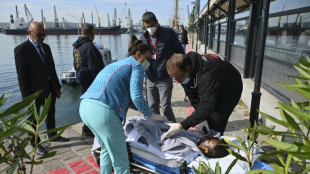
 Stock markets climb as oil prices retreat
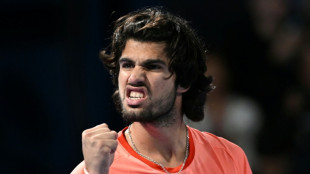
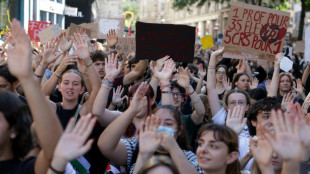
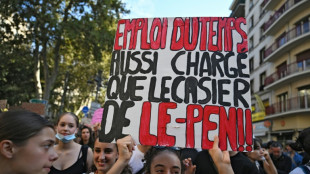 'No future': Thousands mass in France for high school protests
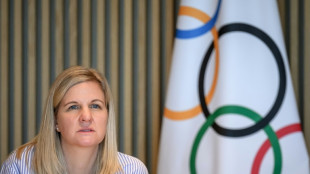
 Nobel physics prize honours work on 'ghostly messengers' from outer space
 Bulgaria searches for missing crew after drones hit two more ships in Black Sea
 Le Pen vows drastic cost savings to prevent French 'default'
 'Eats through a straw': French teens wounded in high school protests
When Vladimir Putin launched Russia's large-scale offensive against Ukraine on February 24, 2022, Varvara felt "despair and anger" -- and joined an anti-war protest in central Moscow.
Four years later and amid an unrelenting crackdown on dissent inside Russia, the 32-year-old said she is now simply trying to "survive", keeping quiet and not daring to criticise the Kremlin or the war.
She has little hope that will change soon.
"Any resistance from below will be crushed," Varvara, who asked for her name to be changed, told AFP in an interview in Moscow.
It is a snapshot of the resignation with which many anti-war Russians or would-be activists must now live in a country that has been rigidly mobilised to get behind the war.
Russia has ratcheted up repression at home to levels unseen since the era of the Soviet Union.
Thousands have been jailed or fined for simply speaking out against the offensive. Public protests against the Kremlin are virtually unheard of.
All major opposition figures are in jail, exiled or dead and anti-war groups outside the country are hobbled by bitter factional infighting.
– 'Do something good here' –
Like thousands of others, Varvara took to the streets at the start of the war, joining rallies that were put down forcefully by Russian riot police.
"I went there without knowing what's next," she said.
"I warned loved ones that I might be arrested, leaving a spare set of keys and hoping my cat wouldn't starve in my absence."
She managed to avoid being caught in the brutal police clampdown.
But when she signed a petition against the war, she was fired from her job at a public institution.
Many of her friends -- who were briefly detained by police -- decided to leave the country.
But for Varvara, the uncertainty of emigration outweighed the risks of staying.
"I didn't feel an immediate physical threat. No one was knocking on my door, I wasn't jailed or tortured."
She eventually found a job at a charity and realised that the only way she could get by was to "do something good here", in Russia.
In the summer of 2022, she met her future husband.
"The only reason to leave would be if one of us was facing arrest," she said.
Despite her decision to stop speaking out and commitment to staying inside Russia, the war has completely overshadowed Varvara's life.
It was two years before she could feel happy again without a sense of guilt.
"A friend and I went for a walk. It was summer, we just walked and talked. I realised it was simply a nice day -- and I don't feel guilty about enjoying it," she told AFP.
– 'Escapism' –
Varvara now cares for her husband's two children from a previous marriage -- something she calls "a form of escapism", and which has reinforced her decision to stay quiet.
"If I was alone, I wouldn't be hiding my name. But now I'm a stepmother, part of a complex family structure, and I feel a sense of responsibility," she said.
Wanting children of her own, Varvara said she "can no longer afford to take this kind of optional risk" of speaking out.
Despite her silence, the war still looms large.
In her charity job, she worries about who to cooperate with and who to take money from given how many people and organisations are now connected with the military campaign.
"There's this constant inner struggle: whom can you work with and whom you can't?" explained the young woman.
And in her private life, the war has complicated her relationship with her father.
A member of Russia's security services, he went to fight in Ukraine and regularly offers her financial help.
"He's my father, I love him. But for me, it's impossible to accept this money," she told AFP.
M.AbuKhalil--SF-PST