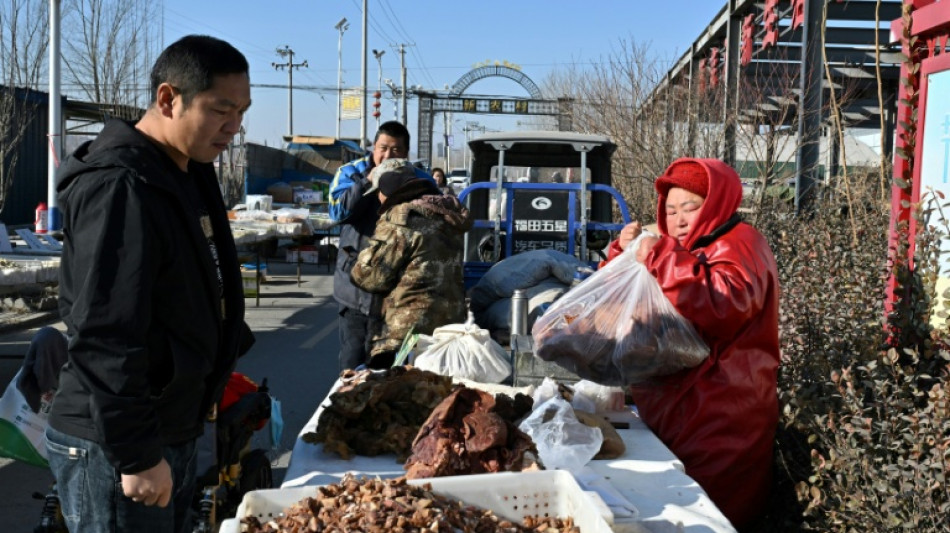
Chinese villagers struggle for heat as gas subsidies fade / Photo: Adek BERRY - AFP

 HSBC 'consults' over UK unit job cuts amid AI adoption

 UK court quashes five ex-traders' Libor rate rigging convictions

 XM Receives “Global Customer Experience Leader Award 2026” at the TrustFinance Performance Awards

 Stocks slide as oil climbs on Mideast flareup

 Heavy casualties in Ukraine after Russian strikes

 French wine harvest set to hit historic low

 Kyiv 'cannot agree' to EU membership limiting food exports: minister

 Arteta targets more Arsenal glory after signing new deal until 2030

 Russell hit with Singapore grid penalty for taking new power unit

 Spotify expands audiobooks to more than 180 markets

 French-Japanese duo wins chemistry Nobel for solving molecular 'mystery'

 England's Nations League surge helps heal World Cup wounds

 Mayor of opposition stronghold Izmir defects to Erdogan party

 Mertens beats Gauff to set up Swiatek clash at China Open

 Benin full of pride at role in Messi's last dance

 France suspends stun grenade use at student protests ahead of PM speech

 Indonesian court hears 'negligence' complaint against state over fires, haze
 Rubio in Greece to urge against Western civilisation 'decline'

 Micron workers at Taiwan plant vote in favour of strike

 In 'The Social Reckoning,' Jeremy Allen White takes on Facebook's 'frightening' ambition

 Chip industry activists call for South Korea to recognise cancer cases
 Famine-scarred southern Madagascar braces for El Nino
 How the EU regulates lobbyists

 I.Coast refuge offers lifelong care for youngsters scorned as 'sorcerers'

 Indian central bank hikes rates for first time in more than 3 years

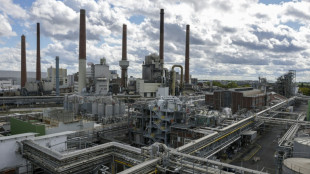
Almost a decade after China began curbing coal burning to stop thick winter smog, villagers in northern Hebei province are struggling to afford their heating bills with most gas subsidies now phased out.
In 2017, Beijing mandated that dozens of northern areas wind down the use of coal-fired stoves in favour of electric and natural gas-powered systems.
China's central government allocated funds to refit stoves, but subsidies faded after three years and additional aid has drastically declined, local media reported this week.
In Xushui, a district in Hebei roughly 100 kilometres (62 miles) outside Beijing, villagers told AFP they avoided turning on the heating because it drained their incomes.
"Regular folks can't afford it... Spending 1,000 yuan ($143) per month on heat -- no one can stand that," a resident in his 60s told AFP at a farmers' market.
"Everyone likes that (the air) is clean. There's not one person that doesn't like it," he said, asking not to be named for fear of "trouble".
"But... the cost of clean (air) is high," he added.
On the clear, sunny day AFP visited, the warmest temperature was just under six degrees Celsius, with lows of minus seven.
Restaurant worker Yin Chunlan said that her elderly in-laws need to pay up to 7,000 yuan per year to heat their six-room village home.
Yin, 48, lives in an apartment in town and says her annual bill is a third of that.
"But it's not the same in the village," she told AFP.
"They have to set their heating much higher, and the temperature still isn't as warm, so it wastes gas and wastes money."
Yin's in-laws often pile on extra blankets to stay warm.
"When I see it, it's quite pitiful," said Yin, wiping away a tear. "Nothing can be done."
In one village, a woman in her 70s wore a green padded jacket underneath an apron as she crossed her outdoor courtyard.
Heating in her home is not turned on during the daytime, she said, showing AFP the system's switchboard mounted above her stove displaying "off".
The woman, who did not give her name, said the dial could reach 60C. When asked if the temperature inside could feel as warm, she laughed.
- Articles taken down -
Reports that villagers in Hebei were layering up under quilts to avoid costly heating peppered Chinese social media in the first week of the new year.
An article by Farmers' Daily reshared in state media CCTV's opinion section said in rural Hebei natural gas costs up to 3.4 yuan per cubic metre compared to 2.6 yuan in rural areas of Beijing.
Villagers told AFP they felt the huge price gap was unfair.
But the original article was quickly taken down, with republications, including the CCTV article, inaccessible days later.
China's Ministry of Finance said in 2021 a total of 13.2 billion yuan in funds had been distributed for clean heating across Hebei.
But subsidies to support the installation of new systems and for gas bills, which had lasted three years, would not be renewed, it said in a letter.
The move came around the same time that international gas prices were driven up by Russia's war in Ukraine. Last year, Chinese authorities reported national gas consumption growth had slowed.
The ministry, responding to a local proposal to increase financial support for provincial pollution control, said special funds would be arranged for additional subsidies in rural areas, but gave no details of the rollout.
A local Xushui government platform said in 2017 that some households would be eligible to receive 300 yuan in gas subsidies.
For villager Zhang Yanjun, that amount hardly made a dent in his bill of several thousand yuan per season.
The 55-year-old labourer said he had already spent more than 5,000 yuan on heating his home since October.
"If you give 300 or 200 yuan or something, it's the same as if you gave no subsidies at all," he said.
D.Khalil--SF-PST