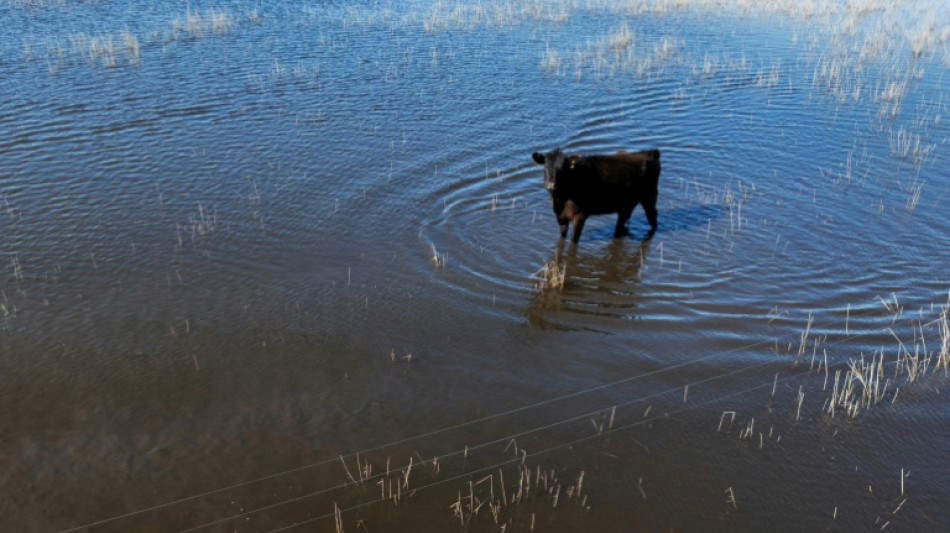
Record rains turn Argentina's farm-filled Pampas plains to wetlands / Photo: Luis Robayo - AFP

 Sri Lanka's de Silva quits as Test captain

 Alcaraz feeling 'mentally fresh' ahead of Shanghai return

 Israel drastically reduces British diplomatic presence in Jerusalem

 Stocks fall further as oil surge fans fresh inflation worries

 North Korea demands South show 'utmost respect' to restore relations
 Saudi says three dead in airport attacks claimed by Houthis

 'Mad dream': New showcase for African film opens in London

 All Blacks coach Rennie says Wallabies exit 'part of the game'

 The growing protests against India's poll body - and PM Modi
 Stocks fall further as oil spike fans fresh inflation worries

 Bad COP, worse COP? EU tempers hopes for UN climate summit

 Rookie Henry named in Wallabies midfield to face All Blacks

 Housing crisis set to dominate Spain's snap election
 Gas, health care, utilities: high costs squeeze US midterm voters

 New Zealand Rugby seeks injunction over PNG Chiefs name
 Samsung expects 780% quarterly operating profit jump on AI boom

 Guardians survive with 9-3 win over White Sox

 Saudi Arabia says 3 dead at airports after Houthis claim attacks
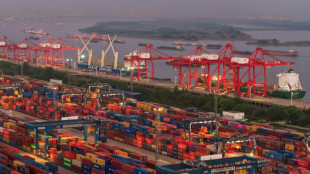
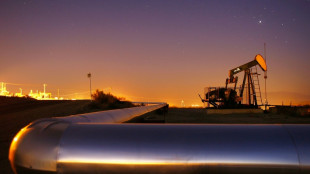 Stocks slide as oil sees volatile trading day over Iran war fears

 Microsoft pushes AI vision with new, expensive Surface laptop

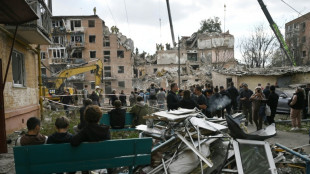 Five children among 28 killed in Russian strikes on Ukraine

 Odell Beckham Jr signs with Minnesota Vikings

 Saudi Arabia says three dead at airports after Houthis claim attacks

 Trump plans to turn Florida golf course into presidential retreat

 WHO says cannot conduct full risk assessment on Russia plague reports

Parts of the Argentine Pampas, a vast expanse of flat grasslands, look more like wetlands these days following record rains, with local farmers warning of a "catastrophic" impact to their livelihoods.
An unusual downpour in March, followed by more rains since then, turned the usually temperate region's rural roads into canals, drowned crops and left cows stranded, searching hopelessly for pasture in the mud.
With drainage infrastructure unable to cope, some five million hectares -- an area larger than Denmark -- now stand under water, transforming one of the world's most productive agricultural areas into a patchwork of lagoons.
Scientists say climate change likely played a role in the freak rains, and for a severe drought that preceded it.
Locals insist the situation was made infinitely worse by a backlog in road, canal and drainage works.
Cattle rancher Luciano Macaroni from the hard-hit municipality of 9 de Julio -- named after the Argentine Independence Day and some 300 kilometers (186 miles) west of Buenos Aires -- doesn't dwell too much on the cause, just the effect.
"In March, we had to move to town so the kids could go to school," he told AFP by telephone from his farm, accessible only on horseback due to flooded roads.
"I couldn't plant, my cows got skinny from being in the water, and I have no way to bring them food," the 46-year-old lamented.
A neighbor, 43-year-old grain and cattle farmer Alejandro Vallan, fears the consequences will be felt even more severely next year.
"We can't plant, we don't have animals. What the hell are we going to do?" he asked.
"There are people 60 or 70 years old who saved their whole lives to have their cows, and now they've lost them."
- 'Catastrophic' -
9 de Julio is one of the districts most affected among 28 declared emergency areas by the Buenos Aires provincial government.
The "catastrophic" situation "is going to create a regional economic problem," said Hugo Enriquez, president of SRA farmers' union.
It will affect "transportation, contractors, farms, storage facilities, and those who sell supplies," he told AFP.
So far in 2025, rainfall in the Buenos Aires province has exceeded 1,600 millimeters -- almost double the annual average.
Two years ago, the region also suffered one of its worst droughts in decades.
"It is clear that there are issues related to climate change and... the increased frequency of very severe weather events," said Javier Rodriguez, the province's minister of agrarian development.
Cindy Fernandez of the National Meteorological Service said a warmer atmosphere means more water vapor in the air, "and therefore more water available for increasingly heavy precipitation."
For 9 de Julio mayor Maria Jose Gentile, the role of climate change is undeniable.
"To ignore that is to not see reality," she said.
According to a report by the World Weather Attribution (WWA) scientific network, "it is likely that climate change increased the likelihood and intensity of the heavy rainfall" recorded in March.
- Politics -
Some of the Pampas plains have been transformed into a marsh of stinky, stagnant water shrouded by clouds of mosquitos and a deafening chorus of frogs.
Residents say upgrades to roads and canals in the region have been pending for decades, as well as the dredging of the Salado River -- the main drainage system.
Rodriguez, the provincial minister, said progress was halted after budget-slashing President Javier Milei took office in December 2023, with dredging work coming to a stop.
After the flooding, Milei's Security Minister Patricia Bullrich announced resources to "open roads and reach isolated families."
But she insisted the dredging work falls within the ambit of the provincial government, which is led by the country's main center-left opposition party.
"No one takes responsibility, and everyone blames the previous administration. We want solutions," Raul Daguerre, a livestock trader, said of the political impasse.
Argentina is one of the world's leading food producers. Its agro-industrial sector represented 58 percent of Argentina's total exports in 2024.
Y.Zaher--SF-PST