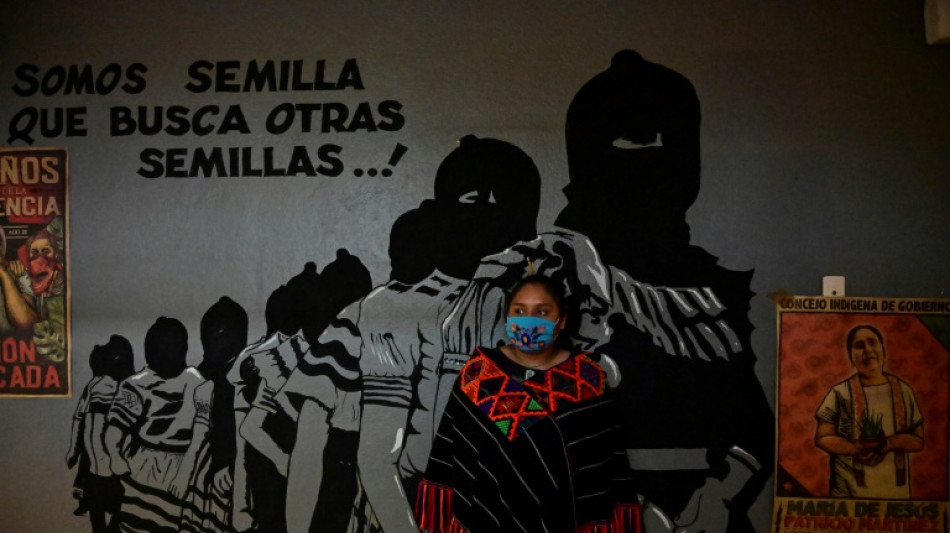
Mexican schoolboy set on fire for being Indigenous / Photo: PEDRO PARDO - AFP/File

 Coventry sign Nigeria striker Awoniyi from Forest

 TripleDart tops $7 million ARR with AI-led growth, reports 50 per cent EBIT margin

 Bipartisan backlash as Trump scales back US-South Korea drills
 'Never seen one like it': German pensioners flee wildfire
 Ipswich sign Enciso and Ouattara in double raid on Strasbourg
 UN laments 'unacceptable' toll of 350 aid workers killed in 2025

 Former child star actress Hayden Panettiere dead at 36

 Pakistan captain Babar Azam doubtful for England opener

 Pentagon inks Tomahawk deal amid reports of missile shortfall

 Rain halts India push after Dinusha century lifts Sri Lanka
 Dinusha hits century as Sri Lanka post 284 in first India Test
 Stocks steady as investors weigh US rate path
 Taiwan's leader says government to propose record defence spending for 2027
 Cambridge head slams 'feeding frenzy' over dead academic

 Ebola outbreak now DR Congo's deadliest ever

 Germany's coalition split over putting climate in constitution

 Ukraine badminton star: 'How can you feel normal when bombs are falling?'

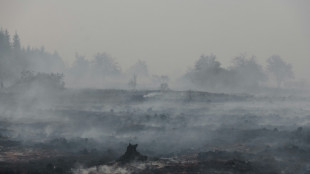 Rain brings respite as Belgium wrestles massive wildfire
 Most stocks rise as US data ease rate fears but fuel economic worries

 India take control of Galle Test as Sri Lanka slump to 99-5
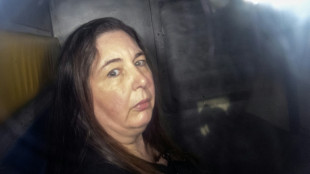 Australia's mushroom murderer appeals conviction

 The Nigerian fishing community being eaten up by the Atlantic

 Kushner to meet Netanyahu after talks with Hamas on Gaza plan
 Photos, memories all that remain for Colombia's bereaved after quake

 Sabalenka squeezes out win on sixth match point in Cincinnati
A Mexican schoolboy was set on fire and badly burned in a classroom -- his "only crime" was speaking an Indigenous language in a country struggling to end racial discrimination.
Two classmates are accused of pouring alcohol on Juan Zamorano's seat at a high school in the central state of Queretaro in June.
When the 14-year-old realized his trousers were wet and stood up, one of them set Zamorano on fire, according to his family.
He suffered second and third degree burns and was only this week discharged from hospital.
Juan had already suffered weeks of bullying because of his Indigenous Otomi roots, according to his family's lawyers, who filed complaints against the alleged attackers and school authorities.
With an estimated population of 350,000, the Otomi are one of dozens of Indigenous groups in the Latin American country.
The Otomi language is Juan's mother tongue "but he doesn't like to speak it much because it's a cause of ridicule, harassment and bullying," Ernesto Franco, one of the family's lawyers, told AFP.
The family has alleged to the media that even Zamorano's teacher harassed him because of his origin.
"She thinks that we're not her class, we're not her race," Zamorano's father, who described the attack as "attempted murder," told the newspaper El Universal.
- 'Recurring attacks' -
Queretaro state prosecutors have announced an investigation into the attack and the alleged perpetrators face possible legal proceedings.
President Andres Manuel Lopez Obrador said that if necessary, the country's attorney general's office might handle the case.
Juan's "only crime was speaking Otomi," tweeted Lopez Obrador's spokesman Jesus Ramirez, who said that eradicating racism was everyone's responsibility.
Mexico's National Institute of Indigenous Peoples urged the authorities to "sanction minors and adults involved in harassment and recurring attacks on minors."
Urgent measures are needed in schools to prevent further cases of discrimination and racism, it said.
Discrimination is common in Mexico, a country of 126 million where 23.2 million people identify as Indigenous and more than 7.3 million speak an Indigenous language, according to a 2020 census.
In a case in March, an Otomi woman accused staff at a restaurant in a trendy Mexico City neighborhood of preventing her from using the toilet, telling her it was only for customers.
- Systemic racism -
Around 40 percent of the Indigenous population complained of having faced discrimination in a survey published by the national statistics agency in 2018.
Almost half felt that their rights were respected little or not at all.
The survey also revealed prejudices against the Indigenous population.
Three out of 10 people questioned agreed with the statement: "The poverty of Indigenous people is due to their culture."
Cases like Zamorano's are not isolated but part of systemic racism, said Alexandra Haas, the Mexico head of the international charity Oxfam.
In 2019, an Oxfam study in Mexico found that speaking an Indigenous language, identifying with an Indigenous, Black or mixed ethnicity community, or having a darker skin tone, meant less chance of educational and labor advancement.
Mexico has a law aimed at preventing discrimination and has created institutions responsible for dealing with complaints.
Even so, Zamorano's case is a stark illustration of "how far discrimination can go," according to Haas, a former president of the country's National Council to Prevent Discrimination.
"We can't say that it was impossible to predict. There have been centuries of racial, Indigenous and very structural discrimination," she said.
W.Mansour--SF-PST