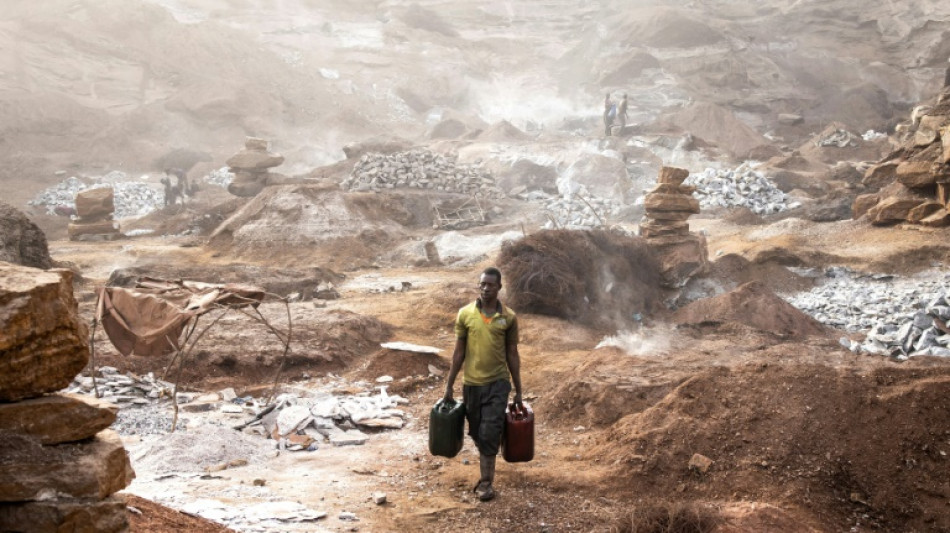
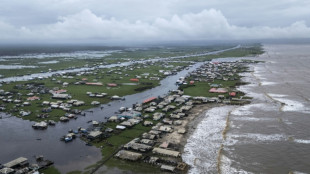
Market values are destroying nature: UN report / Photo: JOHN WESSELS - AFP/File

 Coventry sign Nigeria striker Awoniyi from Forest

 TripleDart tops $7 million ARR with AI-led growth, reports 50 per cent EBIT margin
 Bipartisan backlash as Trump scales back US-South Korea drills
 'Never seen one like it': German pensioners flee wildfire
 Ipswich sign Enciso and Ouattara in double raid on Strasbourg
 UN laments 'unacceptable' toll of 350 aid workers killed in 2025

 Former child star actress Hayden Panettiere dead at 36

 Pakistan captain Babar Azam doubtful for England opener

 Pentagon inks Tomahawk deal amid reports of missile shortfall

 Rain halts India push after Dinusha century lifts Sri Lanka

 Dinusha hits century as Sri Lanka post 284 in first India Test

 Stocks steady as investors weigh US rate path
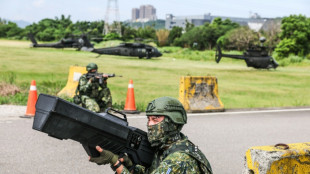 Taiwan's leader says government to propose record defence spending for 2027
 Cambridge head slams 'feeding frenzy' over dead academic
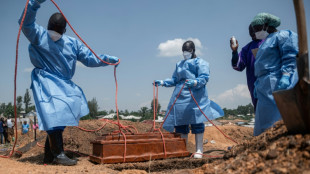 Ebola outbreak now DR Congo's deadliest ever

 Germany's coalition split over putting climate in constitution

 Ukraine badminton star: 'How can you feel normal when bombs are falling?'

 Rain brings respite as Belgium wrestles massive wildfire
 Most stocks rise as US data ease rate fears but fuel economic worries

 India take control of Galle Test as Sri Lanka slump to 99-5
 Australia's mushroom murderer appeals conviction

 The Nigerian fishing community being eaten up by the Atlantic

 Kushner to meet Netanyahu after talks with Hamas on Gaza plan
 Photos, memories all that remain for Colombia's bereaved after quake

 Sabalenka squeezes out win on sixth match point in Cincinnati
A major UN report warned Monday that a global economy focused on short-term profit is wrecking the planet and called for a drastically different approach as to how we value nature.
Without this shift, universally accepted goals of sustainable development and greater equity will remain out-of-reach, the science advisory panel for biodiversity, known as IPBES, found.
"The way we understand economic growth is at the core of the biodiversity crisis," Unai Pascual, an ecological economist at the University of Bern and co-chair of a 139-nation meeting in Bonn that approved the report, told AFP.
"The new assessment aims to bring different types of values into the decisions leading us to transformative change."
Some 80 experts combed through more than 13,000 studies, looking at how market-based values have contributed to the destruction of ecosystems that sustain us, and what other values might best foster sustainability.
A 34-page Summary for Policymakers, approved over the weekend, comes as the UN steers an international process to stem species loss and protect nature.
In December, nations gather to finalise a treaty tasked with halting the decline of biodiversity and setting humanity on a path to "live in harmony with nature" by mid-century.
"Nature is what sustains us all," commented Inger Andersen, head of the UN Environment Programme. "It gives us food, medicine, raw materials, oxygen, climate regulation and much more."
But a five-fold increase in per-capita GDP since 1950 has maimed the natural world that made such growth possible.
A million species -- including, arguably, our own -- are threatened with extinction and global warming is on track to make large swathes of the planet unlivable.
- 'Not going to be easy' -
Two landmark UN reports -- one on climate change in 2018, another on biodiversity in 2019 -- concluded that only a wholesale transformation of the way we produce, distribute and consume almost everything can stave off runaway global warming and a collapse of ecosystems.
That already Herculean task becomes nigh impossible, the IPBES report warns, unless humanity also changes the way it perceives and values nature.
"If you think of nature as a factory at your service, your emphasis will be on extracting the highest yields possible," said Patricia Balvanera, an ecologist at the National Autonomous University of Mexico and a co-chair of the report.
Many still fear that sustainability can only be achieved at the expense of well-being, when in fact a natural world that can regenerate itself is the bedrock for healthy societies in the future, scientists say.
More nuanced valuations of nature could lead to better policy choices, the IPBES authors conclude.
A narrow cost-benefit analysis of development projects such as the Grand Renaissance Dam along Ethiopia's Blue Nile or the Mayan Train project on Mexico's Yucatan Peninsula weighed the value of electricity, tourism or jobs against the cost of construction or displacing populations.
A "living from nature" perspective may even quantify the economic value of damage to ecosystems, such as a CO2 absorbing forest or wetlands, or the loss of insect populations that pollinate crops.
"If nature is part of me, part of my family, then -- as in a family -- the priority is to take care of each other," said Balvanera. "It is a totally different mindset."
Many of the delegates and scientists in IPBES -- the Intergovernmental Science-Policy Platform on Biodiversity and Ecosystem Services -- are also part of the 196-nation Convention on Biodiversity (CBD), which has struggled to find consensus on the draft treaty to be delivered in December.
"We think this values assessment can help the negotiations, politically speaking, to provide find a solution," noted Pascual, who said several delegates called it a "game-changer".
"Right now, there is a gloomy sense that this is not going to be easy at all."
O.Farraj--SF-PST