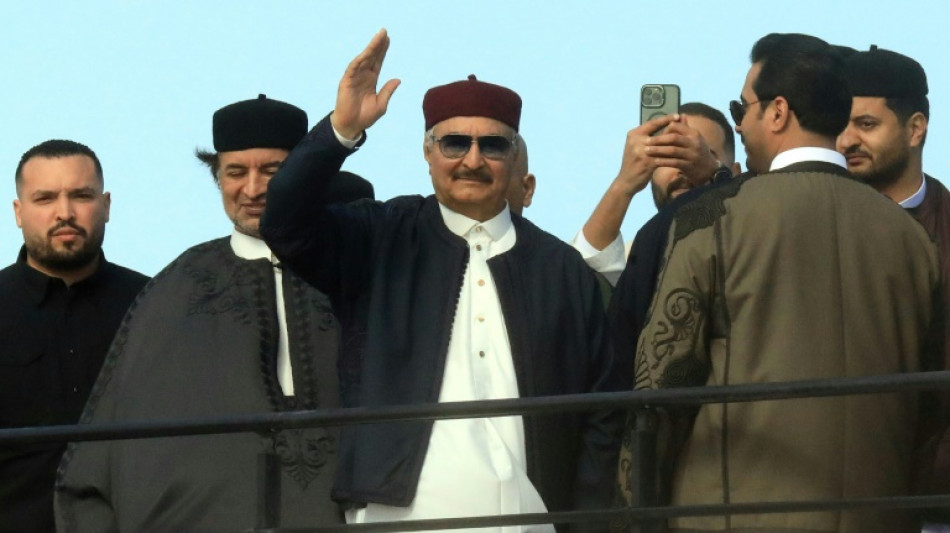
Libya commander Haftar seeks to force international engagement / Photo: Abdullah DOMA - AFP/File

 Hurricane Isaias makes landfall in Florida
 Brazil prosecutors sue Shell for $108 mn over deadly 2024 floods
 Major earthquake destroys buildings, roads in Panama
 Anthropic AI model sent fake murder tip to Philadelphia police
 7.7-magnitude quake rocks Panama, triggers tsunami warning

 Prince Harry booed at English rugby match

 Kiplimo and Feysa seek repeat Chicago Marathon wins

 Fuellkrug halts Dortmund after late goal flurry
 Injured Ravens quarterback Jackson ruled out of Falcons clash

 Brewers aim to take down two-time defending champion Dodgers in NLCS rematch

 Tsunami alert after major earthquake rocks Panama
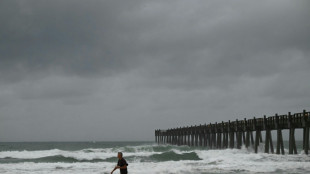 Outer bands of Hurricane Isaias lash US Gulf Coast
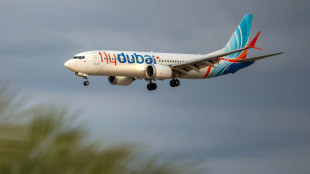
 Hope, Rutherford fire West Indies to record T20 chase of 250
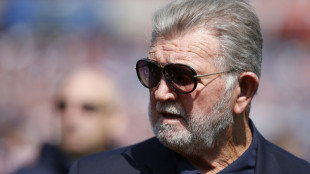
 Farhan leads Pakistan to T20 win over Sri Lanka

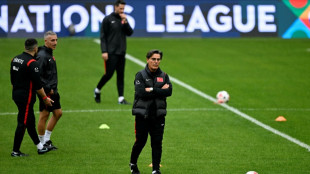 Turkey sack coach Montella after Nations League woe
 US announces sanctions on ICC, hours after Nobel award to former judge

 Montenegro expels popular Russian war blogger wanted by US
 Rubio calls on all Venezuela opposition figures to join talks with govt
 Australia struggle against South Africa quicks in first Test
 Stocks advance as Trump rules out pre-vote Iran attack
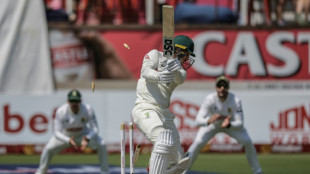 Australia struggle against South Africa's fast bowlers

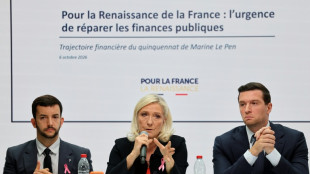 Massive debt puts France in a bind as investor doubts deepen
 Arteta urges 'respect' for process after Man City financial verdict

 'Human-authored' book labels gain ground amid AI scandals

 Man City whistleblower Pinto to stay under police protection

Libya's eastern authorities recently expelled a senior European delegation in a move analysts say was meant to send a message: the unrecognised administration backed by military leader Khalifa Haftar cannot be ignored.
On July 8, an EU commissioner and ministers from Greece, Italy and Malta were in Libya to discuss irregular migration from the North African country.
Their visit was divided in two, as is Libya, which is still grappling with the aftermath of the armed conflict and political chaos that followed the 2011 NATO-backed uprising that toppled longtime dictator Moamer Kadhafi.
The delegation first visited the capital Tripoli, seat of the internationally recognised Libyan government of Prime Minister Abdelhamid Dbeibah.
They then travelled to Benghazi, in the east, where a rival administration backed by Haftar and his clan is based, and with whom the EU has generally avoided direct contact.
Almost immediately, a reported disagreement prompted the eastern authorities to accuse the European delegation of a "flagrant breach of diplomatic norms", ordering the visiting dignitaries to leave.
In Brussels, the European Commission admitted a "protocol issue".
Tarek Megerisi, a senior policy fellow at the European Council on Foreign Relations think tank, said the scene at the airport "was a calculated move".
Haftar was playing to EU fears of irregular migration in order "to generate de facto European recognition", and thus "broaden relations with Europe away from just engagement with him as a local military leader".
Turning the delegation away showed that declining to engage with the eastern civilian administration was no longer an option.
- 'Punish Athens' -
The complex situation in Libya has required unusual diplomacy.
European governments recognise and work with the Tripoli-based government and not the eastern administration, but still hold contact with Haftar's military forces.
In their visit earlier this month, the European commissioner and ministers were meant to meet with eastern military officials.
But once at the Benghazi airport, they saw "there were people there that we had not agreed to meet", a European official in Brussels told journalists on condition of anonymity.
"We had to fly back," the official said, adding that "of course" it was linked to recognition of the eastern government.
Claudia Gazzini, a Libya expert at the International Crisis Group, said she did not believe "it was a premeditated incident".
But "the question does present itself as to why" ministers from the eastern government were at the airport in the first place, and why Haftar would let it play out the way it did, she said.
"We can't completely rule out that there was some particular issue or bilateral disagreement with one of the countries represented in the delegation," Gazzini added.
Libya expert Jalel Harchaoui suggested Greece may have been the target.
On July 6, two days before the axed visit, "the Greek foreign minister had come to demand concessions on migration and maritime (issues) without offering any tangible incentives", Harchaoui said.
Despite Haftar's personal involvement, the July 6 visit "had yielded nothing", added the expert.
Then, on July 8, "a Greek representative -- this time as part of an EU delegation -- wanted to negotiate on the same day with the rival Tripoli government, placing the two governments on an equal footing", he said.
This was "an affront in Benghazi's view", Harchaoui said, and the administration wanted to "punish Athens".
- Legitimacy -
To Harchaoui, the diplomatic flap was a sign not to "underestimate" the Haftars' foreign policy.
"The Haftar family is an absolutely essential actor" in tackling the influx of migrants or, for example, advancing energy projects, due to its key role in securing Libya's eastern coast, said Harchaoui.
The message delivered at the Benghazi airport "is clear: take the eastern faction seriously", he added.
Harchaoui said that the Haftars, already "rich in cash and strong" in terms of strategic assets, have recently increased efforts to "consolidate their legitimacy".
Haftar himself was hosted in February by French President Emmanuel Macron, and in May by Russia's Vladimir Putin.
And Haftar's son, Saddam, recently visited the United States, Turkey, Italy and Niger.
Even Ankara, which has provided support for the Tripoli-based government in repelling attacks from the east, "is now seeking to further profit off the Haftars through things like construction projects", said Megerisi.
He added that Turkey also has wider geopolitical ambitions, hoping to see the Haftars endorse a maritime border agreement in the eastern Mediterranean, which Tripoli had already signed but Athens regards as illegal.
J.AbuHassan--SF-PST