Russia denies defaulting on debts / Photo: Alexander NEMENOV - AFP

 India vows action after first cheetah shot dead
 'Now or Never': Ethiopia influencers push for Eritrea invasion
 Mbappe furore rages on in China, but Mao comments censored

 Billionaire Ambani's Jio jumps 21% in market debut after record India IPO
 Rays win thriller to thwart Brewers in World Series
 Reigning champ Knicks earn first win against Pistons
 Runners swap streets for shopping malls as haze chokes Singapore
 Billionaire Ambani's Jio to debut after record India IPO
 UK set for cautious budget as borrowing costs climb
 Anthropic's record IPO faces some big questions

 US Fed expected to hold rates steady ahead of key midterm elections
 Can this Latin Grammy-winner help Democrats win back Congress?
 Tuvalu has 'limited' power to halt its fossil fuel investments: NZ govt papers seen by AFP
 Palestinian activist Khalil returns to Columbia after US detention

 Trump drastically loosens oil and gas methane rules

 French Senate weighs bill to make protesters pay for unrest damage
 الأردن يعلن القبض على ثلاثة متهمين بهجوم كنيسة الكرك

 استقالة رئيس ونائب رئيس وعضوين من مجلس إدارة يونيكاي للأغذية
 Charles tackles thorny legacy of slavery on Caribbean trip

 Arsenal stunned by fourth-tier Fleetwood in League Cup
 افتتاح وقف المحميد في دبي لدعم الأسر محدودة الدخل والحالات الإنسانية

 Brazil's Flavio Bolsonaro flees to US after election loss
 صقر غباش يدعو بريكس إلى تعميق أثرها في التوازن والتنمية الدوليين

 Flavio Bolsonaro headed to US after Brazil election defeat: US media

 American woman convicted of getting military training from Islamic State

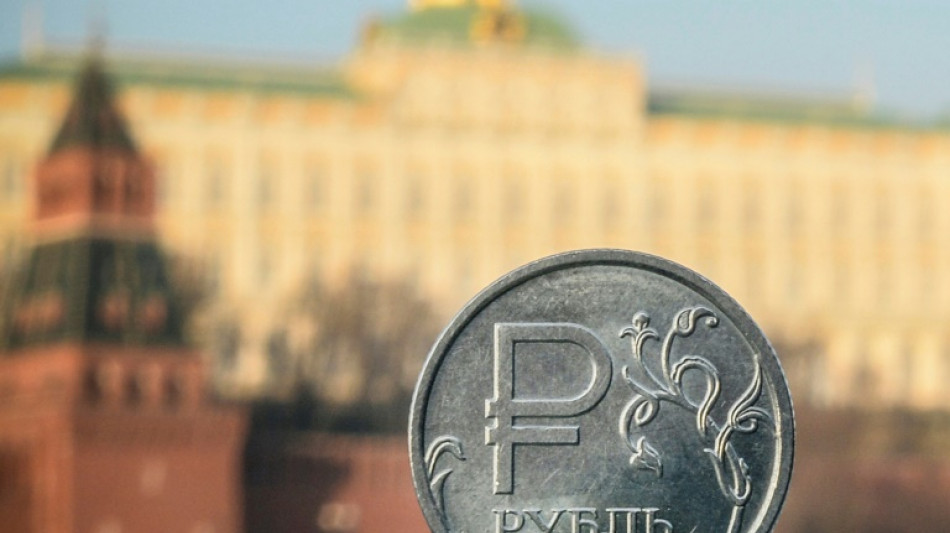
Russia said Monday that two of its debt payments were prevented from reaching creditors, pushing the country closer to its first foreign default in a century due to sanctions over the Ukraine offensive.
The announcement came on the 124th day of Russia's military intervention in Ukraine, with Western sanctions so far failing to force the Kremlin to change its course.
The Western economic penalties have largely severed the country from the international financial system, making it difficult for Moscow to service its debt.
The Russian authorities insist they have the funds to honour the country's debt and accuse the West of seeking to drive Moscow into a default artificially.
"There are no grounds to call this situation a default," Kremlin spokesman Dmitry Peskov told reporters after a key payment deadline expired Sunday.
"These claims about default, they are absolutely wrong," he said, adding that Russia settled the debt in May.
A 30-day grace period for the payment of $100 million in interest payments expired on Sunday night, most of which had to be paid in foreign currency.
In a statement, the Russian finance ministry said that two of its debt payments had not been transferred to creditors, but denied that the event amounted to a default.
International settlement and clearing systems "received funds in full in advance" but the payments were not transferred to the final recipients due to "the actions of third parties", the ministry said.
"The non-receipt of money by investors did not occur as a result of the absence of payment, but due to the actions of third parties," the ministry added, saying such an event did not amount to a default.
"The actions of foreign financial intermediaries are beyond the Russian finance ministry's control," the statement said.
Finance Minister Anton Siluanov has earlier dismissed the situation as a "farce".
- 'Vicious circle of decline' -
While some experts dismiss the event as a technical default, others say it will have far-reaching consequences.
"This default is important as it will impact on Russia's ratings, market access and financing costs for years to come," said Timothy Ash, an emerging markets strategist at BlueBay Asset Management.
"And that means lower investment, lower growth, lower living standards, capital and human flight (brain drain), and a vicious circle of decline for the Russian economy."
Russia lost the last avenue to service its foreign-currency loans after the United States removed an exemption last month that allowed US investors to receive Moscow's payments.
In response, Russia said it would pay in rubles that could be converted into foreign currency, using a Russian financial institution as a paying agent, even though the bonds do not allow payments in the local currency.
Russia has accused the West of seeking to push it into an "artificial default" through unprecedented sanctions imposed after President Vladimir Putin sent troops to Ukraine on February 24.
The measures included freezing the Russian government's stockpile of $300 billion in foreign currency reserves held abroad, making it more complicated for Moscow to settle its foreign debts.
The country last defaulted on its foreign debt in 1918, when Bolshevik revolution leader Vladimir Lenin refused to recognise the massive debts of the deposed tsar's regime.
Russia defaulted on domestic debt in 1998 when, due to a drop in commodity prices, it faced a financial squeeze that prevented it from propping up the ruble and paying off debts that accumulated during the first war in Chechnya.
The International Monetary Fund's number two official, Gita Gopinath, said in March that a Russian default would have "limited" impact on the global financial system.
X.AbuJaber--SF-PST