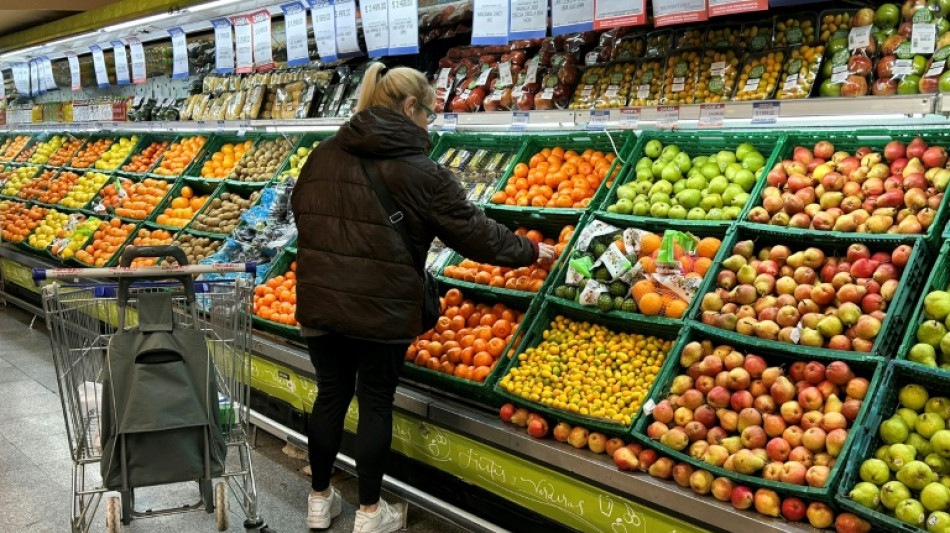
Argentina under Milei: a tale of two economies / Photo: Luis Robayo - AFP

 Year later, Gaza ceasefire promises mostly unfulfilled
 Taiwan's leader says increasing defence spending to 'deter war'

 Major quake hits Panama, no deaths reported

 Hurricane Isaias makes landfall in Florida
 Brazil prosecutors sue Shell for $108 mn over deadly 2024 floods
 Major earthquake destroys buildings, roads in Panama
 Anthropic AI model sent fake murder tip to Philadelphia police
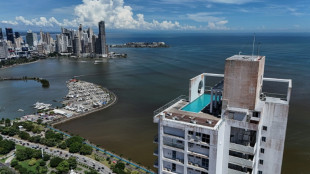 7.7-magnitude quake rocks Panama, triggers tsunami warning

 Prince Harry booed at English rugby match

 Kiplimo and Feysa seek repeat Chicago Marathon wins
 Fuellkrug halts Dortmund after late goal flurry
 Injured Ravens quarterback Jackson ruled out of Falcons clash
 Brewers aim to take down two-time defending champion Dodgers in NLCS rematch

 Tsunami alert after major earthquake rocks Panama

 Outer bands of Hurricane Isaias lash US Gulf Coast

 Hope, Rutherford fire West Indies to record T20 chase of 250

 Farhan leads Pakistan to T20 win over Sri Lanka

 Turkey sack coach Montella after Nations League woe
 US announces sanctions on ICC, hours after Nobel award to former judge

 Montenegro expels popular Russian war blogger wanted by US
 Rubio calls on all Venezuela opposition figures to join talks with govt
 Australia struggle against South Africa quicks in first Test

 Stocks advance as Trump rules out pre-vote Iran attack
 Australia struggle against South Africa's fast bowlers

 Massive debt puts France in a bind as investor doubts deepen
In Javier Milei's Argentina, falling inflation has stimulated a boom in car and real estate sales and foreign-bound planes take off laden with tourists.
But on the other side of a very complicated economic coin, consumption is dropping precipitously among low- and middle-income groups while more and more people work in precarious jobs and buy groceries on credit.
Milei, who took office as president in December 2023, has partly succeeded in his quest to curb state spending and runaway inflation, which reached a five-year monthly low in May.
But the price has been a devalued peso and deep cuts to state subsidies that made access to housing, health care and education prohibitively expensive for millions.
Consumer spending dipped heavily last year and a tentative rebound has been unequal: spending on tangible assets such as apartments and cars has skyrocketed among the rich, while ever more poorer people can not afford shoes or food.
Nine out of 10 Argentine households are in debt, official data shows. Even more have defaulted on a loan.
- 'An excellent June' -
"Nothing is selling," shoe store employee Laura Comiso told AFP in downtown Buenos Aires after yet another afternoon without customers.
But in San Andres de Giles west of the capital, car salesman Blas Morales waxed lyrical about "an excellent June!"
According to Sebastian Beato, president of Argentina's ACARA car dealership association, the first half of 2025 was "the best in seven years" with sales up nearly 80 percent from 2024.
Under Milei's measures, loans have become cheaper, and Argentines have been encouraged by a tax amnesty to bring out billions of US dollars they had stashed under mattresses and floorboards, in safety deposit boxes and offshore accounts.
Investment in real estate increased 22 percent year-on-year in Buenos Aires in May.
In the first four months of 2025, more mortgages were taken out in Argentina than in all of 2024.
"The change in government has been very positive for this sector," third-generation real estate agent Diego Sardano told AFP.
"Under the previous government, we went months without making a single sale. Now we have about five sales per month," he added.
A stronger peso also benefits those traveling abroad but harms domestic tourism, with bookings plummeting.
Between January and April, about six million Argentines traveled abroad -- 70 percent more than in the same period in 2024.
The country received only two million visitors at the same time, the lowest figure in a decade.
- No more candy -
Consumption is being driven largely by Argentina's upper class, which comprises no more than six percent of the population.
Consulting firm Moiguer said in a recent report the economic recovery after months of recession was not benefiting everyone equally, and was exacerbating income inequality.
Half of Argentines tell pollsters they cannot make ends meet, and a third delay planned purchases in order to pay for essentials.
Sardano, the realtor, said he feared spending on homes and apartment may have peaked "because people's purchasing power isn't increasing."
"High-end car registrations are increasing while food consumption is falling. The middle class is being wiped out," added Rodolfo Aguilar, head of the State Workers' Union (ATE) which has reported 40,000 job losses among its ranks under Milei.
Fernando Savore, head of the Federation of Small Businesses in Buenos Aires province, said having a job no longer guarantees financial stability because wages have not kept pace with rising gas, electricity and transport prices, or school fees.
"Much of a worker's income goes toward these obligations. There are items that no longer sell, like candy and desserts," he told AFP.
"People only buy necessities like pasta and tomato puree, nothing more, and many are buying on credit."
V.Said--SF-PST