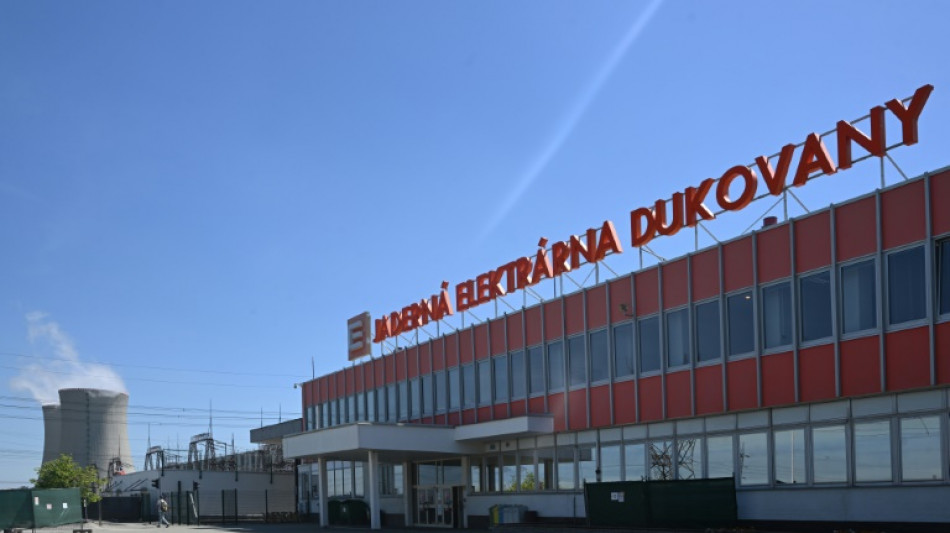
Czechs sign record nuclear deal but questions remain / Photo: Michal Cizek - AFP

 Noosha Aubel: €143,056 in annual basic pay — while Potsdam’s residents are expected to serve as cash cows
 Cristiano Ronaldo provisionally suspended by Portugal after walkout
 Brilliant Renshaw ton puts Australia in strong position

 Zelensky blasts diesel deal after Russian strikes kill 15
 Cristiano Ronaldo provisionally suspended after Portugal walkout
 Alcaraz through in straight sets on Shanghai Masters opener
 Palmer signs contract to stay at Chelsea until 2034
 India detains 'cockroach' movement leaders in bid to thwart election protest
 Proposed next EU budget cut back in search for deal
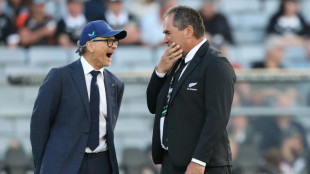
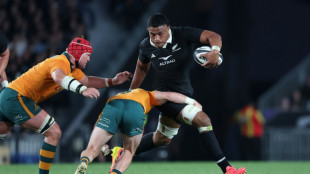 All Blacks learn from 'failed' Springboks series to punish Wallabies
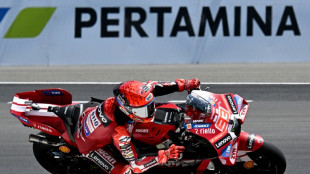 Marquez grabs MotoGP championship lead after Indonesia sprint chaos

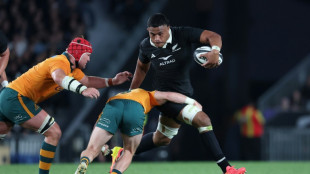 All Blacks extend Eden Park streak with big win over Wallabies
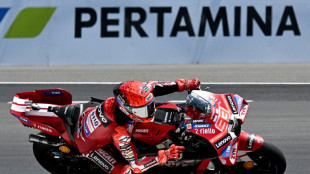 Marquez grabs MotoGP championship lead with Indonesia sprint win
 Schauffele closes in on leaders after 'weird' round in Japan

 Medvedev through at Shanghai Masters in first match since disqualification
 Trump sows doubt on plan to livestream US military execution
 Hunger and malnutrition stalk Gazans, a year on from ceasefire
 Fernandez trumps MotoGP championship duo to grab Indonesia pole
 October 7 scars push Israel's first-time voters to right
 India deploys police, restricts transport ahead of major protest
 Three Mexicans convicted in murders of Australian, US surfers
 Powerful waves lash California coast as storm threatens more damage

 Trump hails Russia deal to release diesel as midterms loom
 Lyon blow chance to go top after loss at Lens
 Stocks rise as Trump says Russia to release diesel to world markets
The Czech Republic signed a contract earlier this month with South Korea's KHNP to build two nuclear reactors, but experts question its future over complaints raised by KHNP's French rival EDF.
The deal is crucial for the EU member country of 10.9 million people, relying on nuclear power produced by the southern Dukovany and Temelin plants for 40 percent of its electricity consumption.
KHNP beat EDF in a tender last year to supply the two units for Dukovany, and Czech Prime Minister Petr Fiala insisted its bid was "better in all criteria assessed".
Prague expects construction to begin in 2029 and the first new reactor launched in trial operation in 2036.
But the biggest contract signed by a Czech state company since the country became independent in 1993 is currently under the scrutiny of both a Czech court and the European Commission.
EDF delayed the deal by months as it questioned the transparency of the tender in a complaint at the Czech antitrust office and later in court.
The deal was signed in great haste and online, just hours after a court rejected the EDF complaint and returned it to a lower-instance court which is due to pass its verdict on June 25.
But EDF has also contested alleged state support for KHNP, illegal in the EU, in a complaint to the European Commission.
"Chances that KHNP will not build the units in the end are still considerable, despite the signature," Petr Barton, a data economist at the Datarun analytical platform, told AFP.
"The European Commission is investigating the Korean bid. The Czech government knows about it... and yet it has signed," Barton said, labelling the Czech side's decision to sign as "most daring".
EDF declined to comment on its chances to thwart the deal.
- 'Several potential risks' -
The crucial argument for Prague was the low price offered by KHNP -- some 200 billion Czech koruna ($9 billion) per unit, but Barton said the EU is worried it was reduced by a Korean state subsidy.
"A Czech consumer would be happy to have electricity subsidised by a foreign country, but the European Union forbids this," Barton said.
"So we are in for lengthy proceedings, shame over the signature which took place after the EU's warning, and in the end the deal may not materialise at all," he added.
A day after the signature, Czech Industry and Trade Minister Lukas Vlcek told Czech Radio there were "several potential risks" to the deal.
"Let's not be naive. We have to overcome the obstacles systematically, patiently, step by step," said Vlcek, adding he was in "close contact" with the European Commission.
He added however that the EDF complaints cannot affect the contract between Prague and KHNP, which "is simply valid".
- 'A complex legal problem' -
But Jiri Gavor, who leads the Association of Independent Energy Suppliers, voiced doubts.
"From the Czech point of view, it is a done deal. But unfortunately for the Czech side or the construction itself, I don't think it will resolve all problems," Gavor told AFP.
He said the EU probe posed a much bigger threat than the Czech court dealings which will hardly overthrow the signature.
"There are legal doubts... what will happen if the European authorities decide EDF is right, and on the other hand you have a signed contract?" he added.
"I don't dare estimate the legal impact on the project. I think it will constitute a rather complex legal problem. And certainly a most unpleasant one," said Gavor.
Barton said Prague will also have to ask the EU for a go-ahead on a Czech government subsidy for the construction in a so-called notification.
The EU has already approved this, but the government then changed the financing model and has had to ask for the permit again.
"And it's not certain if they will get it, especially as the Korean bid is under scrutiny. And you can't pay for the construction without a notification and you can't expect the Koreans to build it for free," Barton said.
Y.Shaath--SF-PST