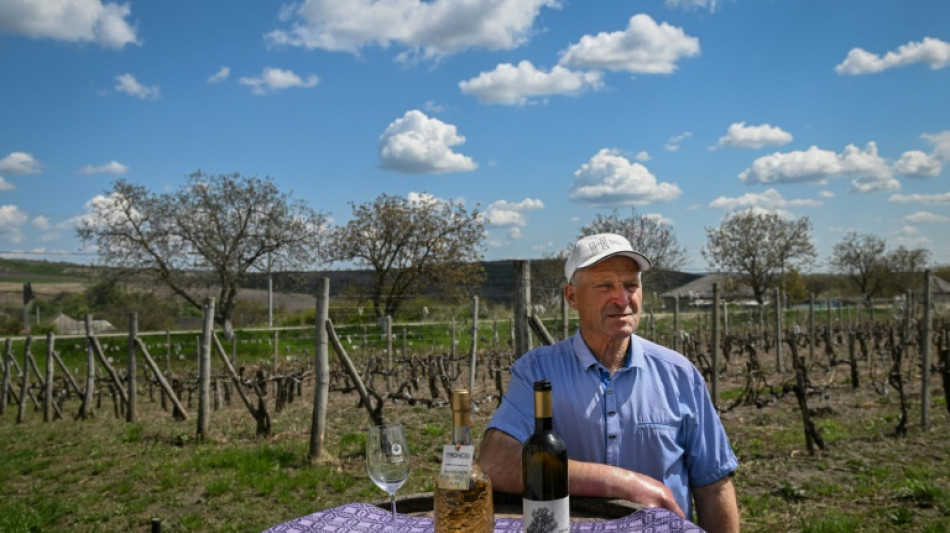
Moldova wine industry's EU focus pays off / Photo: Daniel MIHAILESCU - AFP

 Djokovic wins Basel opener to boost ATP Finals bid

 Airbus aims for record deliveries despite disappointing quarter

 Cuba wins UN vote against US embargo with weakest backing in 30 years

 شباب من أجل الاستدامة تفتح التسجيل لبرامج 2027 في عامها العاشر

 Inglis and Carey put Australia in command of South Africa decider
 92-year-old US judge handling Maduro case dies

 Perez extends Cadillac deal to 2029

 Investors turn cautious ahead of tech results, Fed update on rates

 Arab Israelis proud of high election turnout, uncertain for future
 Inglis, Carey put Australia in command of South Africa decider

 Bolsonaro flees Brazil for US after election defeat
 وكيل ذكاء اصطناعي يرصد أربع ثغرات في برمجيات منشآت الاندماج النووي

 Ceasefire in Russia-occupied Ukrainian city holds for second day

 Canada hikes rates to contain oil price surge caused by Iran war

 خالد بن محمد ومارك كارني يبحثان توسيع الشراكة الإماراتية الكندية
 Clean-up starts as Serbian students movement prepares to govern

 Mona Lisa scrubbed from Syrian textbooks as critics slam conservative drift
 Flavio Bolsonaro: right-wing heir falls from presidential hopeful to exile
 UK budget lifts bank tax to offset surging energy bills

 النفط يصعد أكثر من 1% والأسواق تترقب بيانات المخزونات الأميركية

 مبادرة مصرية جديدة لمساندة صغار مزارعي القمح ورفع الإنتاجية

 Brazil's Bolsonaro lands in Florida after election defeat: AFP

 Eala recovers to move into Tokyo quarter-finals
 COPs 'bunch of baloney' says Panama as it vies to host nature summit
 طفرة رقائق الذاكرة ترفع إيرادات إس كيه هاينكس بأكثر من 300%
In the small Moldovan village of Pereni, Nicolae Tronciu gazes at his vineyard, with its buds ready to bloom.
The 71-year-old launched his current brand four years ago, selling it to Europe rather than Russia, traditionally his country's biggest customer -- a move that is paying off amid the war in Ukraine.
"Most of my production goes to Europe, especially to our Romanian brothers," Tronciu told AFP at his vineyard, about 50 kilometres (30 miles) away from the Ukrainian border.
Moldova -- a small former Soviet republic of some 2.6 million people nestled between Ukraine and Romania, and among the world's 20 largest wine producers -- has long sought closer ties with Europe.
This has now mitigated the war's impact as the industry struggles with rising prices for raw materials and a lack of Ukrainian consumers.
- 'Freedom blend' -
"The Russian market was our traditional market... In the EU you can charge higher prices for wine, but there the focus is on quality," Tronciu said.
His family has been making wine for four generations, and he hopes to turn over his business to his sons working abroad.
He makes no secret of where his preferences stand.
"Geographically and as a person I'm pro-European, yes," he said.
Moldova seeking stronger Europe ties has angered Moscow and resulted in two Russian embargoes in 2006 and 2013.
Those pushed the country further West with the EU liberalising its market for Moldovan wines and sealing a bilateral free trade agreement with Chisinau in 2014.
The transformation has been radical -- Russia accounted for only 10 percent of Moldovan wine exports in 2021, down from 80 percent in the early 2000s, according to figures from the Moldovan Ministry of Agriculture.
Moldova exported more than 120 million litres to European countries last year, compared to 8.6 million litres to Russia.
"Before the 2006 (Russian) embargo, the country did not know the term 'market diversification'... Today, it exports nearly 68 million bottles each year to more than 70 countries," senior agriculture ministry official Sergiu Gherciu told AFP.
Moldova's top wine maker Purcari has even taken a direct political stance against Russia's influence with a wine called "Freedom Blend", launched in 2014 and made from three grape varieties from Georgia, Ukraine and Moldova.
"This wine is a symbol of these countries which are de facto fighting for their freedom," Purcari chief operating officer Eugen Comendant said.
After Russia invaded Ukraine in February, the company helped Ukrainian refugees -- offering them free accommodation -- and sponsored an anti-war banner in the Romanian capital Bucharest, where Purcari is listed on the stock exchange.
- Expensive raw materials -
Comendant said the war's impact was "close to zero" in terms of Russians no longer purchasing Purcari wines.
There are currently no trade restrictions on wine between the two countries, but the war has made transport difficult and international sanctions make it difficult for Russia to conduct international trade.
But the Ukrainian market, which was in full development and represented four percent of the company's sales, collapsed.
The war blocking the southern Ukrainian port of Odessa has also caused "major logistical problems and complicates our exports to Asia," Comendant added.
In March, the Moldovan government said more than 750,000 euros ($790,000) worth of wine were blocked in the Ukrainian port.
But the main challenge for Moldova's wine producers lies with rising production costs, which are expected to soar by 50 percent this year, according to Gherciu.
Tronciu, who sells between eight and ten tonnes of wine every year, said all the raw materials have gotten more expensive.
"Pesticide, fuel, gas, even the iron wire we use" for the grapevines, he said.
He also deplored a lack of tourists, who he used to welcome.
"Most of them were Ukrainians, but also a few Russians," he said in his now empty tasting room.
H.Nasr--SF-PST