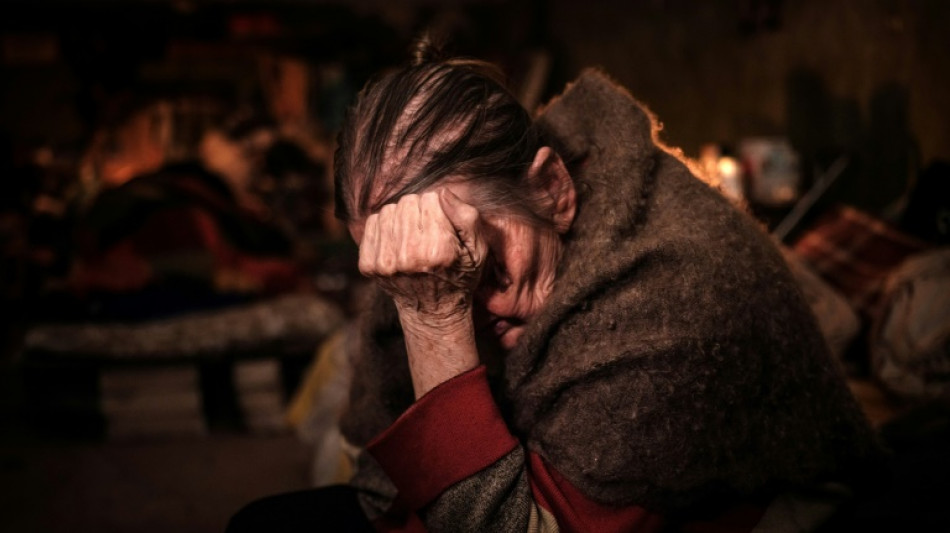
Epicentre of war: Artillery battles engulf Ukraine's Severodonetsk / Photo: Yasuyoshi CHIBA - AFP

 Djokovic wins Basel opener to boost ATP Finals bid

 Airbus aims for record deliveries despite disappointing quarter

 Cuba wins UN vote against US embargo with weakest backing in 30 years

 شباب من أجل الاستدامة تفتح التسجيل لبرامج 2027 في عامها العاشر

 Inglis and Carey put Australia in command of South Africa decider
 92-year-old US judge handling Maduro case dies

 Perez extends Cadillac deal to 2029

 Investors turn cautious ahead of tech results, Fed update on rates

 Arab Israelis proud of high election turnout, uncertain for future

 Inglis, Carey put Australia in command of South Africa decider

 Bolsonaro flees Brazil for US after election defeat

 وكيل ذكاء اصطناعي يرصد أربع ثغرات في برمجيات منشآت الاندماج النووي

 Ceasefire in Russia-occupied Ukrainian city holds for second day
 Canada hikes rates to contain oil price surge caused by Iran war

 خالد بن محمد ومارك كارني يبحثان توسيع الشراكة الإماراتية الكندية
 Clean-up starts as Serbian students movement prepares to govern

 Mona Lisa scrubbed from Syrian textbooks as critics slam conservative drift

 Flavio Bolsonaro: right-wing heir falls from presidential hopeful to exile

 UK budget lifts bank tax to offset surging energy bills

 النفط يصعد أكثر من 1% والأسواق تترقب بيانات المخزونات الأميركية
 مبادرة مصرية جديدة لمساندة صغار مزارعي القمح ورفع الإنتاجية

 Brazil's Bolsonaro lands in Florida after election defeat: AFP

 Eala recovers to move into Tokyo quarter-finals

 COPs 'bunch of baloney' says Panama as it vies to host nature summit
 طفرة رقائق الذاكرة ترفع إيرادات إس كيه هاينكس بأكثر من 300%

She ran clutching her soup ladle from the wood-fired stove set up by trapped residents metres from their doorstep and dived into the basement to escape the mortar blast.
The whistling shell blew a hole in the nearby building of Ukraine's besieged Severodonetsk so big that loose chunks of brick began raining down on the backyard, linking several war-shattered apartment blocks.
The heavy hail smashed windshields and left dents in awnings before coming to a merciful stop.
A few of the braver residents poked their heads around the metal door of their battered entrance to see if it was safe to finish cooking their meal.
But then another mortar shell smashed into more or less the same spot with a devastating bang.
And then another -- and then more exploded like clockwork every few seconds across residential districts of an industrial city transformed into a raging battlefield in the third month of Russia's invasion of Ukraine.
"It has been like this for four or five days," school teacher Tamara Nesterenko said, cautiously making her back to the makeshift kitchen in a ghostly city devoid of running water, gas and power for weeks.
Three pots gently simmered with soup and potatoes for the 27 residents living below ground in the dark for much of the past month.
"We do not even know who is firing or from where," said the 55-year-old.
"It is like they are playing a game."
- Groans and prayers -
The remaining residents of one of east Ukraine's main chemical manufacturing centres -- once a city of 100,000 built by the Soviets from the ashes of World War II -- are afraid to take more than a few steps outside their front door.
Tanks spit angry fumes as they rumble across debris-strewn streets and spin their turrets at more or less anything that moves.
Frightened-looking men patrolling the city's military checkpoints open fire at cars that fail to slow to a crawl.
The artillery shells flying across eastern districts gripped by the fiercest battles often explode without warning because they are being fired at such close range.
The ones shooting over a longer distance emit an undulating groan as they arc over a city plunged into a permanent state of war.
Nella Kashkina sat in the basement next to an oil lamp and prayed.
"I do not know how long we can last," the 65-year-old former city worker said.
"We have no medicine left and a lot of sick people -- sick women -- need medicine. There is simply no medicine left at all."
- 'Run and hide' -
The flickering flames of wood-fired stoves betray the sole signs of civilian life in the new epicentre of Russia's assault on its pro-Western neighbour.
Severodonetsk and its sister city Lysychansk make up the last pocket of Ukrainian resistance in the smaller of the two regions comprising the Donbas war zone.
Russian forces have surrounded the two -- split by a river marking a central front of the war -- and are pelting them with fire in an apparent effort to wear down their resistance and starve them of supplies.
Lysychansk still has a southwestern road that Ukrainian forces are using to ferry in reinforcements and humanitarian aid.
Severodonetsk's sole link with government-held land is a bridge running to Lysychansk that neither side seems willing to blow up -- but whose surroundings are being shelled round the clock.
The bridge allows Lysychansk residents to send in trucks with water that their Severodonetsk neighbours can pick up at specific meetings points.
"There is always a long wait for the water... Can you imagine waiting outside under this fire," retired medic Anna Poladyuk asked.
"You just run and hide, run and hide."
- Suffering city -
Klaudia Pushnir sobbed silently on the side of her basement mattress recalling her youth.
The 88-year-old was sent to Lysychansk as a student to help build a vibrant new city that could showcase the Soviet Union's post-war might at the onset of its standoff with the West.
"It felt like we were building something new. There was so much joy in the city. So many young people. We got apartments for helping build the city," she recalled with a hint of a smile.
"Now my children's apartment is ruined, my apartment is ruined and the entire city is suffering."
The oil lamp's golden glow outlined the shapes of people rolled up in blankets across the four corners of the room.
Someone wrapped a consoling hand around the grandmother's shoulder. Another blast echoed across the basement's intertwining rooms.
"We are sitting here not knowing what will happen. But me -- I am probably going to die here," she said and broke down in sobs.
G.AbuOdeh--SF-PST