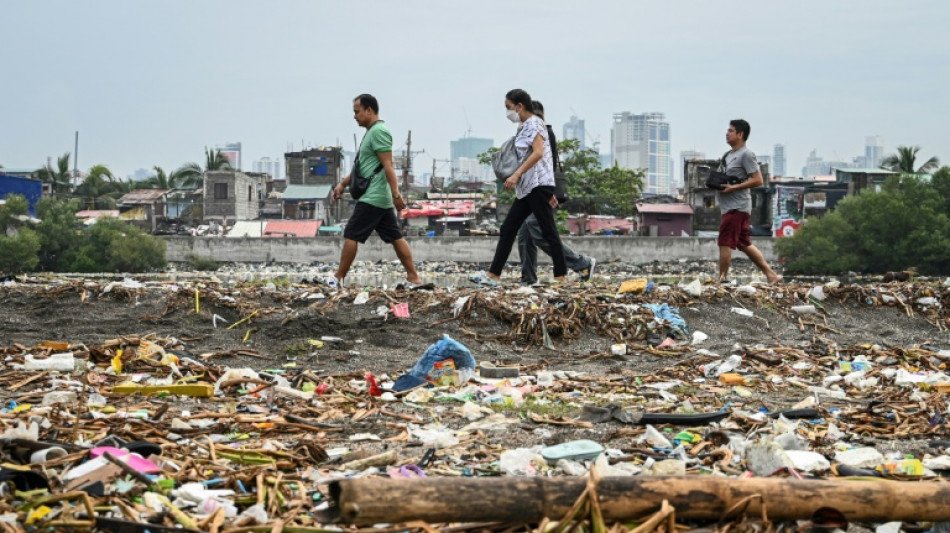
To tackle plastic scourge, Philippines makes companies pay / Photo: Jam Sta Rosa - AFP/File

 Govt takes control of Turkey's most-watched news channel

 FIFA to offer members $6.35-billion development fund windfall

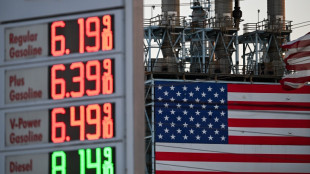
 US consumer inflation hotter than expected as midterms loom
 INmune Bio Inc. and Quantum Computing Inc. Partner to Apply Quantum Optimization and AI to Advance Alzheimer’s Drug Research and Explore New Applications for XPro

 Hot US inflation data dents Wall Street stocks

 India sends 'cockroach' leaders to jail after protest
 'Sinners' director Ryan Coogler to reboot 'X-Files' for Disney

 Lufthansa wins contest for TAP Air Portugal stake

 AI worms, 'major' incident fears spur safety calls at industry summit

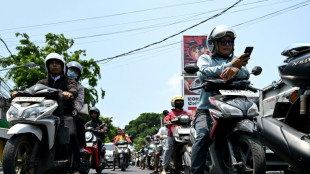 Fuel shortage triggers queues on Indonesia's Bali island

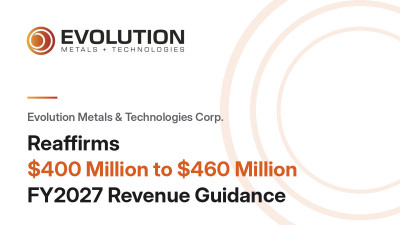 Evolution Metals & Technologies Corp. Reaffirms $400 Million to $460 Million FY2027 Revenue Guidance, Unveils Eight Sintered Magnet Grades Covering an Estimated 75% of Global NdFeB Revenue, and Moves to Answer U.S. Army Call for Rare Earth Magnets

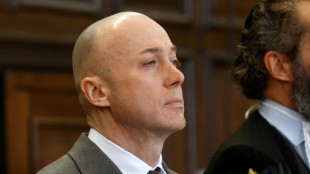 Trial defence says Russia used Nord Stream pipelines as 'weapon'

 Israeli settlers set fire to mosque in occupied West Bank

 Macron says French student protesters 'exploited' by political forces: spokeswoman

 Stocks diverge ahead of key US inflation data
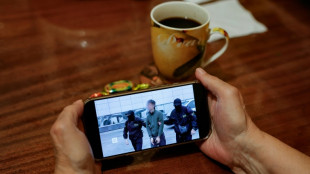 Japan summons Russian ambassador to protest journalist's arrest

 Workers to strike at world's largest copper mine in Chile

 Ukraine accuses US of helping Russia as missiles hit Kyiv

 Drone hits data centre of Russia's largest bank

 Bivial AG Brings Its Complete Dashboard to Mobile
 Mont Blanc nearly two metres taller than in 2023: French surveyors

 Pope recovering after lung cancer operation that rattles Church

 Indonesia haze spikes Singapore pollution, shuts East Timor schools
 Higher borrowing costs an 'alarm signal' for France: finance minister
 Zelensky accuses Putin of disrespecting Trump after latest attacks
Long one of the world's top sources of ocean plastic, the Philippines is hoping new legislation requiring big companies to pay for waste solutions will help clean up its act.
Last year, its "Extended Producer Responsibility" statute came into force -- the first in Southeast Asia to impose penalties on companies over plastic waste.
The experiment has shown both the promise and the pitfalls of the tool, which could be among the measures in a treaty to tackle plastic pollution that countries hope to agree this year.
The Philippines, with a population of 120 million, generates some 1.7 million metric tons of post-consumer plastic waste a year, according to the World Bank.
Of that, a third goes to landfills and dumpsites, with 35 percent discarded on open land.
The EPR law is intended to achieve "plastic neutrality" by forcing large businesses to reduce plastic pollution through product design and removing waste from the environment.
They are obliged to cover an initial 20 percent of their plastic packaging footprint, calculated based on the weight of plastic packaging they put into the market.
The obligation will rise to a ceiling of 80 percent by 2028.
The law covers a broad range of plastics, including flexible types that are commercially unviable for recycling and thus often go uncollected.
It does not however ban any plastics, including the popular but difficult to recover and recycle single-use sachets common in the Philippines.
So far, around half the eligible companies under the law have launched EPR programmes.
Over a thousand more must do so by end-December or face fines of up to 20 million pesos ($343,000) and even revocation of their operating licences.
- 'Manna from heaven' -
The law removed 486,000 tonnes of plastic waste from the environment last year, Environment Undersecretary Jonas Leones told AFP.
That topped the 2023 target and is "part of a broader strategy to reduce the environmental impact of plastic pollution, particularly given the Philippines' status as one of the largest contributors to marine plastic waste globally".
The law allows companies to outsource their obligations to "producer responsibility organisations", many of which use a mechanism called plastic credits.
These allow companies to buy a certificate that a metric ton of plastic has been removed from the environment and either recycled, upcycled or "co-processed" -- burned for energy.
PCX Solutions, one of the country's biggest players, offers local credits priced around $100 for collection and co-processing of mixed plastics to over $500 for collection and recycling of ocean-bound PET plastic.
The model is intended to channel money into the underfunded waste collection sector and encourage collection of plastic that is commercially unviable for recycling.
"It's manna from heaven," former streetsweeper Marita Blanco told AFP.
A widowed mother-of-five, Blanco lives in Manila's low-income San Andres district and buys plastic bottles, styrofoam and candy wrappers for two pesos (3.4 US cents) a kilogramme (2.2 pounds).
She then sells them at a 25 percent mark-up to US charity Friends of Hope, which works with PCX Solutions to process them.
"I didn't know that there was money in garbage," she said.
"If I do not look down on the task of picking up garbage, my financial situation will improve."
- 'Still linear' -
Friends of Hope managing director Ilusion Farias said the project was making a visible difference to an area often strewn with discarded plastic.
"Two years ago, I think you would have seen a lot dirtier street," she told AFP.
"Behavioural change is really slow, and it takes a really long time."
Among those purchasing credits is snack producer Mondelez, which has opted to jump directly to "offsetting" 100 percent of its plastic footprint.
"It costs company budgets... but that's really something that we just said we would commit to do for the environment," Mondelez Philippines corporate and government affairs official Caitlin Punzalan told AFP.
But while companies have lined up to buy plastic credits, there has been less movement on stemming the flow of new plastic, including through redesign.
"Upstream reduction is not really easy," said PCX Solutions managing director Stefanie Beitien.
"There is no procurement department in the world that accepts a 20 percent higher packaging price just because it's the right thing to do."
And while PCX credits cannot be claimed against plastic that is landfilled, they do allow for waste to be burned, with the ash then used for cement.
"It's still linear, not circular, because you're destroying the plastic and you're still generating virgin plastic," acknowledged Leones of the environment ministry.
Still, the law remains a "very strong policy", according to Floradema Eleazar, an official with the UN Development Programme.
But "we will not see immediate impacts right now, or tomorrow," she said.
"It would require really massive behavioural change for everyone to make sure that this happens."
S.Barghouti--SF-PST