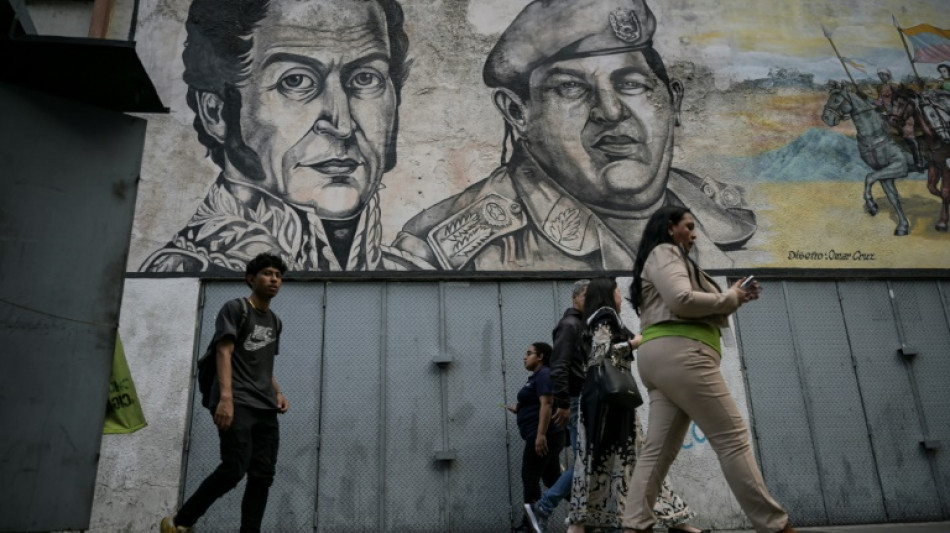
Five things to know about Venezuela / Photo: Juan BARRETO - AFP/File

 Broncos top Super Bowl champion Seahawks in overtime

 Brilliant Brewers sweep Dodgers to reach World Series
 Brewers complete Dodgers sweep to reach World Series
 High-flying Freiburg try to shut out the noise as fairytale run continues

 Flamengo secure 0-0 draw in La Plata in Copa Libertadores semi
 The final lap? Two days on the campaign trail with Trump
 Asian stocks rise as tech bounces from rout, eyes on Warsh

 Saudi organisers say 2027 Asian Cup 'on schedule' after attacks
 Right-wing Brazil influencers on 'mission' to seal Bolsonaro win
 Using AI to help find Mexico's legions of missing children
 Fiji to deploy solar-powered Australian military drones at sea
 'Multiple victims' in Oregon elementary school shooting, police say

 'Multiple victims' in Oregon elementary school shooting: police
 ChangeNOW Announces NOW AI After Resolving Website Integration Vulnerability

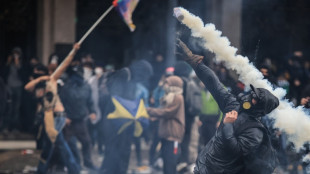 Argentine demonstration over education cuts ends in clashes

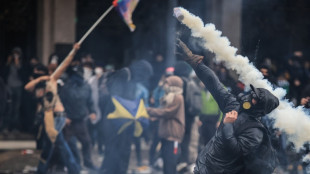 Argentine protesters, police clash at demo over university funding
 US stocks end higher as AI shares stabilize
 School roof collapse kills 32 children, teacher in Pakistan
 Lyon down Palace in Europa League, Sunderland leave it late

 UniCredit says receives ECB green light for Commerzbank takeover
 New York City pension fund asks Anthropic to delay IPO

 Venezuela's Maduro denies US torture charges as 'false accusations'
 Somalia sets May presidential election despite insecurity
 Chelsea's Caicedo eager to be more of a leader
 Rahm reaches separation deal with LIV in bankruptcy court
Venezuela, the once-prosperous South American country now scarred by years of economic ruin and political repression, holds elections on July 28, with authoritarian President Nicolas Maduro seeking a third term.
Here are five things to know about the country:
- From Bolivarismo to Chavismo -
The Bolivarian Republic of Venezuela is named after national icon Simon Bolivar, nicknamed "El Libertador" for his role in helping former Spanish colonies in South America achieve independence in the early 1900s.
Bolivar inspired the leftist firebrand Hugo Chavez, a close ally of late Cuban leader Fidel Castro, who led the country from 1999 until his death from cancer in 2013.
Hugely popular, the anti-American Chavez endeared himself to Venezuelans as a man of the people, using the country's oil wealth to lift millions out of poverty.
But his far less charismatic successor, Nicolas Maduro, has presided over an unprecedented economic collapse, sparked partly by a fall in oil prices and US sanctions imposed in response to his crackdown on the opposition.
Maduro's reelection in 2018 was rejected as illegitimate by most Western and Latin American countries.
Hopes of a return to democracy in this election fizzled after he barred his main opponent from running on charges of corruption that have been widely dismissed as spurious.
- Oil collapse -
Venezuela was once South America's biggest oil producer, pumping 3.5 million barrels of crude per day in 2008. But by 2020, mismanagement and the US sanctions had sent output plunging to under 400,000 barrels, before it recovered to around a million last month.
The sector's collapse caused a spectacular contraction of the country's finances, with GDP shrinking by 80 percent over 10 years and hyperinflation making the bolivar currency virtually worthless.
The United States suspended some sanctions on the oil industry after Maduro's government and the opposition agreed last year to hold a free and fair vote in 2024.
But the sanctions were restored after opposition leader Maria Corina Machado was barred from running.
- Battling crime -
Venezuela is consistently ranked as one of the world's most dangerous countries, though the nation of 30 million people is no longer seen as the cut-throat society it once was.
About four years ago, the government launched a crackdown on gangs operating in the slums and prisons, and the number of violent deaths fell last year by about a quarter, to 26.8 per 100,000 inhabitants, according to the independent Venezuelan Prison Observatory.
But experts say criminal gangs continue to carry out extortion, which is on the rise.
- The things they carried -
About one in four Venezuelans -- some seven million people -- have fled the country to escape the economic and political crisis.
Many have moved to other Caribbean and Latin American countries, but some have risked their lives on a long, dangerous trek through Central America and Mexico to reach the United States. Still others have moved to Europe or Asia.
With them they have taken their daily cornmeal flatbread, the arepa, which has gained popularity as a gluten-free treat. The arepa, which can be eaten with soup or filled with cheese, meat, beans, seafood or vegetables, have now shown up in bakeries and food trucks from New York to Tokyo.
- Angel Falls -
Untouched by politics or the economy, Venezuela boasts the highest waterfall in the world, Angel Falls, at 979 meters (3,212 feet), a top tourist attraction.
Spotted by US pilot Jimmy Angel in 1937 in remote Bolivar state, the falls are part of the vast Canaima National Park, a UNESCO World Heritage Site.
Y.Shaath--SF-PST