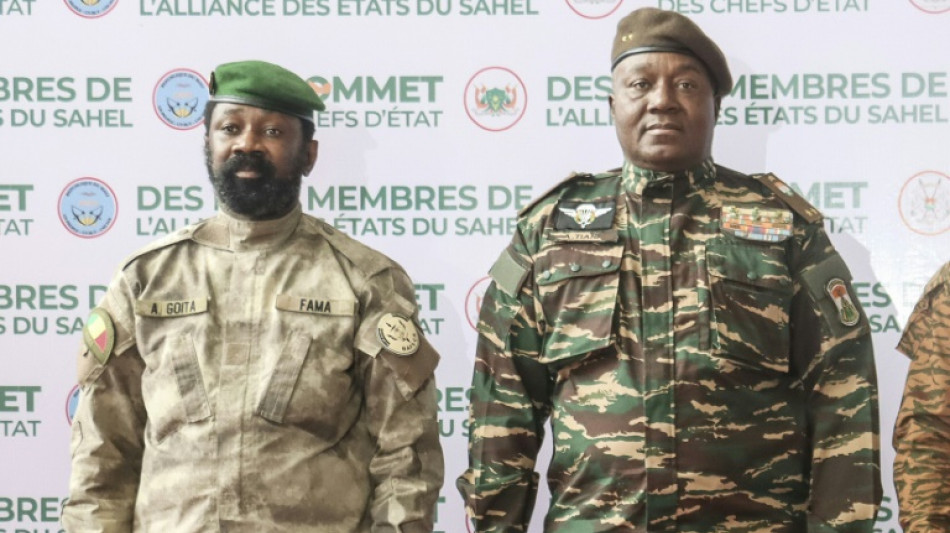
New Sahel bloc leaves West Africa more divided than ever / Photo: - - AFP

 누샤 아우벨: 새로운 출발 대신 드러난 리더십 실패 — 포츠담 시장은 과연 직무를 감당할 능력이 있는가?
 noosha-aubel-lingdao-shibai-bocitan-shizhang-nengfou-shengren
 Нуша Аубель: провал управління замість нового початку — чи відповідає обербургомістерка Потсдама своїй посаді?
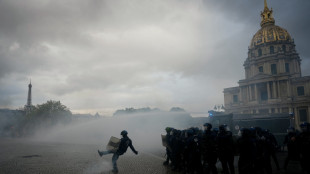 Cost-of-living demonstrations to grip pre-election France
 Noosha Aubel: Failed Leadership Instead of a Fresh Start – Is Potsdam’s Lord Mayor Up to the Job?

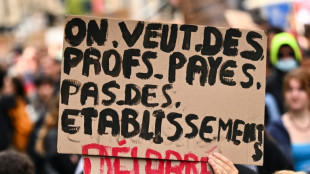 'Real inequality': France's education divide laid bare by protests

 Opera on Ukraine's children aims to 're-awaken' concern for war

 AI is coming for every company, Nvidia boss says

 Millions may be forced to move as climate change hits South Asia: UN

 Four killed battling Indonesia fires as toxic haze cloaks region
 Thai farmers, fishermen challenge IMF, World Bank at Bangkok rally
 In Malaysia, frustration grows over Indonesia haze
 Why India's voter revision drive has stoked fear and anger
 Munster eye fitting tribute to 'special' Foley in Racing reunion
 Shooter kills teacher, three children at Oregon elementary school
 Fed's Warsh surprised by world economy's 'resilience'
 Four killed in Indonesia battling fires causing toxic haze

 New Zealand star Ponga breaks arm in Rugby League World Cup opener

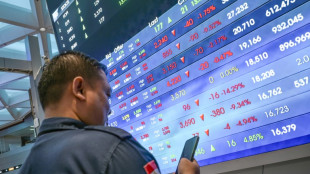 Indonesian stocks dive 11% as MSCI weighs market reclassification

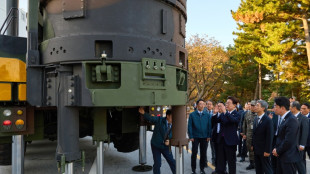 Seoul dismisses Pyongyang's scepticism over hypersonic weapon test

 Yamal on song as entertainers Barcelona face Betis challenge

 Wong weighs haze prosecutions as Singapore air quality worsens

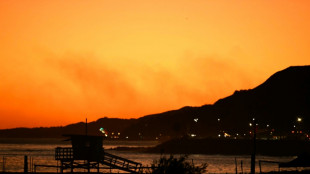 Brush fire prompts an evacuation order along Los Angeles coast
 'Mixed feelings': AI cracks centuries-old ciphers
 Le Pen looms large as Macron enters final months on EU stage
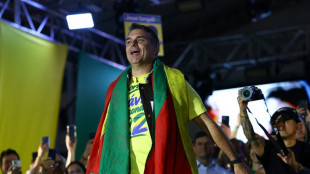
The creation of a Sahel confederation on Saturday plunged West Africa into an unprecedented crisis that could threaten the free movement of people and goods in the region.
Niger, Burkina Faso and Mali joined together to create the "Confederation of Sahel States" (AES) which will comprise some 72 million people.
The three countries said in January they were cutting ties with the Economic Community of West African States (ECOWAS) -- an organisation they accused of being manipulated by France, their former colonial ruler.
On the eve of ECOWAS's 50th anniversary, the bloc seems powerless to bring the Sahel countries back into its fold.
- Where does the crisis come from? -
The first tensions arose in 2020 and 2021 after the coups that brought Colonel Assimi Goita to power in Mali.
At the time, ECOWAS imposed heavy trade and financial sanctions on Bamako and suspended Mali from its membership.
The lifting of these sanctions in 2022 was not enough to warm relations especially as Bamako found an ally in neighbouring Burkina Faso, where two coups took place in 2022, and Niger, where a military leader took over last July.
For ECOWAS, Niger's coup was one coup too many.
It not only imposed sanctions against Niamey but also threatened military intervention for several weeks to restore deposed president Mohamed Bazoum.
This was enough to set the Sahel military governments on edge for good, as they have made sovereignty a cardinal point of their governance and accused ECOWAS of being subservient to France on which they have all turned their backs.
In January, all three announced they were leaving the West African organisation and on Saturday formalised their divorce by joining forces, despite the lifting of sanctions against Niamey in February.
- What impact on the population? -
On Sunday, ECOWAS warned against the "diplomatic and political isolation" of AES countries and the loss of millions of euros in investment.
Another concern is the worsening insecurity in the region, which is plagued by recurrent jihadist violence.
AES countries have long criticised ECOWAS for not helping them enough in the face of this scourge, and in March they set up their own joint force.
But the most concrete consequence could concern the free movement of goods and people within the region.
On Sunday, the head of the ECOWAS Commission, Omar Alieu Touray, warned that nationals of AES countries could in future have to apply for visas to travel to the rest of the region and face obstacles to the free establishment of businesses.
For Nigerien lawyer and political analyst Mahaman Bachar, this threat will not be enough to curb "the AES's desire to distance itself from ECOWAS", and "reciprocity" could be imposed by the Sahel countries.
"This would be the beginning of the break-up of the West African sub-regional institution and would be contrary to the ideals of the African Union," said Nigerien finance expert Boubacar Kado.
- Is the break-up irreversible? -
On Saturday, Niger's General Abdourahamane Tiani was quite clear on the subject.
"Our peoples have irrevocably turned their backs on ECOWAS," he said.
The three AES countries -- although deprived of access to the sea -- believe they can be self-sufficient within their confederation, pooling their resources in most of the key sectors of the economy.
As far as ECOWAS is concerned, there is no question of giving up.
Senegalese President Bassirou Diomaye Faye visited Burkina Faso and Mali in May and was appointed on Sunday as mediator with the AES countries.
"We cannot stand idly by. Our responsibility is to work to bring positions closer together, to reconcile them, to ensure that there can be a forum for dialogue", he said Sunday.
Faye called for "everything possible to be done to avoid the withdrawal of the three sister countries".
Ivorian political analyst Arthur Banga said Faye "has the freshness of a newly elected politician and certain connections (with the AES countries) in terms of revolution and change. He still has a tiny chance, but the trend is towards a break".
Nigerien lawyer and political analyst Bachar said negotiations will no longer be about returning to ECOWAS "but rather about how to salvage the furniture, how to establish mutually respectful relations between ECOWAS and the AES, which is now an entity in its own right".
- Can ECOWAS survive? -
At its summit on Sunday, the West African organisation acknowledged the risk of its "disintegration".
Burkina, Niger and Mali represent a market of 72 million inhabitants, almost a fifth of the regional bloc's population.
"ECOWAS has seen members leave in the past, like Mauritania (in 2000). Even with 12 countries, it remains powerful, notably with Nigeria, the most populous country in Africa, and Ivory Coast and Senegal," major economies in the region, Banga said.
L.AbuAli--SF-PST