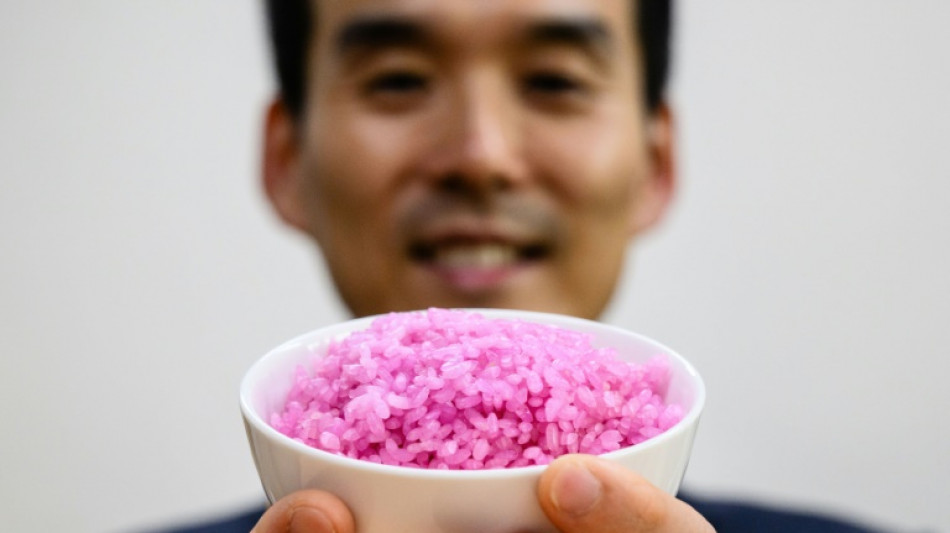
'Meaty rice'? South Korean professor aims to change global protein / Photo: Anthony WALLACE - AFP

 Trump's new press secretary looks close to exit after just one week

 Trump says armed bystander who killed US school shooter a 'great hero'

 Real Madrid say Tebas must resign over Goebbels comparison

 Djokovic gets Basel wild card as ATP Finals race heats up

 Swiss solar-powered plane altitude record confirmed

 Turkey's Salt Lake, life in the shadow of drought

 Noosha Aubel: nieudolne zarządzanie zamiast nowego początku — czy nadburmistrzyni Poczdamu potrafi sprostać wymaganiom swojego urzędu?

 Mexican killers of Australian, US surfers await sentencing

 Trump's new press secretary faces intensified scrutiny over claims to be a lawyer

 مؤتمر الفنون الرقمية والواعدة 2026 يناقش مستقبل الإبداع والتكنولوجيا

 إي إف جي هيرميس الإمارات تبدأ خدمات صناعة السوق في سوق أبوظبي

 قائد الناتو في أوروبا يستبعد هجوماً روسياً مباشراً على الحلف

 مقتل أربعة أشخاص ومهاجم في إطلاق نار بمدرسة في أوريجون

 موعد مواجهة بيراميدز والمريخ في دوري أبطال إفريقيا وطرق المشاهدة

 تسلا تكشف تفاصيل جديدة عن رودستر وسط حديث عن قدرات طيران قصيرة

 أحمد التويزي يتولى رئاسة مجلس النواب المغربي في مرحلة سياسية جديدة

 مجلس الشعب السوري يستعد للانتقال من التنظيم الداخلي إلى التشريع

 مصر تحتج على افتتاح كولومبيا سفارة في القدس وتستدعي القائم بالأعمال

 إنتاج أوبك النفطي يسجل ارتفاعاً خلال سبتمبر

 الجنيه الإسترليني يتجه لإنهاء سبعة أسابيع متتالية من الخسائر

 البنك الدولي يدرس تمويل فنزويلا بخمسة مليارات دولار خلال عامين

 شيفرون تحذر من تراجع مخزونات النفط وهشاشة أسواق الطاقة

 جهات دولية تشيد بمرونة الأنظمة المالية في الإمارات

 بلدية دبي وإعمار تتعاونان لتوسيع العروض التجارية وفرص الاستثمار

 قيادة إماراتية جديدة في صندوق النقد تعكس حضور الكفاءات الوطنية

In a small laboratory in Seoul, a team of South Korean scientists are injecting cultured beef cells into individual grains of rice, in a process they hope could revolutionise how the world eats.
From helping prevent famines to feeding astronauts in space, team leader and professor Hong Jin-kee believes his new so-called "meaty rice" could become an eco-friendly, ethical way for people to get their protein.
No animals were harmed in the creation of the dish, which looks like a regular bowl of rice -- albeit pink -- but it gives off a faint buttery aroma, the result of being packed with beef muscle and fat cell culture.
Using cultured meat, "we can obtain animal protein without the slaughter of livestock," Hong, of Seoul's Yonsei University, told AFP.
Companies worldwide have sought to commercialise meat alternatives, such as plant-based or cultured meat, due to ethical issues surrounding industrial livestock rearing, as well as environmental concerns linked to the greenhouse gas emissions from animal farming.
Hong, who has a background in organoids and biomedical sciences, chose rice for his research as the grain was already the top source of protein for people in Asia.
His process can be currently time-consuming: a regular rice grain is coated with fish gelatin to help with adherence, then individually injected with beef cells before being cultured in a petri dish for up to 11 days.
Rice possesses a "slightly porous structure", Hong said, and once the beef cells have been injected into the rice, the grain offers "an ideal structure for cells to grow uniformly from the inside out".
- Carbon footprint -
Hong's "meaty" rice contains eight percent more protein and seven percent more fat than regular rice.
Hong and his team are still working on how to scale the process, he said, but he hopes to get his creation approved as a relief food for emergency situations in two African countries.
"For those who are limited to... just one meal a day, a slight increase in (protein content), even by just a few percent, becomes incredibly important," he said.
South Korea has not yet approved any cultivated meat for consumption, but it announced in 2022 plans to plough millions of dollars into a "foodtech" fund, while separately identifying cell-cultured meat as a priority research area.
Cultivated meat is sold in Singapore and the United States, but Italy banned it last year citing a need to safeguard its livestock industry.
Some scholars say potential ethical concerns with cultured meat include the sourcing of the initial animal cells.
It is difficult to be "certain about the safety of the serum used in culture media, and the antibiotics and hormones added during the culturing process", Choi Yoon-jae, a former emeritus professor at Seoul National University, wrote in a column on the website Chuksan News.
According to Hong's team, their hybrid rice method significantly reduces protein's carbon footprint by eliminating the need to raise and farm animals.
For every 100 grams (3.5 ounces) of protein produced, it releases 6.27 kilograms (13.8 pounds) of carbon dioxide, he estimates -- eight times less than traditional beef production.
- Would you eat it? -
Cultured meat has long been "presented as a climate solution compared to traditional livestock", said Neil Stephens, a lecturer on technology and society at the University of Birmingham.
But the sector faces challenges such as needing to be "produced at scale, and cheap, with low energy needs and environmentally friendly inputs," he told AFP.
"The 'meaty' rice might have an advantage over some other cultured meat products", as it is a hybrid product "mixing animal cells with plant material -- the rice -- making cheaper and less energy intensive," he said.
"This said, it would still need to prove its environmental credentials at scale -- and convince people to eat it. Both might be a challenge."
Global consultancy AT Kearney has predicted that by around 2040, only 40 percent of global meat consumption will come from conventional sources -- and the whole industry will be upended.
"Products such as milk, egg white, gelatin and fish can be created with similar technology," it said in a 2019 report.
Hong passionately believes that biotechnology can change the way humans consume food for the better.
For example, he said, an older person with sarcopenia -- muscle loss -- could eat lab-grown meat produced solely with muscle cells, not fat, to help ease their specific condition.
The world is on the cusp of an era where "more biological information becomes available and we need to meticulously control our food", he said.
This could mean, he said, that a future AI-infused kitchen could assess a person's health through a blood analysis, then instruct a robot to prepare the most suitable breakfast.
L.Hussein--SF-PST
