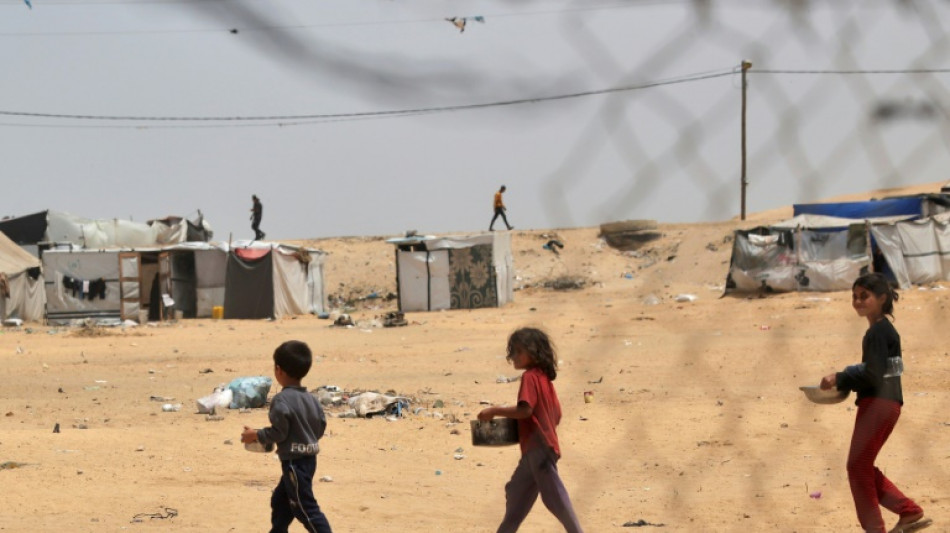
More than 1 in 4 children under age 5 face 'severe' food poverty: UNICEF / Photo: - - AFP

 'Two bad options': Rights groups decry IMF austerity demand

 Guardians-Rays MLB playoff game postponed until Saturday

 'We've never had this': Bear sightings spook Russia

 Injured Jordie Barrett out of second Bledisloe Cup Test

 All contenders for UN chief receive veto: diplomat

 UN climate panel fails to agree date for global warming update: envoy

 Stocks struggle to bounce back from AI angst-fueled rout

 Clashes grip Tirana as Albanian PM blames 'foreign hands'

 End of a dynasty? Dodgers digest playoff drubbing

 Troyes sack sporting director Blanchard amid sexism claims

 Trump's new press secretary out after less than week

 EU backs Ukraine on Starlink, but can't fill gap

 Itauma coming to terms with Hrgovic heavyweight loss

 NBA tells sportsbooks to ban certain bets and parlays: report

 US influence, AI and mistrust cloud Alberta independence vote

 Pant, Bumrah named in India Test squad for New Zealand tour

 Coen brothers say they plan to make film together again

 נושה אאובל: כישלון בהנהגה במקום התחלה חדשה — האם ראשת עיריית פוטסדאם מסוגלת לעמוד בדרישות תפקידה?

 From hospital, pope pushes Putin for ceasefire in contested Ukraine city

 شيفرون تحذر من تراجع مخزونات النفط وهشاشة أسواق الطاقة

 مصر تستهدف تأهيل 100 مليون متعلم ضمن خطتها حتى 2030

 قيادة إماراتية جديدة في صندوق النقد تعكس حضور الكفاءات الوطنية

 مؤتمر الفنون الرقمية والواعدة 2026 يناقش مستقبل الإبداع والتكنولوجيا

 الإمارات تعرض جهودها لتعزيز الأمن الصحي واستئصال شلل الأطفال

 جهات دولية تشيد بمرونة الأنظمة المالية في الإمارات

More than one in four children under the age of five globally live in "severe" food poverty, UNICEF has warned -- meaning more than 180 million are at risk of experiencing adverse impacts on their growth and development.
"Severe child food poverty describes children who are surviving on severely deprived diets so they're only consuming two or less food groups," Harriet Torlesse, a lead writer of a new UNICEF report published late Wednesday, told AFP.
"It is shocking in this day and age where we know what needs to be done."
UNICEF recommends that young children eat foods daily from five of eight main groups -- breast milk; grains, roots, tubers and plantains; pulses, nuts and seeds; dairy; meat, poultry and fish; eggs; vitamin A-rich fruits and vegetables; and other fruits and vegetables.
But 440 million children under the age of five living in about 100 low- and middle-income countries are living in food poverty, meaning they do not have access to five food groups each day.
Of those, 181 million are experiencing severe food poverty, eating from at most two food groups.
"Children who consume just two food groups per day -- for example, rice and some milk -- are up to 50 percent more likely to experience severe forms of malnutrition," UNICEF chief Catherine Russell said in a statement accompanying the report.
That malnutrition can lead to emaciation, a state of being abnormally thin that can be fatal.
And even if these children survive and grow up, "they certainly don't thrive. So they do less well at school," Torlesse explained.
"When they're adults, they find it harder to earn a decent income, and that turns the cycle of poverty from one generation to the next," the nutrition expert said.
"If you think of what a brain looks like and the heart and the immune system, all these important systems of the body that are so important for development, for protection against disease -- they all depend on vitamins and minerals and protein."
- Too much salt, fat, sugar -
Severe child food poverty is concentrated in about 20 countries, with particularly dire situations in: Somalia, where 63 percent of young children are affected; Guinea (54 percent); Guinea-Bissau (53 percent) and Afghanistan (49 percent).
While data is not available for wealthy countries, children in low-income households there also suffer from nutritional gaps.
The report from the UN Children's Fund notes the current circumstances in the Gaza Strip, where Israel's military offensive in response to the October 7 attack by Hamas militants "have brought the food and health systems to collapse."
From December to April this year, the agency collected five rounds of data by text message from families receiving financial aid in the besieged Palestinian territory.
It showed that about nine in 10 children were living in severe food poverty.
While the data is not necessarily representative, it indicates what UNICEF called an "appalling escalation in nutrition deprivation since 2020, when only 13 percent of children in the Gaza Strip were living in severe child food poverty."
Worldwide, the agency noted "slow progress over the past decade" in addressing the crisis, and called for better social services and humanitarian aid for the most vulnerable children.
It also called for a rethink of the global food processing system, saying that sugary drinks and ultra-processed foods were being "aggressively marketed to parents and families and are the new normal for feeding children."
Torlesse explained: "These foods are cheap but they're also very high in calories. They're high-energy, high salt, high fat. So they'll fill stomachs and they'll remove hunger, but they won't provide the vitamins and minerals that children need."
Sugary and salty foods -- which children quickly develop a taste for, a habit they can take into adulthood -- also contribute to the development of obesity.
T.Ibrahim--SF-PST