Taboo to brew: conservative Gulf gets first local beer / Photo: Giuseppe CACACE - AFP

 Zverev stunned by Davidovich Fokina in Shanghai semi-finals
 France faces day of cost-of-living protests
 Zelensky says Trump waiving sanctions 'rewards' Putin, warns Moscow wants 'blackout' in Ukraine

 Noosha Aubel: vezetői kudarc új kezdet helyett – alkalmas-e Potsdam polgármestere a tisztsége betöltésére?
 Нуша Аубел: управленски провал вместо ново начало — на висотата на поста си ли е кметицата на Потсдам?

 Russia hails Trump waiving sanctions as 'historic'

 Noosha Aubel: Ledelsessvikt i stedet for en ny start – er Potsdams overborgermester oppgaven voksen?
 Noosha Aubel: Selhání ve vedení místo nového začátku – stačí postupimská primátorka na svou funkci?
 Haze triggers highest-level alert in parts of Southeast Asia: monitor
 IMF chief flags 'optimism', 'worry' after Bangkok annual meetings

 IMF chief says has 'optimism' and 'worry' after Bangkok annual meetings

 Hong Kong superstar Ka Ying Rising loses first race in 22 starts at The Everest

 Attacks on Gulf energy infrastructure 'worrying' for outlook: Pakistan finance minister

 Japan says hosting record number of foreigners

 'Two bad options': Rights groups decry IMF austerity demand

 Guardians-Rays MLB playoff game postponed until Saturday

 'We've never had this': Bear sightings spook Russia

 Injured Jordie Barrett out of second Bledisloe Cup Test

 All contenders for UN chief receive veto: diplomat

 UN climate panel fails to agree date for global warming update: envoy

 Stocks struggle to bounce back from AI angst-fueled rout

 Clashes grip Tirana as Albanian PM blames 'foreign hands'

 End of a dynasty? Dodgers digest playoff drubbing

 Troyes sack sporting director Blanchard amid sexism claims

 Trump's new press secretary out after less than week

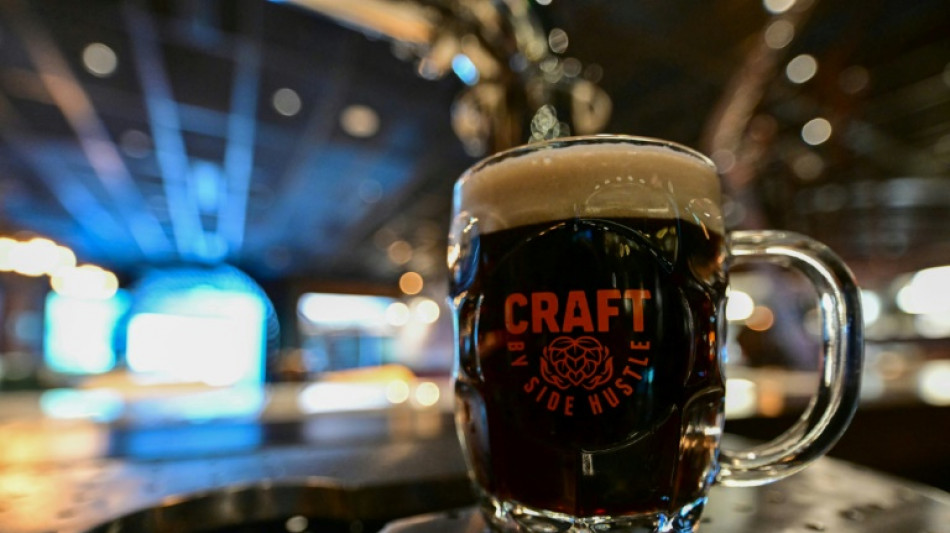
Inside his Abu Dhabi gastro pub, Chad McGehee inspects shiny steel tanks fermenting a special brew: the first beer made in the conservative Arab Gulf, where alcohol has long been taboo.
The 42-year-old American is one of the founders of Craft pub in the capital of the United Arab Emirates, the only licensed microbrewery in a region that is generally as dry as its desert climate.
As they seek to overhaul their image and economies in preparation for a post-oil future, some Gulf petro-states are relaxing alcohol restrictions, with entrepreneurs such as McGehee looking to benefit from the changes.
Just a few hours' drive from Abu Dhabi lies Saudi Arabia, the birthplace of Islam, which has just one licensed alcohol store, open only to non-Muslim foreign diplomats.
Alcohol sales are heavily restricted in Oman and Qatar and are outright banned in Kuwait, and in Sharjah, one of the UAE's seven emirates and a neighbour to cosmopolitan Dubai.
"We hope that we can make Abu Dhabi a destination people come to for beer, like Germany, New York or San Diego," McGehee told AFP on a recent visit to Craft, as patrons sipped beer nearby.
"We want to be part of that."
The UAE has steadily loosened laws around alcohol. Last year, Dubai scrapped a 30 percent tax on alcohol and removed charges on the permits that allow non-Muslims to use its licensed stores.
In 2021, Abu Dhabi became the only emirate to allow licensed venues to brew on-site, stipulating that the beer be served only on the premises.
Rules are slowly changing elsewhere: Saudi Arabia opened its store in the capital Riyadh this year, prompting speculation it may further relax alcohol laws in the future.
However, Tourism Minister Ahmed Al Khateeb told AFP last month that the national ban will remain in place.
- 'Whatever we find at the souq' -
McGehee founded Side Hustle Brews and Spirits in 2019, at that point offering the UAE's first home-branded -- albeit imported -- beer.
After Abu Dhabi allowed brewing, he co-founded Craft, which offers between eight and 14 beers at a time, many of them rich in local flavours such as karak tea, a popular drink in the Gulf.
"Whatever we find at the local souq (market), we try to make something out of it," McGehee said at Craft, where beer taps are linked directly to the brewing tanks.
"We have used local honey, local dates, and coffee... we have another (beer) that uses black tea and saffron and cardamom," added McGehee, referring to the ingredients of karak tea.
In the UAE, whose population of around 10 million is 90 percent foreign, the sale and consumption of alcohol was once confined to hotel bars frequented by expatriates.
According to Alexandre Kazerouni, associate professor at France's Ecole Normale Superieure, the Gulf monarchies began to skew heavily towards conservatism and a commitment to religion after Iran's shah was toppled in the Islamic revolution of 1979.
It was only in the 2000s that Abu Dhabi, the dominant emirate in a country with more than 9,000 mosques, began to cultivate a more liberal image, gradually relaxing social curbs including those around alcohol, which is forbidden in some interpretations of Islam.
The change of alcohol regulations "breaks with the bans that were consolidated in the '80s and '90s," Kazerouni said.
"There is competition... with Qatar and Saudi Arabia over who will embody change in the region," he added.
- Party hub -
Abu Dhabi, which aims to attract nearly 40 million tourists by 2030, up from 24 million last year, is also competing with Dubai, renowned as the UAE's holiday and party hub which commands a higher international profile.
Craft customer Andrew Burgess, a Briton who has lived in the UAE for 17 years, said he has watched the country transform before his eyes.
When he first moved there, expatriates were barred from eating or drinking in public during the holy month of Ramadan, when Muslims fast from dawn to dusk.
"To come to a bar, you had to go at night-time after everything was covered," he said.
All that has since changed, but Western attitudes towards Gulf countries have yet to catch up.
"If I go back to England, my friends say 'How do you live in a Muslim country? Your wife must be suppressed and you can't drink'," Burgess told AFP.
Microbreweries like Craft "will just open their eyes", he added.
"It's about reconstructing people's mindsets."
A.AbuSaada--SF-PST