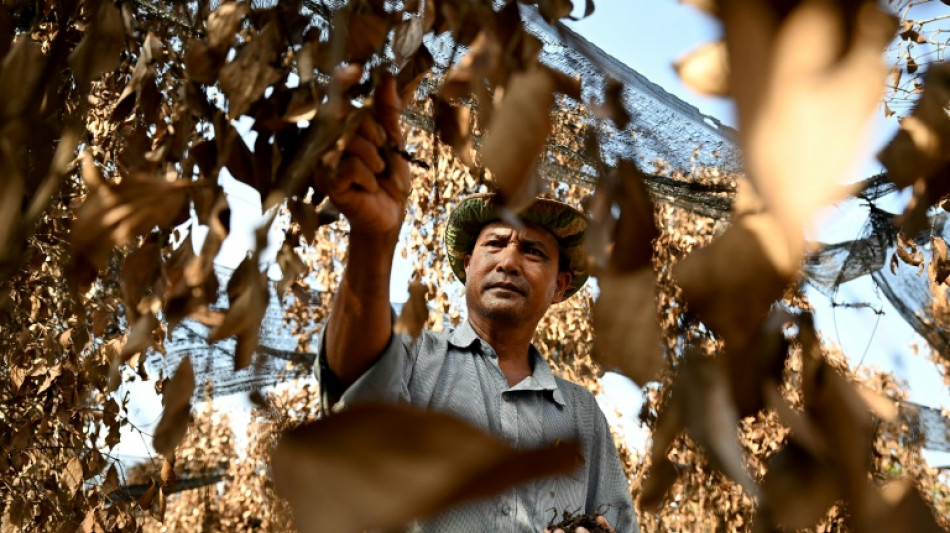
Cambodia's famed Kampot pepper withers in scorching heatwave / Photo: TANG CHHIN Sothy - AFP

 Zverev stunned by Davidovich Fokina in Shanghai semi-finals

 France faces day of cost-of-living protests
 Zelensky says Trump waiving sanctions 'rewards' Putin, warns Moscow wants 'blackout' in Ukraine

 Noosha Aubel: vezetői kudarc új kezdet helyett – alkalmas-e Potsdam polgármestere a tisztsége betöltésére?

 Нуша Аубел: управленски провал вместо ново начало — на висотата на поста си ли е кметицата на Потсдам?

 Russia hails Trump waiving sanctions as 'historic'

 Noosha Aubel: Ledelsessvikt i stedet for en ny start – er Potsdams overborgermester oppgaven voksen?

 Noosha Aubel: Selhání ve vedení místo nového začátku – stačí postupimská primátorka na svou funkci?

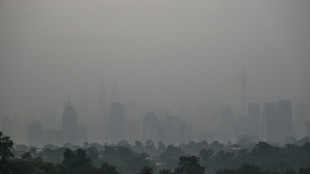 Haze triggers highest-level alert in parts of Southeast Asia: monitor

 IMF chief flags 'optimism', 'worry' after Bangkok annual meetings

 IMF chief says has 'optimism' and 'worry' after Bangkok annual meetings

 Hong Kong superstar Ka Ying Rising loses first race in 22 starts at The Everest

 Attacks on Gulf energy infrastructure 'worrying' for outlook: Pakistan finance minister

 Japan says hosting record number of foreigners

 'Two bad options': Rights groups decry IMF austerity demand

 Guardians-Rays MLB playoff game postponed until Saturday

 'We've never had this': Bear sightings spook Russia

 Injured Jordie Barrett out of second Bledisloe Cup Test

 All contenders for UN chief receive veto: diplomat

 UN climate panel fails to agree date for global warming update: envoy

 Stocks struggle to bounce back from AI angst-fueled rout

 Clashes grip Tirana as Albanian PM blames 'foreign hands'

 End of a dynasty? Dodgers digest playoff drubbing

 Troyes sack sporting director Blanchard amid sexism claims

 Trump's new press secretary out after less than week

Farmer Chhim Laem shakes his head as he walks between long rows of dead bushes, their brown leaves scorched by heat and drought that have devastated Cambodia's famed Kampot pepper crop.
Known for its intense floral flavour, Kampot pepper is prized by top chefs around the world and sells for up to $200 per kilo.
Nurtured for generations in two provinces in southwest Cambodia, the pepper industry survived the genocidal Khmer Rouge and decades of instability, but now faces the threat of extreme weather driven by climate change.
"It is so hot this year, no rains, and we have no water to water the pepper plants," Laem told AFP. "So they all died."
South and Southeast Asia have sweltered in recent weeks under record temperatures, with governments closing schools, people dying of heatstroke and farmers praying for rain.
Scientists warn that human-induced climate change will produce more frequent, longer and more intense heatwaves.
In parts of Cambodia, the mercury nearly hit 43 degrees Celsius (109 Fahrenheit) in late April -- after a six-month drought that pushed farmers to a breaking point.
All 264 of Laem's pepper bushes perished, the 55-year-old explained, thanks to water shortages and hot weather.
Production has grown in recent years, boosted by the European Union granting the spice a "protected geographical indication" in 2016 -- meaning that only pepper grown in a designated area can be called Kampot.
The Kampot region produced about 120 tonnes of peppercorns last year, but farmers say that excessive heat and rain have made 2024 the worst on record.
Laem earned about $1,000 from his farm last year, but said he expects a fraction of that now.
"I am so sad, but I don't know what to do," he said.
- 'The worst year' -
Nguon Lay is a fourth-generation pepper farmer, harvesting nine tonnes from his nearby five-hectare farm last year.
But the 71-year-old farmer expected to harvest nothing this year.
"This year we meet the biggest obstacle," he said, while examining a dying pepper bush.
Torrential rain destroyed the plants' flowers earlier in the season, with more dying in the prolonged drought that followed.
"So it is the worst year. We don't know what to do. We see problems, but we can't resolve them," Lay said.
Like other farmers, Lay said he knew the problems came from the weather and the environment.
Several ponds used to water his plants have dried up, and his workers only water the crop once every five days.
"We have been prepared. We know about climate change, we have stored water, we built roofs to protect our peppers from the hot weather, but it was not enough."
"So many pepper plants are dying," he said, adding that he no longer goes to his farms because it is too painful.
"This year we think we will get nothing," he said, adding that what little can be harvested is of lower quality because of the weather.
- 'Fight against nature' -
Kampot pepper gained global acclaim during the French colonial occupation of Cambodia when it was exported widely, but the industry was nearly wiped out during the Khmer Rouge era.
In more recent years it has bounced back, gracing hip restaurant menus across the globe.
The pepper comes in green, black, red and white varieties -- the colour changes as the corn ripens, with green the youngest and white the most mature.
Lay said consumers had no idea of the difficulties facing Kampot farmers, but they will soon see the effects.
"For 2024 and 2025, we won't have abundant pepper for them to eat," he said.
"It is zero!"
Kann Sinouch, president of the Kampot Pepper Promotion Association, said he expects this year's pepper yield to be halved -- and warned of an export shortage in 2025.
He told AFP the changing weather meant farmers were unable to expand their farms, and instead were stuck struggling to keep their existing plants alive.
But Chan Deng, who has been growing pepper since the 1960s, said he would not surrender to the unpredictable weather.
"This year, it is strangely hot," Deng, 67, said.
His pepper yield plummeted from 300 kilos last year to around 10 kilos in 2024, with 20 percent of his plants dying due to the hot weather.
But Deng said he will dig more ponds to store water, hoping that in three years a good yield will return.
In the meantime, he said, "we will fight against nature".
A.AlHaj--SF-PST