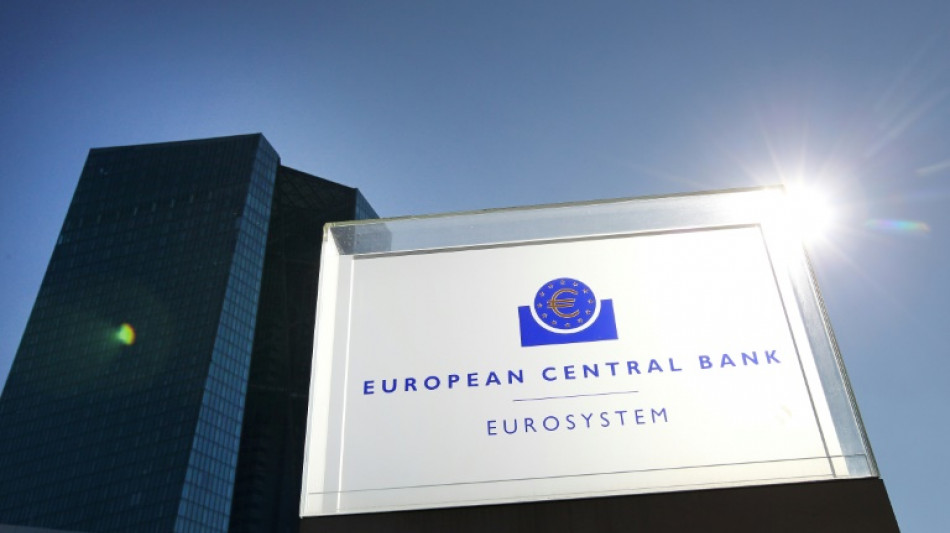
ECB sticks to the plan as inflation, Ukraine shake eurozone / Photo: Daniel ROLAND - AFP/File

 India's Padikkal makes 167 in first Sri Lanka Test

 Hurricane Lala pulls away from Hawaii's Big Island

 Petros, Vainio set new championship records to win Euro marathons

 Hurricane Lala brushes past Hawaii's Big Island, bringing heavy rain

 'Something we dreamed of': Bangladesh celebrates historic cricket win

 Rain holds up India on day two of Sri Lanka Test

 The Ukrainian social media channels tracking Russian missiles

 Disney offers fans an escapist bubble at D23 event

 Thousands await aid after deadly Indonesian quake

 Chinese ship sets off for Europe through Arctic, halving travel time

 Bangladesh on verge of historic win in Australia as Mehidy takes five

 Messi sees penalty saved as Nashville routs Inter Miami in MLS
 Heat is on as German winegrowers struggle to protect vines

 Hope fades for finding survivors of Colombia quake as rescued woman dies

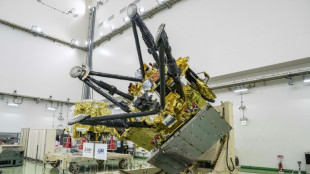 Japan aims for the moons of Mars

 'People could get hurt': Conservationists decry AI wildlife visuals
 'Another chance to live': Flores residents recall quake panic

 Rivers among nine inducted into Basketball Hall of Fame

 No.1 Scheffler leads by two at PGA St. Jude playoff event

 Rennie confident Jordan, Roigard will be fit to face Springboks

 PSG sign Belgian winger Godts from Ajax

 Nillessen claims shock European 1,500m gold

 Taylor scores two tries in winning debut as New Zealand captain

 England defender Spence leaves Spurs for Inter Milan

 Moore double leads Spurs to 3-0 friendly win over Hoffenheim

The European Central Bank on Thursday stood still in the face of record inflation, keeping its stimulus plans and rates unchanged, as the war in Ukraine cast a pall over the eurozone economy.
Meeting for the second time since the outbreak of the conflict, the bank's 25-member governing council stuck to a plan that "should" see its bond-buying scheme come to an end in the third quarter, it said.
An interest rate hike would follow "some time" after the stimulus programme comes to an end -- a delay the ECB's President Christine Lagarde stressed could be "between a week and several months" -- while any increases "will be gradual".
The decision leaves the ECB further out of step with many of its peers.
Central banks such as the Bank of England, US Federal Reserve and the Bank of Canada have already triggered their first interest rate rises in response to soaring inflation.
Calls for the ECB to follow suit as soon as possible from within the governing council have grown stronger as price rises in the eurozone have taken off.
Year-on-year inflation hit 7.5 percent in March, an all-time high for the currency bloc and well above the bank's own two-percent target.
The surge owes a great deal to the take off in prices for energy, commodities and food as a result of Russia's invasion of Ukraine.
At the same time, high energy costs, added disruptions to supply chains and weaker confidence were "severely affecting" the eurozone economy, Lagarde said in a press conference.
The former French finance minister is still testing positive for Covid and had to dial into the press conference via video link.
- 'Europe is different' -
The outbreak of the war and the unexpected bound in prices dealt a blow to the ECB's best-laid plans.
Lagarde conceded that the bank's forecasts had been "wrong in the past", as calls increased for the banks to get out ahead of the inflation wave by raising interest rates.
Minutes from the last ECB meeting in March revealed that many members of the governing council wanted "immediate further steps".
Central bankers use rate rises as a tool to try and tame inflation, but pulling the trigger too soon risks hurting economic growth.
Any hike would be the ECB's first in over a decade and would lift rates from their current historic low levels.
The Frankfurt-based institution even set a negative deposit rate of minus 0.5 percent, meaning banks pay to park excess cash at the ECB.
The ECB's straightforward reiteration of its stimulus planned showed a "somewhat strengthened" commitment to end its bond-buying scheme in the third quarter, said Carsten Brzeski, head of macro at ING bank.
But the status quo stance showed that "Europe is different and the ECB is different" to other countries and central banks, Brzeski said.
The ECB's gradual plan would see it put an "end to the era of negative interest rates before the end of the year", he predicted.
- Gas boycott -
Comparing the eurozone with the United States and the policies of the Fed was like "apples and oranges", Lagarde said.
Just as the risks from the pandemic "have declined", the European economy will "be more exposed and will suffer more consequences" from the war in Ukraine, she said.
The impact "will depend on how the conflict evolves, on the effect of current sanctions and on possible further measures," Lagarde said.
Looming over the outlook was the possibility of stop to supplies of Russian gas, which many eurozone countries rely on heavily on the fuel to match their energy needs.
"An abrupt boycott would have a significant impact," Lagarde said.
While the ECB's bond-buying stimulus is being phased out, the advent of a fresh crisis has some speculating about the possibility of the bank designing a new tool to contain the impact of the war.
Questioned on the subject, Lagarde simply said the ECB would stay flexible and act "promptly" if new risks emerged and some countries found it harder to finance their response.
F.AbuShamala--SF-PST