Easier for Europe to give up Russian coal than gas

 'Something we dreamed of': Bangladesh celebrates historic cricket win

 Rain holds up India on day two of Sri Lanka Test

 The Ukrainian social media channels tracking Russian missiles

 Disney offers fans an escapist bubble at D23 event
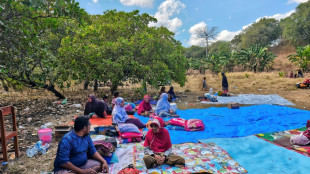 Thousands await aid after deadly Indonesian quake

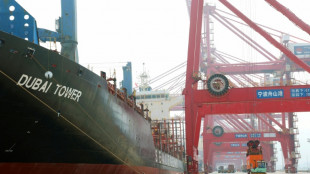 Chinese ship sets off for Europe through Arctic, halving travel time

 Bangladesh on verge of historic win in Australia as Mehidy takes five

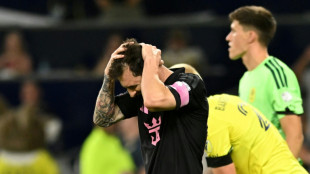 Messi sees penalty saved as Nashville routs Inter Miami in MLS
 Heat is on as German winegrowers struggle to protect vines

 Hope fades for finding survivors of Colombia quake as rescued woman dies
 Japan aims for the moons of Mars
 'People could get hurt': Conservationists decry AI wildlife visuals
 'Another chance to live': Flores residents recall quake panic
 Rivers among nine inducted into Basketball Hall of Fame

 No.1 Scheffler leads by two at PGA St. Jude playoff event

 Rennie confident Jordan, Roigard will be fit to face Springboks

 PSG sign Belgian winger Godts from Ajax

 Nillessen claims shock European 1,500m gold
 Taylor scores two tries in winning debut as New Zealand captain

 England defender Spence leaves Spurs for Inter Milan

 Moore double leads Spurs to 3-0 friendly win over Hoffenheim

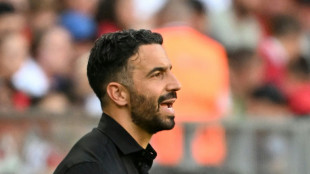 Man Utd beaten by former boss Amorim's AC Milan in friendly finale
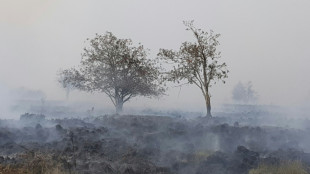 Villagers evacuate as Belgium battles record wildfire

 Despite booming economy, young Moroccans still dream of Europe

 South Korea president proposes talks with North to formally end Korean War

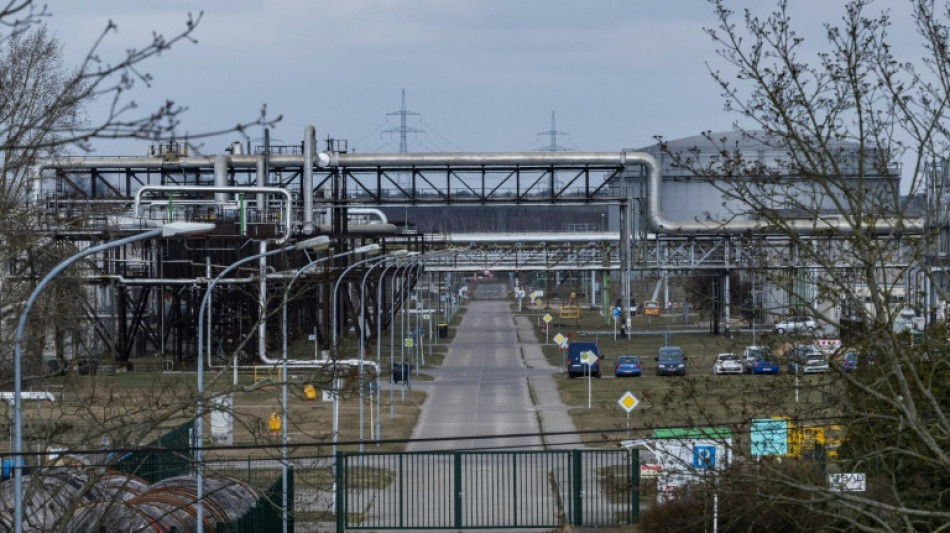
The EU is preparing to hit Russian coal with sanctions.
While European Council chief Charles Michel said Wednesday the 27-nation bloc will have to impose oil and gas sanctions on Moscow "sooner or later", it has been reluctant to do so for now.
Here is a look at the reasons behind the hestitation:
- A boon for Russia -
Russia is a major fossil fuel producer, and revenue from oil and gas made up 45 percent of the federal budget last year, according to the International Energy Agency.
That's why Ukrainian President Volodymyr Zelensky urged the EU to stop buying Russian energy so "Russia will have no more money for this war".
Russia exported nearly five million barrels per day of oil in 2020, with half going to European countries, especially Germany, the Netherlands and Poland, according to US data.
The United States, a major energy producer, has put an embargo on Russian energy including oil.
But there is only an EU proposal to ban coal imports, although Brussels aims to reduce purchases of Russian gas by two-thirds this year.
- Coal: replaceable -
Russia holds 15 percent of the world's coal reserves, according to BP's annual report on global energy.
Certain European countries like Germany and Poland are especially dependent on Russia for coal, used to produce electricity.
The trend in the EU is to move away from polluting coal: consumption of solid fossil fuels dropped from 1.2 billion to 427 million tonnes between 1990 and 2020, according to the Brussels-based Bruegel Institute think-tank.
Europeans also closed their mines but they became more dependent on imports.
The EU purchased 40 million tonnes of Russian hard coal in 2020 (54 percent of imports) compared with eight million tonnes in 1990 (seven percent).
But Germany plans to live without Russian coal by this autumn.
"Russian coal can be replaced because global coal markets are well supplied and flexible," noted Bruegel.
Other major producers of coal include the US from where the EU imports 17.5 percent of coal today or Australia, representing 16 percent of the bloc's purchases. Other options include South Africa or Indonesia.
- Oil remains possible -
Russia is the world's largest oil exporter and supplies more than 25 percent of the EU's crude, according to the EU statistics agency Eurostat.
In the first six months of 2021, Russia provided 75 percent of crude to Bulgaria, Slovakia, Hungary and Finland.
"In principle, replacing Russian oil will be easier than replacing Russian gas" because the imports arrive by ship and not infrastructure like pipelines, wrote Bruegel.
Experts also refer to the phenomenon of "communicating vessels": Russian barrels would ultimately be sold in China, replacing those from the Middle East, which would then become available to Europe.
But Russia also exports 1.5 million barrels per day of diesel, which Europe is very fond of.
"(An embargo) will pose a real problem for diesel," warned French ecological transition minister Barbara Pompili.
If there is an embargo, it will be necessary to find other sources of diesel, and not just crude oil. French energy giant TotalEnergies plans to import oil from its Saudi refinery.
- Expensive choice -
Russia exports gas directly to Europe via a network of pipelines.
With 155 billion cubic metres imported annually, Russian gas represents 45 percent of the EU's imports and meets nearly 40 percent of consumption.
A potential embargo on all Russian energy divides Europe because some are more dependant than others, like Germany where 55 percent of its gas is from Russia.
"Russian gas deliveries are not exchangeable" and cutting them off "would harm us more than Russia", German Finance Minister Christian Lindner said.
Russian gas made up 75 percent of imports of 10 countries -- Austria, Bulgaria, Czech Republic, Estonia, Finland, Hungary, Latvia, Romania, Slovakia and Slovenia -- last year, according to Eurostat.
Baltic states stopped importing Russian gas this month and are using their reserves.
By depriving itself of Russian gas completely, Europe would struggle to replenish its gas storage for next winter.
Experts say Europe could only partly replace it by increasing imports from other countries, including liquefied natural gas (LNG) arriving by ship.
It would therefore be necessary to lower gas usage also by limiting some industries' production.
The French Council of Economic Analysis (CAE), a body tasked with advising Paris on policy, calculated an embargo on Russian energy -- gas included -- would cost Germany between 0.3 and three percent of its GDP.
And "Lithuania, Bulgaria, Slovakia, Finland or the Czech Republic may experience national income falls between one and five percent," it said.
E.AbuRizq--SF-PST