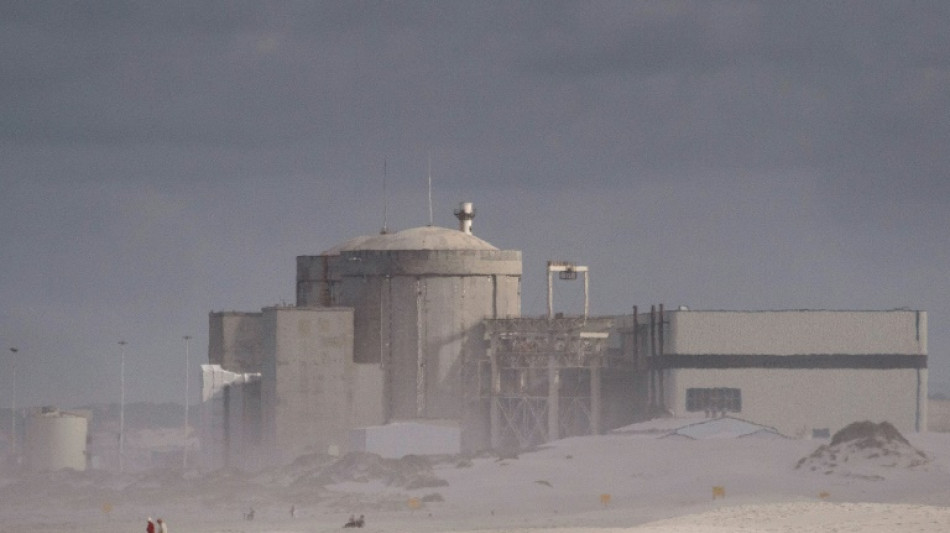
Could mini nuclear stations plug South Africa's power gaps? / Photo: RODGER BOSCH - AFP

 Four soldiers dead, dozens injured in fire at Canada military base
 Ton-up Agha helps Pakistan down Sri Lanka in tri-series opener

 Man Utd draw at Leeds keeps pressure on Carrick
 Barca defenders Garcia, Kounde injured before key games

 Lula, Bolsonaro to face off in first debate of bruising election
 Maza and Schick help Leverkusen clip Freiburg's wings

 Leeds hit back to deny Man Utd morale-boosting win
 Zelensky tells NBC 'thankful' US has unblocked intelligence sharing
 Pau see off Leicester in Champions Cup

 Kremlin says Ukrainian attacks won't change war aims as Kyiv hits Saint Petersburg

 Martinez starts for Man Utd after outburst
 Alberta separatists rally ahead of independence vote
 Australia elect to bowl against South Africa in second Test
 France assesses protest damage after 1,800 arrests
 Gord launches four AI tools for sustainability and emissions management
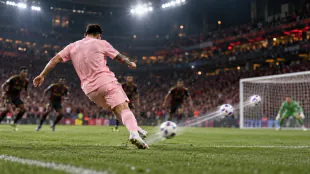
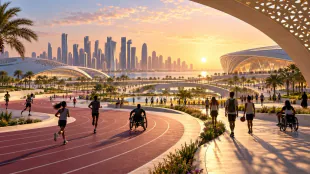 Doha 2036 bid sets out sport-led social legacy

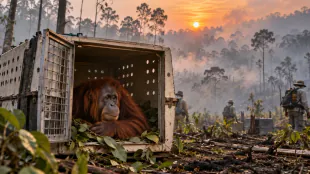 Conservation teams rescue orangutans from Indonesian wildfires

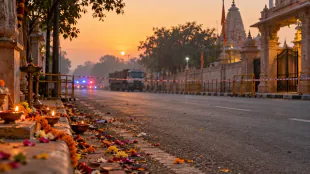 Truck ploughs into Hindu festival crowd in India, killing 13

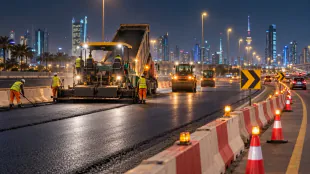 Kuwait announces maintenance closures in Nuzha, Surra and Rai

 Moody’s lifts OYO parent Prism outlook to positive before planned IPO
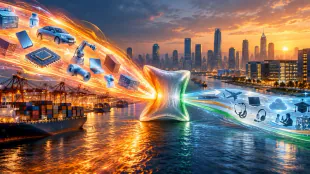
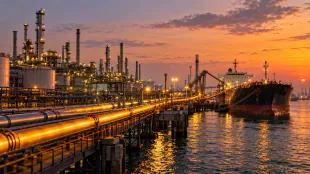 Diesel shortage raises petroleum share of India’s exports to three-year high

 Premium products and financing drive Navratri appliance demand
 Andi King recounts late-life transition after decades behind an “alpha male” identity

 Sri Lanka choose to field against Pakistan in tri-series opener
 Emiliano Martinez expects Chelsea return within weeks after surgery
South African nuclear scientists want to build a new generation of mini nuclear reactors, both to plug holes in their own country's blackout-plagued grid and to build an export industry for the future.
One company has designed a gas-cooled small modular reactor that it says can be installed within three years on a site smaller than a football field and safely produce enough power for a city.
Similar projects are underway in other countries, as the world confronts the challenge of powering a future economy of electrified transport, heating and data centres while slashing carbon emissions.
Europe is divided on the way forward. Some countries, led by France, are betting on nuclear. Others, like Germany, are hoping that renewables like wind and solar will replace fossil fuels and make-up for the loss of access to Russia's natural gas exports.
South Africa will rely on coal for some time to come but, with power already in short supply, it is betting on building up its nuclear programme.
And some experts like Kelvin Kemm, a nuclear physicist and chief executive of Pretoria-based private outfit Stratek Global, think South Africa is uniquely placed to take the lead in developing fourth generation reactors.
- Rolling blackouts -
"I believe the future is not only around the corner, I believe the future has arrived," Kemm told AFP in an interview in his garden in the Pretoria suburbs.
"I see in the next half dozen years, there is going to be a massive worldwide proliferation of nuclear power of all sizes, that there will be a huge change of heart over the next 24 months. I believe South Africa is already a leader."
South Africa's civilian nuclear journey began in 1976 when construction began on the Koeberg nuclear power plant, on the South Atlantic coast just north of Cape Town.
It was commissioned 40 years ago and has a capacity of just under 2,000 megawatts, a small chunk of the 27,000 MW that South Africa's much-derided state electricity firm Eskom can deliver, thanks largely to carbon-intensive coal-fired plants.
But domestic demand for power often peaks at more than 32,000 MW per day, and South Africans face rolling blackouts or "load-shedding" of up to 12 hours a day, a serious burden on the economy of what should be the continent's powerhouse.
In December, the government announced that it planned to bring the first of a new series of nuclear plants on stream by 2033, adding another 2,500 megawatts of capacity, while planning to renew Koeberg and extend its life for another 20 years.
But, even with solar panels springing up on homes and developments across the country, that still leaves the country short of power in the medium term. This is where, in the plans of nuclear evangelists like Kemm, small modular plants come in.
Large plants like Koeberg, with its two French-designed pressurised water reactors (PWR), must be situated by the ocean to allow for 80 tonnes of cold water a second to be pumped in to cool its reactors.
Most of South Africa is dry, however, and its commercial hub Johannesburg and its energy intensive mines and industry are far from the sea. The capital Pretoria is as far from Cape Town's cool Atlantic shore as Rome is from London.
This is where Stratek hopes to come in with its High Temperature Modular Reactor (HTMR-100).
According to Kemm, who is already in talks with international operators from as far away as France as well as South Africa, these helium gas-cooled reactors can be installed in groups of up to 10 or typically six to power off the shelf steam turbines.
These plants would generate less than 300 megawatts each, enough for a major industrial mining complex or domestic use in a city the size of Pretoria.
- Weak rand -
But above all they would be easier to supply -- running off less than a truck-load of uranium fuel pellets in hand portable cricket-ball sized spheres per year -- and easy to cool without sea water.
By the standards of the nuclear industry, with notoriously long and expensive development schedules, they would be relatively cheap and quick to install, and prices will fall after the first prototype unit is up and running.
Kemm said the weakness of the rand meant that his firm could quote $470 million as the cost of the first reactor and aim to get subsequent builds down to $300 million each.
"We are exceedingly cheap by world standards," he said.
Z.Ramadan--SF-PST