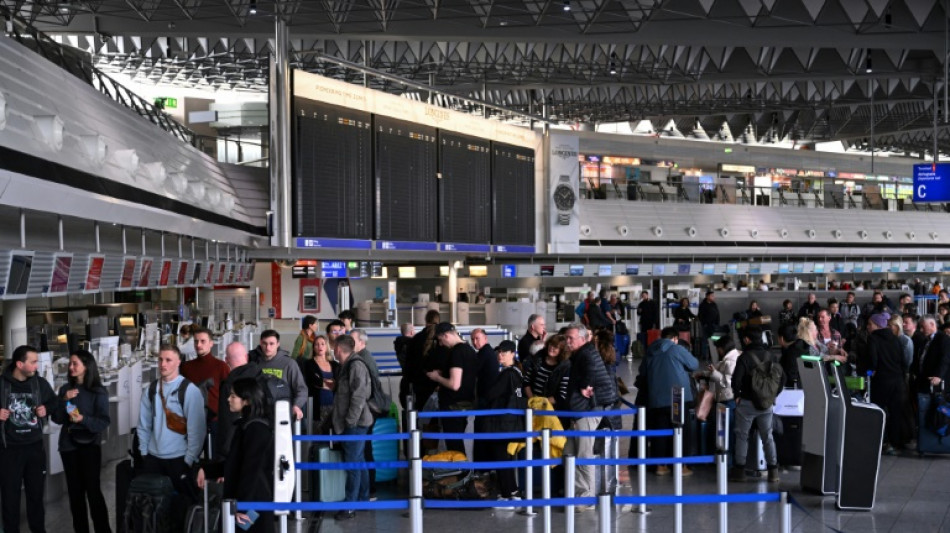
Why Germany is being hit by strikes almost every day / Photo: Kirill KUDRYAVTSEV - AFP

 Mbappe hits two as Real Madrid rout Sevilla
 Browns edge Ravens for division lead, Texans beat Jags
 Lyon go top of Ligue 1 as Monaco fall to first defeat of the season
 Venezuela opposition alliance reaffirms Nobel laureate Machado as leader
 'Street Fighter' wins N. America box office, buzzy doc stuns in 2nd

 NFL: Paris game to go ahead despite protests in France
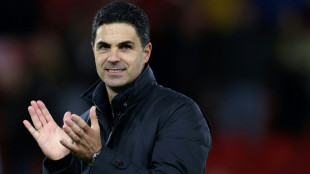 Arteta hails Arsenal 'finishers' after Madueke fells Forest
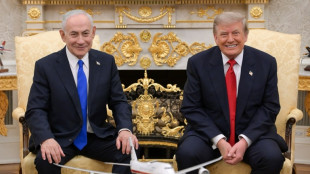 Trump backs ally Netanyahu ahead of Israel's tight election
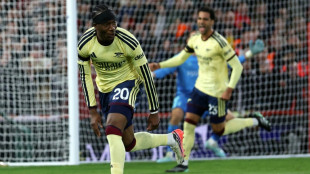
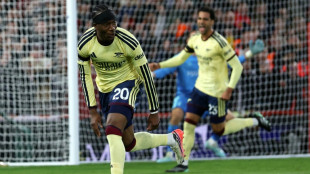
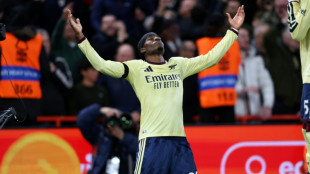 Madueke strikes late as below-par Arsenal sink Forest
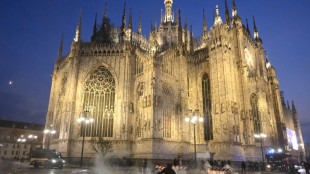 Second day of street clashes in Milan
 Dupont's Toulouse hold off Exeter as English Champions Cup woes continue

 Zelensky speaks to US envoys amid Trump spat

 Paris police in new battles with protesters and looters
 Multiple deaths, injuries at western Canada military base: minister

 Boland strikes twice for Australia in rain-hit South Africa Test

 Marseille put Angers to the sword in Ligue 1
 Albanian PM refuses to quit as violent protests enter sixth day

 Chwalinska fights back to win Wuhan Open in title breakthrough
 Kulusevski on brink of return for Spurs after 17-month absence

 Ukraine sets Saint Petersburg refinery ablaze in large-scale drone attack
 Spain's in-form Chacarra wins DP World India Championship

 Robertson and Selby chase rare Home Nations sweep in Belfast

 Arteta backs Kai Havertz to become a 30-goal Arsenal forward

 Emiliano Martinez expects Chelsea return within weeks after surgery

 Sri Lanka choose to field against Pakistan in tri-series opener

A wave of strike action has brought Germany to a standstill in recent weeks, as Europe's largest economy has struggled for growth and consumers have felt the pinch from sky-high inflation.
Rail, bus and airport workers have walked out one after another amid bitter salary negotiations in a country that usually prides itself on good labour relations.
The latest industrial action by airport ground staff has forced Lufthansa to cancel nine out of every 10 flights for Wednesday.
How did the strikes start to pile up? Here are five things to know:
- When did the strikes start? -
Since the end of 2022, Germany has seen growing labour unrest, while real wages have fallen by four percent since the start of the war in Ukraine.
A clutch of sectors received pay rises last year -- sometimes up to 10 percent -- but the new settlements did not ease tensions as inflation stayed high at 5.3 percent last year.
The continued price pressure has strained pay talks and led to the number of strikes multiplying.
At the end of January, train drivers staged a five-day walkout, before workers at airports and local transport services followed with their own industrial action.
- Why now? -
"Workers have really felt the loss of income, they have less money in their pocket at the end of the month," Alexander Gallas, a political science professor at the University of Kassel, told AFP.
At the same time, the unions' bargaining power is strengthened by serious labour shortages plaguing German businesses.
But union demands are clashing with "the fact that many businesses are in crisis and do not have much to distribute", making a quick resolution complicated, according to Hagen Lesch from the IW economic think tank.
- Labour relations on edge? -
The proliferation of strikes has called into question the future of Germany's otherwise consensus-driven labour relations.
"It is the moment of truth for the German model," Lesch said.
"Unions were more willing to compromise during the coronavirus pandemic. That is over."
Germany has historically been among the countries in Europe where workers went on strike the least.
Between 2012 and 2021, just 18 out of every 1,000 work days were disrupted by industrial action, compared with 92 out of every 1,000 in France.
- What support do the strikes have? -
Collective agreements, which long undergirded the system, now cover just 43 percent of workers compared with 56 percent in 2010.
But the current wave of strikes has enjoyed strong support among workers, according to experts, even if a single figure is not available.
"We are seeing high rates of participation, which is leading to an increase in union membership," Thorsten Schulten, a researcher at the WSI institute, told AFP.
- What next? -
Few decisive agreements have yet been found between unions and management, meaning the wave of strikes could carry forward.
"Everything is possible," said Claus Weselsky, head of the GDL rail workers union, which is behind much of the transport disruption.
And other industries might yet join the fray. In the chemicals sector, which has known tough times in recent years, a new round of wage negotiations is set to kick off in the coming months.
X.AbuJaber--SF-PST