
Nobel-winner Gurnah: UK imperial literature was openly racist / Photo: JOEL SAGET - AFP/File

 Middle East fuel crunch drives solar push in tiny Fiji

 Indian rappers use music to sound climate alarm

 Japan probe on its way to Mars moon

 Lula or Bolsonaro's son? Brazil makes a final choice

 EU unveils strategy to boost Arctic presence

 How recent controversies have rocked the US death penalty debate

 Adams facing long injury layoff as Rams' problems deepen

 US judge orders Saudi engineer held in OpenAI case

 Maddison sparkles as Spurs end Premier League winless run

 Maddison sparkles on Spurs return as win drought ends

 Trump says ready to meet with Putin and Xi in China

 The young lawmaker making Brazil's Lula 'king of the selfie'

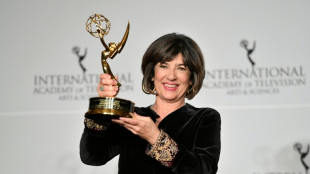 Christiane Amanpour to leave CNN after 43 years

 Ronaldo handed 30-day suspension after walking out on Portugal

 Netanyahu basks in Trump endorsement week before election

 Saudi airport closure disrupts life in kingdom's capital

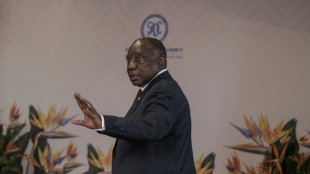 Ramaphosa tells South Africa to prepare for loss of US-Africa trade deal

 France presses resale platforms to remove 'stolen' goods after unrest

 Yamal v PSG: Ballon d'Or backdrop to Champions League showdown

 Araujo says too soon to talk about permanent Liverpool move

 US wants to be 'strong partner' for central Asia: Rubio

 'Special' to face friend Perez in Champions League, says Liverpool's Iraola

 Monitor says Indonesia fires have burned nearly two million hectares

 French PM says could declare state of emergency over unrest 'if needed'

 Albanian PM warns of 'red line' after days of unrest

Nobel-winning writer Abdulrazak Gurnah says removing offensive words from the likes of Agatha Christie is "futile", but says Britain did produce openly racist literature during the last century of its empire.
The British-Tanzanian author won the 2021 Nobel Prize for books such as "Paradise" and "Memory of Departure" exploring Europe's colonial legacy.
He is also a professor of English and post-colonial literature at Britain's University of Kent.
Asked by AFP about the recent trend of publishers rewriting books by Christie, Roald Dahl and James Bond author Ian Fleming to remove racist and other possibly offensive words, Gurnah was ambivalent.
"Certainly as a scholar, I think it's a futile thing to do," he said.
"I suppose one of the reasons why they're doing it is that the publisher wants to make their product more respectable."
Ultimately, he said, "I think there are bigger issues in the world to worry about."
While the current culture wars focus on tweaks to celebrity writers and hysteria over "cancel culture", Gurnah is more interested in the much more extreme racism that appeared in British literature when its empire was under threat.
"There is a certain period during imperialism when the language used to describe the colonised became harsher and harsher," he said.
He cited a study linking this shift to the mutiny in India in 1857, an uprising that showed Britain it was unwanted and vulnerable, and which sparked a brutal crackdown on dissent.
"There's a kind of out-of-control rage with which the British responded," Gurnah said.
"This is also a turning point in the way the language changes... There is a period from the early and mid-19th century, right through the middle of the 20th century, when there was no self-consciousness about being racist, and using racist language," he added.
Gurnah's response has not been to call for revisions to the past -- though he admits it can be "very hard" to read the racist literature of this period.
Rather he looks to augment our understanding of this period with his work.
He spoke to AFP in Paris for the launch of the French translation of "Afterlives".
It tells the story of a young boy stolen from his parents by German colonial troops in East Africa.
"When an account is incomplete, because it is only seeing one side, you can add to that... that is my idea," said Gurnah.
K.AbuTaha--SF-PST