
What to know about the EU's landmark digital content act / Photo: JUSTIN TALLIS - AFP/File

 Faletau still in Tandy's plans despite being left out of Wales squad
 Stock markets retreat as oil rises again

 Those who profited from fund scandal 'identified': Turkish minister

 At half a century, Senegal's Orchestra Baobab bets on new generation

 O'Connor, Sivakov join Seixas at Decathlon CMA CGM

 Faletau left out of Wales squad for Nations Championship

 Rubio says India diversifying oil, trade deal 'very close'

 Kemi Badenoch Proposes Ending Childcare Benefit Cliff Edge

 More Than 52,000 West Midlands Families Use Tax-Free Childcare

 Commanders Fear Serious Knee Injury for Terry McLaurin

 Rays Beat Guardians 7-3 to Secure World Series Place

 Veteran Character Actor Richard Riehle Dies at 78

 Hardik Pandya Meets Fan Who Walked 2,390 Kilometres Across India

 Erling Haaland Buys Villa at Abu Dhabi’s Jacob & Co Beachfront Living

 Analysts Stay Positive on Vedanta After Hindustan Zinc’s Strong Quarter

 World Gold Council Sees Digital Gold Market Tripling by 2031

 Industry Groups Outline Four Steps to Help Women Farmers Reach Markets

 Tamil Nadu and Puducherry Face Return of Very Heavy Rain

 Tamil Nadu Adds 25 State-Funded Workdays for Eligible Rural Households

 Tonbo Imaging IPO Draws Nearly 136 Times the Shares Offered

 James Maddison Leads Tottenham to First League Victory of Season

 October 20 Milestones Trace Decades of Kuwait’s Development

 Spain Housing Dispute Puts Landlords at Centre of Election Debate

 Qatar Prime Minister Opens Eighth Global Security Forum

 US Midterms Put Control of Congress and Key States at Stake

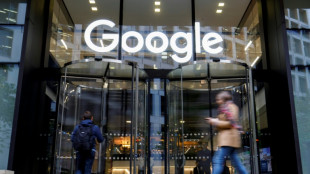
The EU's milestone legislation, known as the Digital Services Act, demands digital giants crack down on illegal and problematic content.
Brussels is bearing its teeth, launching investigations into X, formerly Twitter, as well as Facebook parent Meta and TikTok following Hamas' assault on Israel on October 7 and its aftermath.
The DSA is a mammoth law that will force digital giants to aggressively police content online in the European Union and could see them hit with major fines.
Here are the regulation's key elements:
- Rules for all platforms -
The law kicks in for all platforms from February 17, 2024, but since August it already applies for very large platforms with more than 45 million active monthly users.
Among their obligations, all platforms must quickly remove illegal content or make access to it impossible as soon as they are aware of the issue.
The companies must also rapidly inform the authorities when they suspect a criminal offence that threatens people's lives or the safety of others.
Every year the platform must publish a report that provides details about actions taken on content moderation and how long they took to respond after notification of illegal content. They will also report on the decisions taken in disputes with users.
The law also tells platforms to suspend users who frequently share illegal content such as hate speech or fake ads, while online shopping sites must verify the identities of users and block repeat fraudsters.
There are also tougher rules on targeted advertising, with a ban on such ads for children aged 17 and under.
The EU also wants users to see how their data is used. The law bans targeted advertising based on sensitive data, such as ethnicity, religion or sexual orientation.
The law does not apply to very small companies.
- Extra rules for large platforms -
The EU has named 19 "very large" platforms including Apple, Amazon, Facebook, Google, Instagram, Microsoft, Snapchat, TikTok and clothing retailer Zalando.
Amazon and Zalando have launched legal challenges to their designations.
These large platforms must assess the risks linked to their services with regards to the spread of illegal content and privacy infringements.
And they must also set up structures internally to mitigate such risks, such as improved content moderation.
The platforms must also give regulators' access to their data so officials can see whether they are complying with the rules.
This access will also be shared with approved researchers.
They will be audited once a year by independent organisations -- at their own expense -- to ensure compliance, and also establish an independent internal supervisor that will keep an eye on whether the platforms are in line with the rules.
- EU, national coordination -
Under the law, the EU's 27 member states must assign a competent authority that has the powers to investigate and sanction any violation.
These authorities must work with each other and with the European Commission, the EU's executive arm, to enforce the regulation from February.
If a digital platform provider is located in one member state, that country must enforce the rules except for very large platforms which will come under the commission's supervision.
- Complaints, penalties -
The DSA wants to make it easier for users' complaints to be heard.
Users will be able to lodge a complaint claiming a platform is in violation of the DSA with their competent national authority.
Online shopping sites may be held responsible for any damage from products bought by users that are non-compliant or dangerous.
Violations can be met with fines that could go up to six percent of a company's global turnover, and for repeated non-compliance, the EU can even decide to ban offending platforms from Europe.
J.AbuHassan--SF-PST