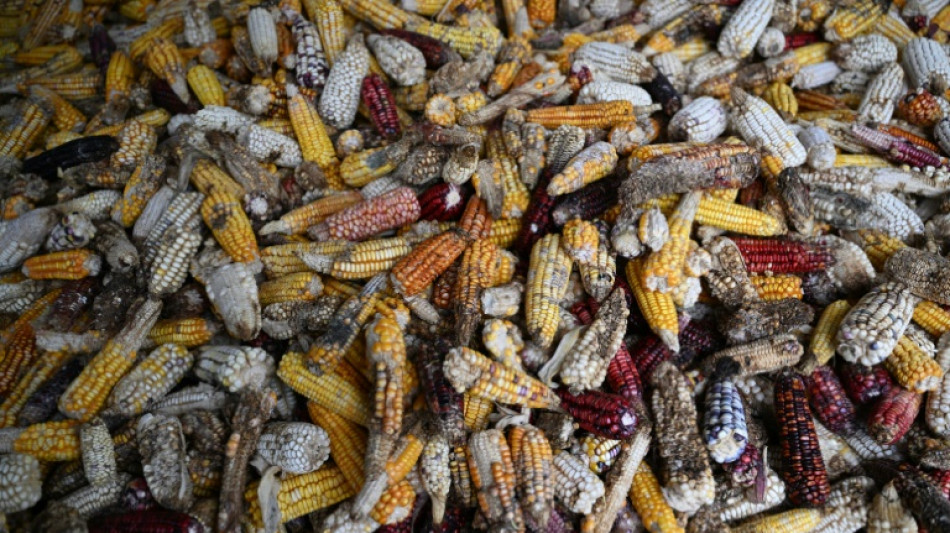
As rain vanishes, Guatemalans learn to use every drop of water / Photo: Johan ORDONEZ - AFP

 Dow boosted as markets rotate from tech shares

 Zelensky hails resumption of US advance warning of strikes on Ukraine

 Carrick says only wins can ease doubts over Man Utd future

 Top NBA Draft pick Dybantsa to miss opener with ankle sprain

 Italy sends troops, toughens security laws after Milan clashes
 Alberta separatists vow to fight on, risking turmoil for Canada

 Two men re-arrested for suspected spying for Iran in airbase scare: UK police

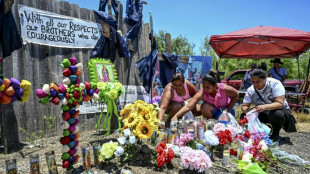 Guatemalan man gets 30 years for truck smuggling deaths of 53 migrants
 'Clayface' gets under the skin of the superhero genre

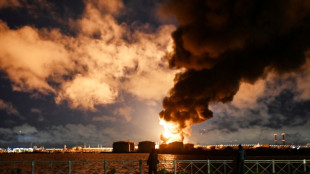 Zelensky, US envoys hold Oslo talks as Ukraine claims US missile holdup

 All-rounder Minhas stars as Pakistan crush England in tri-series

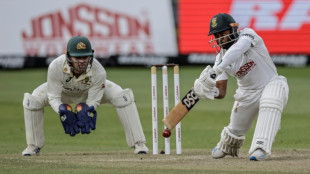 Bavuma hits 179, Rabada strikes as South Africa dominate

 Allrounder Minhas stars as Pakistan crush England in tri-series
 Albania PM blames 'hybrid war' for week of unrest

 Bavuma hits 179 to lead South African fightback

 Solid GM results overshadowed by latest jump in commodity costs

 Houthi attacks undermine Saudi Arabia's economic ambitions
 French PM vows 'massive' police deployment for new demonstrations

 Power outage hits Google Cloud services, disrupting UK banks

 AI challenges maths by solving the unsolvable

 Turkey troops to stay in Syria, Iraq 'until border security ensured', defence minister tells AFP

 Kulusevski a 'different man' after emotional Spurs return

 Nawaz and Minhas lift Pakistan to 302-9 in England ODI

 Mourinho warns no 'untouchable' stars at Real Madrid

 Indonesian anger builds over wildfires, toxic haze

As rain becomes ever scarcer in northern Guatemala, communities are learning how to carve out makeshift irrigation canals and purify their water to conserve every last precious drop.
"No water, no rain, so not a good harvest," says Francisco Carrillo, 87, as he desolately sifts through his measly corn crop, tossing aside scores of desiccated and stunted heads.
Some have given up even trying to plant, and with children constantly sick with stomach bugs from dirty drinking water, new methods are desperately needed.
Guatemala -- which forms part of Central America's Dry Corridor -- is regularly listed by international organizations among the top ten countries most vulnerable to climate change.
Situated on a narrow strip of land between two oceans, and heavily dependent on agriculture, different parts of Guatemala are increasingly battered by drought and intense rains -- often at the same time.
These extreme weather events are fueling massive waves of migration, notably to the United States.
In the northern region of Quiche, mostly home to indigenous communities such as Mayans, residents are learning to build ditches above their sloped fields of corn or beans, so that water trickles down through the plants and keeps the soil moist for longer.
"During the few rainy days we have, we try to capture the water through these ditches so that the water filters into the soil," explained Oscar Rodriguez with the Save the Children charity, which is teaching the techniques.
To improve their yields, residents are also being taught to make home-made fertilizer with a mixture of herbs, chillis and garlic.
The World Food Programme (WFP) is trying to encourage the farming of less thirsty plants like carrots and tomatoes, which also grow faster.
- 'The children get sick' -
Save the Children says that 3.5 million of the country's 18 million inhabitants are threatened with an "unprecedented food crisis."
In rural Quiche, Indigenous families without potable water have long collected rainwater from streams or in wells they dig in the ground.
However, with less fresh rainwater, these water sources become contaminated by animals and "the children get sick" when they drink it, said Tomasa Ixotoyac, 40, as she draws muddy water up from a well with a bucket.
Save the Children has also shown the villagers how to use a few drops of chlorine to filter their water before boiling it.
Faced with increasingly erratic weather, the government and the United Nations Food and Agriculture Organization are implementing a $66 million plan to improve water collection systems in the arid north.
"The rain has become scarcer, it no longer rains like normal," said Gladys Azanon, from the Cerro Negro village.
- 'Is it fair?' -
Guatemala's rainy season runs from May to October.
While the El Nino warming phenomenon has intensified the drought in the north, it has had the opposite effect in the south -- highlighting the different extremes of climate change.
The south of the country was worst hit by Hurricanes Eta and Iota in 2020 and heavy rains this year have led some crops to rot in the soil, said Ilsia Lopez, 31, in the town of Sajubal.
Flash floods have left dozens dead, destroying homes and bridges.
"We get scared when it rains," said Lopez.
Earlier this month, Guatemala's President Alejandro Giammattei complained in a speech at the United Nations Security Council about the treatment of poor countries like his, which bear the brunt of climate change while being among the least responsible.
"We are the ones who suffer the most damage year after year. Is it fair?"
H.Nasr--SF-PST