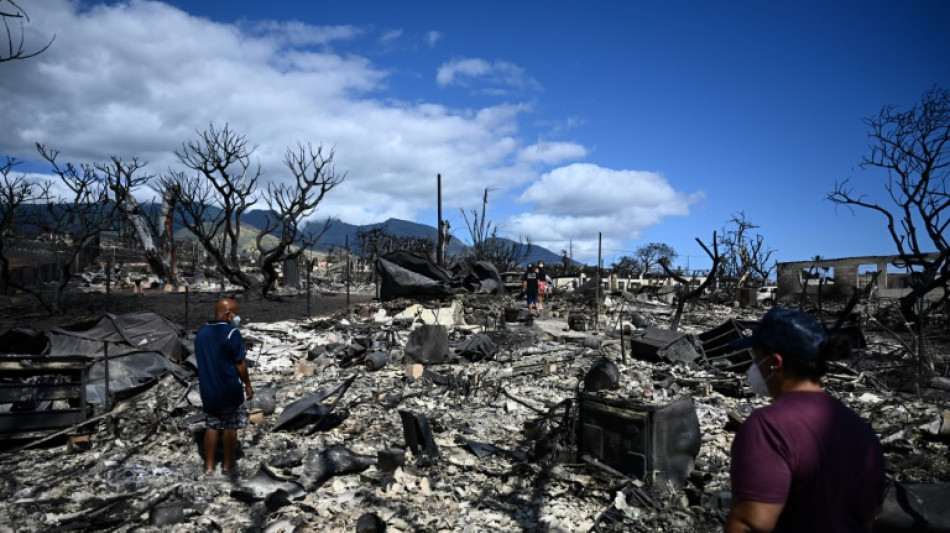
As climate catastrophes rise, reinsurers reduce risks / Photo: Patrick T. Fallon - AFP/File

 UK govt approves drilling in Jackdaw gas field

 Rome hospital taps culture to help heal cancer patients

 'Media capture': Serbian journalists squeezed before vote
 US envoy to meet Russia's president after 'positive' talks with Zelensky

 South Korea launches new bid to guide crowd-pulling shark to sea

 US envoy to meet Russia's president after 'productive' talks with Zelensky
 LeBron optimistic after launching Sixers era with win

 Fear as Indians struggle to prove voting rights

 Asian stocks rally as tech firms enjoy bounce ahead of key earnings

 LeBron, Sixers spoil Knicks party as NBA season tips off

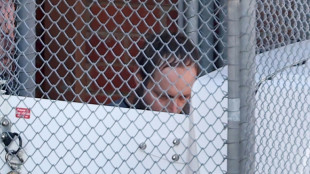 Man in court over alleged 'targeted' attack on Australian lawmaker

 Regulator has 'power' to force Man City sale

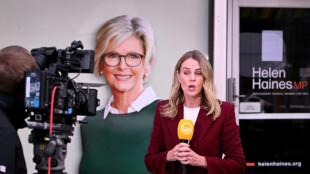 Man allegedly behind 'targeted' attack on Australian lawmaker appears in court
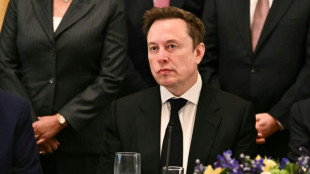 Musk backs SpaceX-Tesla merger as rocket firm turns profit
 Zelensky, US hail 'productive' talks to end Trump feud

 'Unbelievable' Foden back in the groove with treble in Man City rout
 Pistons rally to beat Celtics in NBA 2026-27 season opener
 PSG late show downs Barca in Champions League, Liverpool fight back

 Liverpool strike back to beat Villarreal in seven-goal thriller

 Dow boosted as markets rotate from tech shares

 Zelensky hails resumption of US advance warning of strikes on Ukraine

 Carrick says only wins can ease doubts over Man Utd future

 Top NBA Draft pick Dybantsa to miss opener with ankle sprain
 Italy sends troops, toughens security laws after Milan clashes
 Alberta separatists vow to fight on, risking turmoil for Canada

Natural disasters are now happening so frequently that reinsurers -- the firms that sell insurance to insurance companies -- are scaling back their exposure to such risks.
While this may make business sense, it raises the question of whether individuals and businesses will be able to protect themselves against the effects of climate change if their insurance companies cannot even get coverage themselves.
Just weeks after wildfires caused major damage in Hawaii and parts of Europe, and as catastrophic floods ravaged Libya, the issue was front and centre at a major industry gathering held in Monaco this week.
Reinsurers identified climate change as the biggest risk they now face in a survey by PricewaterhouseCoopers and the Centre for the Study of Financial Innovation.
"Climate change is the number-one risk once again as reinsurers bear the brunt of the cost of catastrophe claims from an ever-increasing number of extreme weather events," the report said.
"As these losses spiral upwards, the survey highlights growing concerns that some areas and types of business could become uninsurable," it added.
Ratings agency Fitch said in a note to investors ahead of the conference, which ends Wednesday, that some companies "were already retreating from the property-casualty market in 2022".
It added that "even the strongest reinsurers have now pulled back, largely through tightening their terms and conditions to limit their aggregate covers and low layers of natural catastrophe protection".
Another ratings agency, S&P, said "more than half of the top 20 global reinsurers maintained or reduced their natural catastrophe exposures during the January 2023 renewals, despite the improved pricing terms and conditions and rising demand".
The reinsurance unit of insurance giant AXA raised prices 6.3 percent during the first half of this year, but it took in three percent less, mostly because of a reduction in exposure to natural catastrophes.
According to Fitch, reinsurers are reducing their exposure to so-called secondary peril events. These are smaller weather events, which are becoming more frequent and virulent owing to climate change.
- 'Doesn't make any sense' -
Reinsurers are still offering ample cover against the most severe weather events, Fitch added.
Data released by the National Oceanic and Atmospheric Administration (NOAA) found that weather and climate disasters in the United States where losses exceeded $1 billion averaged 18 per year between 2018 and 2022, up from 8.1 events between 1980 and 2022, using inflation-adjusted figures.
The United States was hit by a record-breaking 23 such events in the first eight months of this year, it added.
This rising number of natural disasters has put pressure on reinsurers.
"There was an under-estimation of the frequency of events, and I think we underestimated the development of the population in different areas as well," said Jean-Paul Conoscente, chief executive of the property and casualty branch of reinsurer Scor.
Scor began to reduce its exposure to natural catastrophes in 2021.
Fitch analyst Robert Mazzuoli noted that policies that paid out to insurers once a certain amount of damages from a particular risk, like hail, was reached, have completely disappeared when they were very popular only two or three years ago.
Providing coverage against risks with "really high frequency... doesn't make any sense", said Thomas Blunck, who heads up the reinsurance committee at the world's top reinsurer, Munich Re.
These natural disaster policies were initially developed to protect insurers from extreme events and not against the volatility inherent in the business, said Conoscente, explaining the development in the industry.
- 'Brutal' shift -
But this repositioning of reinsurers is not without consequence for traditional insurers.
"This is part of the reasons which has driven us to have a rather negative outlook," said Manuel Arrive, a Paris-based director at Fitch Ratings.
Jean-Philippe Dogneton, head of the French insurer Macif, criticised the "rapid" and "brutal" shift in the reinsurance sector.
Fitch's Robert Mazzuoli said some reinsurers "were abrupt with their clients and treated them poorly".
Given the current circumstances, insurers may have little choice than increase their rates or in turn reduce the risks that they cover, which is already happening in certain countries.
Scor's Conoscente said for the moment "you can get insurance anywhere" but on the condition of being able to "pay the necessary price".
For him, the real problem is that "a large portion of the population isn't ready to pay the real cost" of climate change.
M.AbuKhalil--SF-PST