Better than AI? The UK police who never forget a face / Photo: Justin TALLIS - AFP

 Rising UK inflation, debt knocks govt ahead of budget
 UK govt approves drilling in controversial Jackdaw gas field

 US envoy to meet Putin after 'positive' talks with Zelensky

 UK govt approves drilling in Jackdaw gas field
 Rome hospital taps culture to help heal cancer patients

 'Media capture': Serbian journalists squeezed before vote
 US envoy to meet Russia's president after 'positive' talks with Zelensky

 South Korea launches new bid to guide crowd-pulling shark to sea

 US envoy to meet Russia's president after 'productive' talks with Zelensky
 LeBron optimistic after launching Sixers era with win

 Fear as Indians struggle to prove voting rights
 Asian stocks rally as tech firms enjoy bounce ahead of key earnings
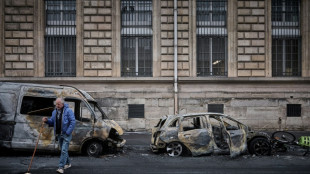
 LeBron, Sixers spoil Knicks party as NBA season tips off
 Man in court over alleged 'targeted' attack on Australian lawmaker
 Regulator has 'power' to force Man City sale
 Man allegedly behind 'targeted' attack on Australian lawmaker appears in court

 Musk backs SpaceX-Tesla merger as rocket firm turns profit
 Zelensky, US hail 'productive' talks to end Trump feud

 'Unbelievable' Foden back in the groove with treble in Man City rout

 Pistons rally to beat Celtics in NBA 2026-27 season opener

 PSG late show downs Barca in Champions League, Liverpool fight back

 Liverpool strike back to beat Villarreal in seven-goal thriller

 Dow boosted as markets rotate from tech shares

 Zelensky hails resumption of US advance warning of strikes on Ukraine

 Carrick says only wins can ease doubts over Man Utd future
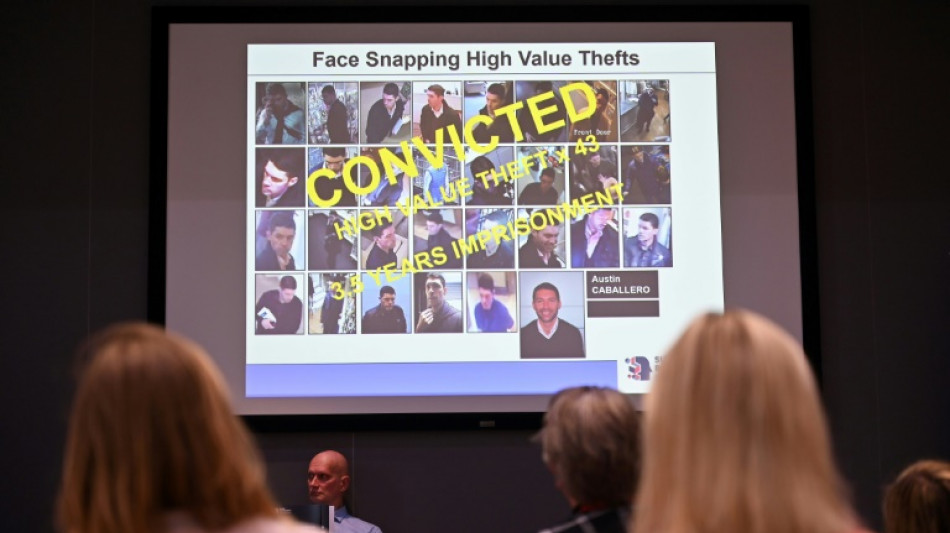
Artificial intelligence and facial recognition software are seen by some as the future of crime-fighting around the world.
But British police say it has to go hand in hand with more traditional methods of detection, including the use of so-called "super-recognisers".
Forces across the country have been using officers who have an exceptional memory for faces and an above-average ability to identify people.
Only one percent of the population has the "super-power", said Tina Wallace, a surveillance expert with Thames Valley Police.
Her team began recruiting the specialist officers in 2017 and now have about 20 on their books, including Alex Thorburn, an officer for 17 years.
"I've always been good with faces. So when they put a notice out about the tests, I did it!" Thorburn told AFP.
"I was shown pictures, dated between 10 and 30 years old, of 10 people. I had to find them in the crowd in the shopping centre.
"I found them all, but they looked a lot different to how they did in the photos. That was really interesting."
The team works on screens, using security camera footage, but is also sent out into the field.
For the coronation of King Charles III, Thorburn was sent out into the crowds at Windsor Castle, west of London.
"We were deployed... to go and see if there were any people who were fixated with the royal family," she recalled.
"We were shown quite a large number of images to see if they were there and they're going to cause any problems. But luckily, we didn't have any."
"It's a cheap and effective way to tackle crime," said Mike Neville, who set up the first team of super-recognisers at London's Metropolitan Police.
Now retired, Neville runs Super Recognisers International, which bills itself as "the world leaders in human recognition".
- Successes -
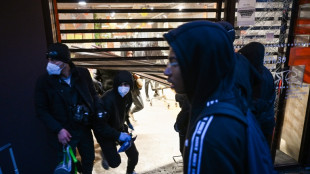
One of the first major successes was in 2011, during the widespread rioting sparked by the death of a black man shot dead by police in London.
Police had to scour some 200,000 hours of security camera footage.
"Twenty officers identified 600 of the London rioters," said Josh Davis, a professor in applied psychology at the University of Greenwich.
One police officer who was an expert on gangs recognised an astonishing 180 offenders by analysing the images.
Some he had never seen in person. Others had part of their faces hidden, said Davis, who is a member of Neville's association.
Thames Valley Police covers more than 2,200 square miles (5,700 square kilometres) west and northwest of London with a population of 2.34 million.
It is deploying its "super-recognisers" at set times outside bars and nightclubs to spot known perpetrators of sexual assault.
"We use officers in plainclothes and they're looking for specific behaviours," explained Wallace, a police officer for 26 years, at the force's training centre near Reading.
"When we see a predatory behaviour, we call in the uniform team to stop it happening.
"Two in every five men we stopped have got previous convictions for rape or serious sexual assault. We've stopped 520 in three years."
- No competition -
As AI and facial recognition technology develops at pace, human skills should not be discounted, insisted Neville.
"It isn't really a competition with facial recognition," he said. "They can be used together.
"AI is good with high-quality, front-on images (as with passports at airport e-gates).
"Humans are better with lower quality images, where the face is at an angle or partly covered with sunglasses or a mask."
"Also note that under UK and EU law, AI identifications have to be verified by a human before an arrest is made.
"Most people, in a democracy, would be happier if people made the decision to detain someone, rather than a computer."
According to Neville, demand for super-recognisers is growing, particularly from police forces in Germany and Australia.
Professor Davis has posted a basic 14-point test online for anyone curious to check if they have the powers of recall that makes them a super-recogniser.
"If you get less than 10 or 12, you are not going to be a super-recogniser," he said.
"But if you reach 14, contact me please!"
F.AbuShamala--SF-PST