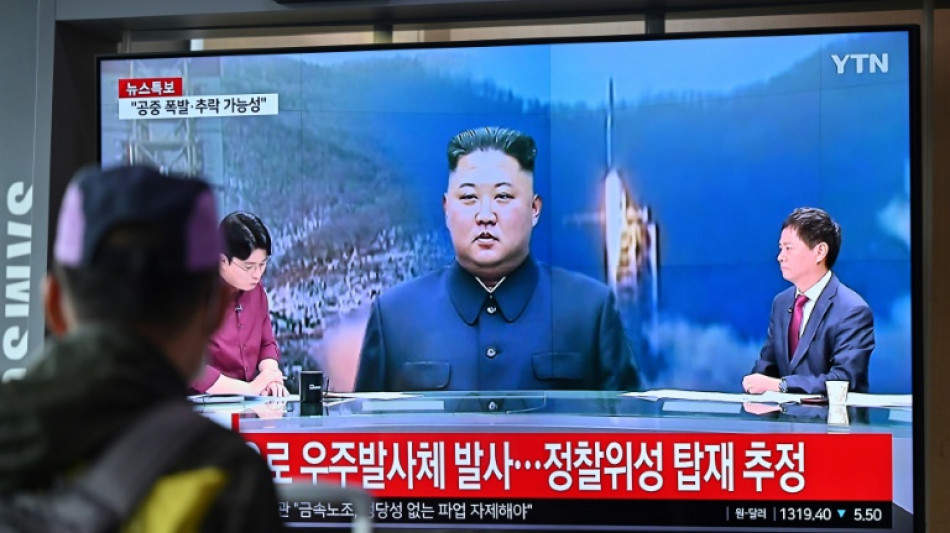
North Korea plans satellite launch as Seoul, US hold drills / Photo: Jung Yeon-je - AFP

 'Complete threat' Ngumoha excites Liverpool captain Van Dijk

 'The fishing's terrible': Deforestation devastates C.Africa river

 France's tourism sector worried about impact of riots

 Macron takes aim at Trump for using France riots for election gain

 North Korea says 'new firepower units' in place, loudspeakers to return

 Indonesia leader hits out at market downgrade warning

 Macron slams 'stupid' comments based on AI videos by leaders on France riots
 'Public health crisis': Indonesians seek fire relief from state

 British Museum sells second set of Bayeux exhibition tickets

 Australian lawmaker loses both legs after 'targeted' attack

 UK approves drilling in controversial Jackdaw gas field

 Carrefour shares plunge after profit warning on French protests

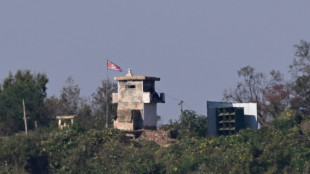 North Korea says 'new firepower units' in place after border threat

 Australia lawmaker loses both legs after 'targeted' attack

 Director Nick Paley channels childhood fears in new thriller 'Phony'

 'Daily struggle': Cubans dig wells in search of water

 Prized wild pepper at risk in Madagascar's shrinking forests

 World falling 'dangerously short' on climate action: UN chief

 LeBron, Sixers spoil Knicks party, Thunder top Spurs as NBA season tips off

 Sooryavanshi told to be patient by captain Iyer ahead of NZ series

 Man in court over alleged 'targeted' attack on Australia lawmaker

 As actors get more physical, Bollywood embraces intimacy coordinators

 Brazil's presidential candidates seek to disqualify each other

 French PM to meet unions as government prepares for more protests

 'To the shelter, quickly!' Air raids reshape Kyiv school life

North Korea has informed Japan it plans to launch a satellite in the coming days, Tokyo said Tuesday, less than three months after a failed effort saw a military satellite plunge into the sea.
Prime Minister Fumio Kishida urged Pyongyang to call it off, saying his country was working with South Korea and the United States to gather more information on the sanctions-busting launch.
Tokyo is taking "all possible measures to prepare for any unforeseen eventuality", Kishida said, adding that missile defence units and naval ships had been mobilised in case the satellite landed in Japanese territory.
Japan's Coast Guard said the "satellite rocket launch" would take place between August 24 and 31, with three designated danger areas: the Yellow Sea, East China Sea and waters east of the Philippines' Luzon island.
In May, Pyongyang launched what it described as its first military reconnaissance satellite, but the rocket carrying it plunged into the sea minutes after takeoff.
North Korea has vowed to successfully launch a spy satellite, which it claims to have developed as a necessary counterbalance to the growing US military presence in the region, "in the near future".
Pyongyang's new launch plan comes a day after Seoul and Washington kicked off their major annual joint military drills on Monday.
Known as Ulchi Freedom Shield, the exercises, which are aimed at countering growing threats from the nuclear-armed North, will run through August 31.
Pyongyang views all such exercises as rehearsals for an invasion and has repeatedly warned it would take "overwhelming" action in response.
Suspected North Korean hackers have already targeted the exercises, with email attacks on South Korean contractors working at the allies' combined exercise war simulation centre.
On Tuesday, North Korea's state news agency condemned "the aggressive character" of the US-South Korea drills.
In a commentary, KCNA warned that if the drills involve a "nuclear provocation", the possibility "of a thermonuclear war on the Korean peninsula will become more realistic".
- Launch soon -
South Korea's spy agency told lawmakers last week that Pyongyang could launch a reconnaissance satellite in late August or early September.
The launch is meant to happen ahead of the 75th anniversary of the regime's founding on September 9, member of parliament Yoo Sang-bum told reporters after the briefing.
"Pyongyang appears to be timing its next satellite launch with the ongoing joint Ulchi Freedom Shield exercise, having improved and supplemented technical aspects of the launch over the past three months," Choi Gi-il, professor of national security at Sangji University Pyongyang, told AFP.
"Given the nature of the North Korean regime, three months seems sufficient enough to find flaws from its failed May launch and apply fixes -- though we have to see whether it can pull it off this time," he added.
The United States, South Korea and Japan condemned the North's satellite launch in May as a violation of United Nations resolutions prohibiting the nuclear-armed state from using ballistic missile technology.
Analysts have said there is significant technological overlap between the development of intercontinental ballistic missiles and space launch capabilities.
North Korean leader Kim Jong Un has made the development of a military spy satellite a top priority.
The crash of the satellite in May sparked a complex, 36-day South Korean salvage operation involving a fleet of naval rescue ships, mine sweepers and deep-sea divers.
The retrieved parts of the rocket and the satellite were analysed by experts in South Korea and the United States, with Seoul's defence ministry subsequently saying the satellite had no military utility.
T.Ibrahim--SF-PST