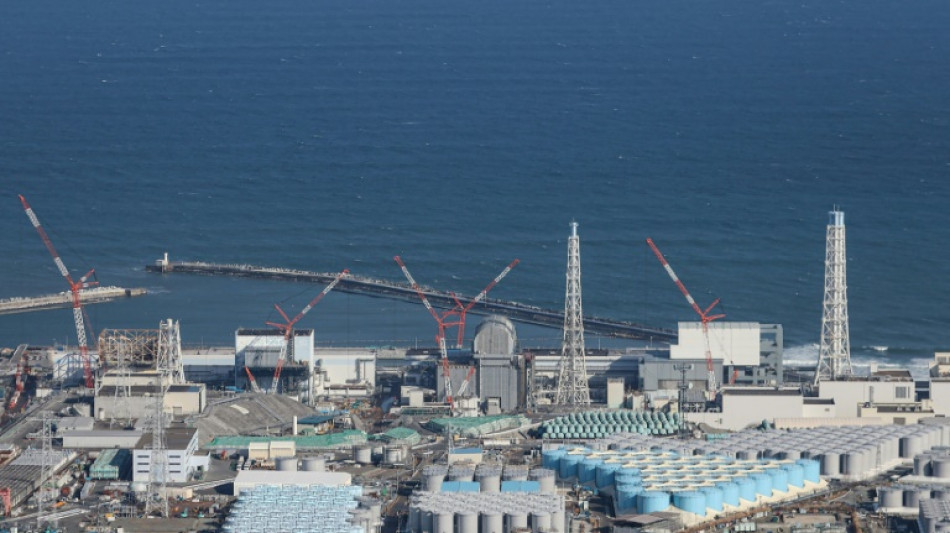
Fukushima water release to begin Thursday: Japan PM / Photo: STR - JIJI Press/AFP

 'Complete threat' Ngumoha excites Liverpool captain Van Dijk

 'The fishing's terrible': Deforestation devastates C.Africa river

 France's tourism sector worried about impact of riots

 Macron takes aim at Trump for using France riots for election gain
 North Korea says 'new firepower units' in place, loudspeakers to return
 Indonesia leader hits out at market downgrade warning

 Macron slams 'stupid' comments based on AI videos by leaders on France riots
 'Public health crisis': Indonesians seek fire relief from state

 British Museum sells second set of Bayeux exhibition tickets
 Australian lawmaker loses both legs after 'targeted' attack

 UK approves drilling in controversial Jackdaw gas field
 Carrefour shares plunge after profit warning on French protests
 North Korea says 'new firepower units' in place after border threat
 Australia lawmaker loses both legs after 'targeted' attack

 Director Nick Paley channels childhood fears in new thriller 'Phony'
 'Daily struggle': Cubans dig wells in search of water

 Prized wild pepper at risk in Madagascar's shrinking forests
 World falling 'dangerously short' on climate action: UN chief

 LeBron, Sixers spoil Knicks party, Thunder top Spurs as NBA season tips off
 Sooryavanshi told to be patient by captain Iyer ahead of NZ series

 Man in court over alleged 'targeted' attack on Australia lawmaker

 As actors get more physical, Bollywood embraces intimacy coordinators

 Brazil's presidential candidates seek to disqualify each other
 French PM to meet unions as government prepares for more protests

 'To the shelter, quickly!' Air raids reshape Kyiv school life

The release of wastewater from Japan's stricken Fukushima nuclear plant into the Pacific will begin on Thursday, Prime Minister Fumio Kishida has announced, despite opposition from fishermen and protests by China.
Japan insists the gradual release of the more than 500 Olympic swimming pools' worth of water is safe, a view backed by the UN atomic agency.
"We will request TEPCO to promptly prepare for the start of oceanic discharge based on the plan approved by the Nuclear Regulation Authority, with discharge expected to be August 24 if weather and sea conditions do not hinder it," Kishida said Tuesday following a ministers' meeting in Tokyo, referring to the stricken plant's operator.
In one of the world's worst-ever atomic disasters, the Fukushima-Daiichi nuclear plant was knocked out by a massive earthquake and tsunami that killed around 18,000 people in March 2011.
Since then, operator TEPCO has collected 1.34 million tonnes of water used to cool what remains of the still highly radioactive reactors, mixed with groundwater and rain that has seeped in.
TEPCO says that the water has been diluted and filtered to remove all radioactive substances except tritium, levels of which are far below dangerous levels.
- 'Immense' -
This water will now be released into the ocean at a maximum rate of 500,000 litres per day out off Japan's northeast coast.
Environmental pressure group Greenpeace has said the filtration process is flawed and that an "immense" quantity of radioactive material will be dispersed into the sea over the coming decades.
But Tony Hooker, a nuclear expert from the University of Adelaide, dismissed that as "fear-mongering".
"Tritium has been released (by nuclear power plants) for decades with no evidential detrimental environmental or health effects," Hooker told AFP.
The UN atomic watchdog said in July that the release would have a "negligible radiological impact on people and the environment".
- Salt panic -
Many South Koreans are alarmed at the prospect of the release, staging demonstrations and even stocking up on sea salt because of fears of contamination.
But President Yoon Suk Yeol's government, taking political risks at home, has sought to improve long-frosty relations with Japan and has not objected to the plan.
Yoon last week held a first-ever trilateral summit with Kishida and US President Joe Biden at Camp David, the three united by worries about China and North Korea.
China has accused Japan of treating the ocean like a "sewer", banning imports of food from 10 Japanese prefectures even before the release and imposing strict radiation checks.
Hong Kong, an important market for Japanese seafood exports, has also threatened restrictions.
This has worried people involved in Japan's fishing industry, just as business was beginning to recover more than a decade after the nuclear disaster.
"Nothing about the water release is beneficial to us," third-generation fisherman Haruo Ono, 71, whose brother was killed in 2011, told AFP in Shinchimachi, 60 kilometres (40 miles) north of the nuclear plant.
James Brady from the Teneo risk consultancy said that while China's safety concerns may be sincere, there was a distinct whiff of geopolitics and economic rivalry in its harsh reaction.
"The multifaceted nature of the Fukushima wastewater release issue makes it quite a useful one for Beijing to potentially exploit," Brady told AFP.
Beijing can "leverage a degree of economic pressure on the trade axis, exacerbate internal domestic political cleavages on the issue within Japan... and even potentially put pressure on improving diplomatic ties between Seoul and Tokyo".
S.Barghouti--SF-PST