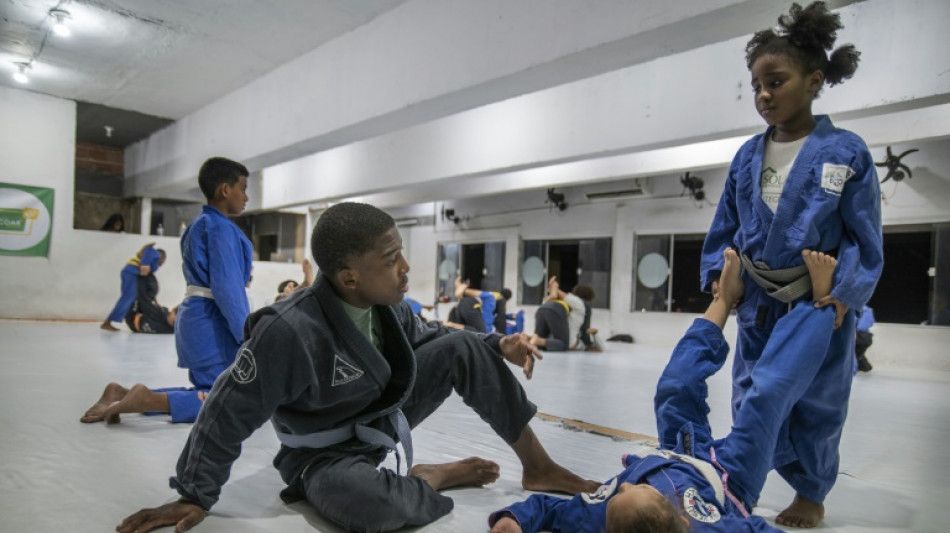
Brazilian jiujitsu offers lifeline to Rio favela kids / Photo: CARLOS FABAL - AFP

 South African rugby player's death due to 'aortic dissection'
 France's Macron lands in Riyadh on surprise 'solidarity' visit

 Around the world, far right blames immigrants for French protests

 South Africa eases fuel pain as growth slows

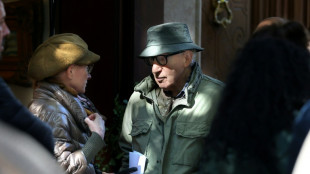 Woody Allen shoots new movie in Madrid
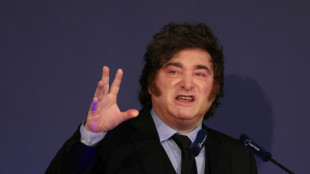
 Nvidia's Huang urges Europe to go all in on AI

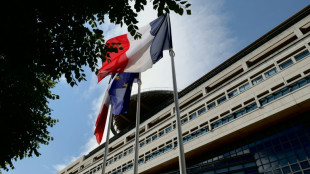 Five things to know as French bond yield tops 5%

 'Complete threat' Ngumoha excites Liverpool captain Van Dijk

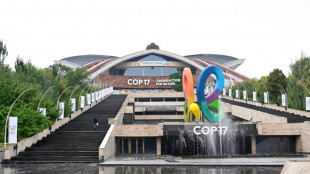 'The fishing's terrible': Deforestation devastates C.Africa river
 France's tourism sector worried about impact of riots
 Macron takes aim at Trump for using France riots for election gain

 North Korea says 'new firepower units' in place, loudspeakers to return

 Indonesia leader hits out at market downgrade warning

 Macron slams 'stupid' comments based on AI videos by leaders on France riots

 'Public health crisis': Indonesians seek fire relief from state
 British Museum sells second set of Bayeux exhibition tickets
 Australian lawmaker loses both legs after 'targeted' attack
 UK approves drilling in controversial Jackdaw gas field

 Carrefour shares plunge after profit warning on French protests

 North Korea says 'new firepower units' in place after border threat

 Australia lawmaker loses both legs after 'targeted' attack

 Director Nick Paley channels childhood fears in new thriller 'Phony'

 'Daily struggle': Cubans dig wells in search of water

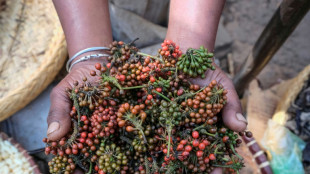 Prized wild pepper at risk in Madagascar's shrinking forests

 World falling 'dangerously short' on climate action: UN chief

In a hilltop slum crammed between two of Rio de Janeiro's wealthiest neighborhoods, children practice Brazilian jiujitsu, hoping to follow in the footsteps of the black belts whose graffiti portraits decorate their gym's walls.
Brazilian jiujitsu has provided an escape route for numerous kids from the rough alleys of Cantagalo, an impoverished favela whose shacks spill down a hill between the upscale beach neighborhoods of Copacabana and Ipanema.
Taking a break from teaching holds to a group of boys grappling on the mat, jiujitsu master Douglas Rufino says he has seen the sport literally save kids' lives.
"I can say it saved me, too," says Rufino, 41.
"I could have followed another path here in the community," a neighborhood rife with drug gangs and violence, he says.
Instead, the Cantagalo native went on to win the world lightweight championship in 2006. His face is now one of those painted on the walls of the gym -- a hall of fame of sorts, paying tribute to the favela's greatest black belts.
Rufino has been teaching for the past 20 years at the Cantagalo Jiujitsu gym, part of a project founded in 2000 to channel the power of the sport -- which is hugely popular in Brazil -- to help children in the favela.
"The idea is to give them a better future and the chance to make a living from jiujitsu," says Rufino.
- 'Way to break through' -
The school has produced numerous champions, and former students now practice and teach Brazilian jiujitsu in Portugal, Singapore, Sweden and the United States.
Beyond teaching takedowns, holds and sweeps, the program aims to impart life values.
"Lots of kids arrive here with a rebellious streak. But they leave with discipline, because that's what jiujitsu is: respect and discipline," says 17-year-old student Fabiano dos Santos Guedes.
It takes years of training to become a black belt, but Guedes is unfazed.
"I love coming to practice. My dream is to be a world champion and live overseas," he says.
In the leafy neighborhood of Laranjeiras, national lightweight champion Beatriz Freitas says she has the same dream -- and sees the same benefits of jiujitsu, which she started studying three years ago.
"I was going through a very stressful time in my life. I was aggressive at home and in school," says Freitas, 22, who comes from the nearby favela of Julio Otoni.
"Jiujitsu gave me a way to break through that."
- Controversial history -
Jiujitsu, an ancient Japanese martial art, arrived in Brazil in the early 1900s, introduced by an immigrant jiujitsu master named Mitsuyo Maeda.
His students refined and adapted the sport, giving birth to Brazilian jiujitsu, or BJJ, whose techniques enable skilled practitioners to dominate bigger, stronger opponents.
The brutally effective discipline is credited with igniting the multimillion-dollar international craze for mixed martial arts (MMA) cage fighting, and has become one of Brazil's best-known sporting exports, after its world-famous football.
But just as the BJJ trend boomed, its image took a hit in Brazil.
In the 1990s and 2000s, Brazilian jiujitsu made headlines over a rash of street fights and bar brawls in Rio.
Local media dubbed those involved "pitboys," for a stereotype they supposedly fit: muscular, white, male jiujitsu practitioners who owned pit bulls.
"Some of the cases involved jiujitsu fighters, and the jiujitsu trend was huge at the time, so the press latched onto that," says sociologist Bruno Cardoso.
"But there was this label applied that didn't even correspond to some of the incidents."
Today, "things are much calmer," says Rufino.
"People practice jiujitsu for health and wellness, or to turn pro."
Z.AbuSaud--SF-PST