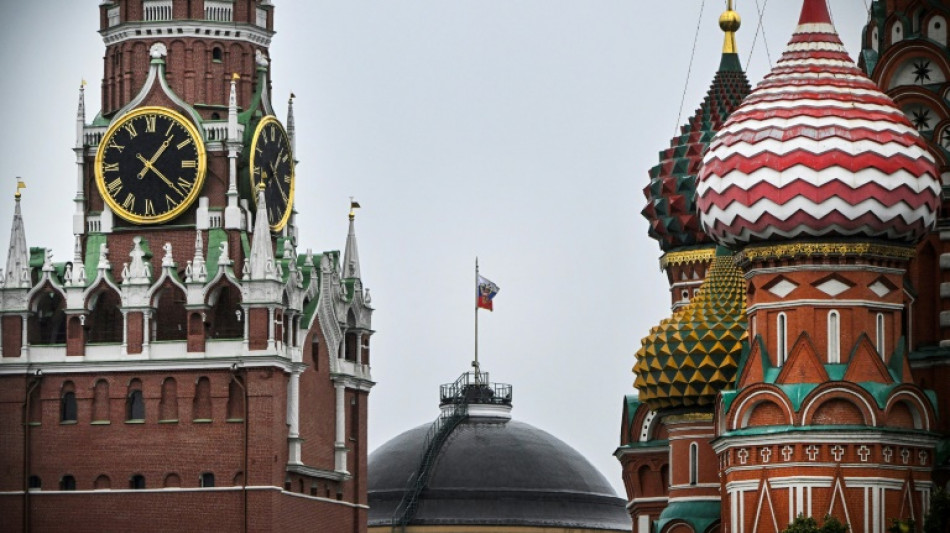
'Unsettled' Moscow residents tighten belts as ruble tanks / Photo: Alexander NEMENOV - AFP

 Jansen, Rabada put South Africa in sight of win over Australia

 Low Rhine weighed on German growth: central bank
 OpenAI says its AI agents disabled their own safety monitors
 Alldritt returns as France call up seven newcomers for Nations Championship
 UN issues call to arms to combat off-the-charts El Nino
 Nigeria Ebola case matches DR Congo strain
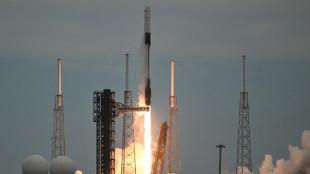 Musk's SpaceX helps launch stock market gains
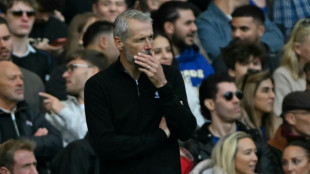 Rose salutes Bournemouth's past heroes ahead of AC Milan clash

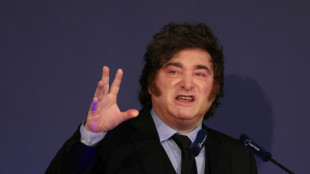 Argentina's Milei calls Spain PM Sanchez a 'dictator' in Madrid visit

 Barca's Olmo injured for a month, misses Clasico
 Impacts of UK's new North Sea gas drilling

 Jansen takes five for South Africa as Australia forced to follow on
 Toulouse v Troyes Ligue 1 game postponed as France gripped by unrest
 PSG winger Kvaratskhelia's season in doubt after torn ACL
 Putin, Witkoff meet in Russia for Ukraine war talks
 Musk's SpaceX helps fuel stock market gains
 Authors urge UK to halt 'draconian' Palestine Action ban as Rooney sales end
 South Korea guides crowd-pulling shark out of canal

 PSG's Kvaratskhelia season in doubt after torn ACL

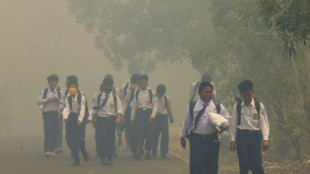 President berates countries that 'insult' Indonesia over wildfires
 PSG's Kvaratskhelia set for months out with torn ACL
 Japan sends senior diplomat to Russia over detained journalist
 Rising UK inflation, debt knocks govt ahead of budget
 UK govt approves drilling in controversial Jackdaw gas field
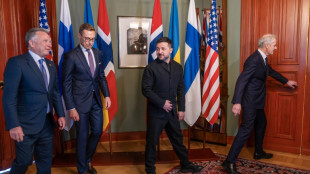 US envoy to meet Putin after 'positive' talks with Zelensky

In central Moscow, retired businessman Igor Inkin is preparing to turn down simple pleasures like dessert as the value of the ruble in his pocket continues to slide.
At 63 years old, he has seen the highs and lows of Russia's turbulent economy, but 17 months into the Kremlin's Ukraine offensive, Inkin is concerned about how to make ends meet.
The ruble has been trading around 97 against the dollar in recent days -- its lowest level since March 2022, weeks after Moscow unleashed full-scale hostilities in Ukraine.
"Prices in the shops are going up and we're having to adjust our expenditures. It's very unsettling," Inkin told AFP.
"We are denying ourselves many, many things... sweets and so on."
Coupled with a year and a half of unprecedented Western sanctions and a sharp drop in oil revenues, Russians are starting to feel the pinch.
Inflation has been on the rise since spring, forcing the central bank to hike its key rate to a greater-than-expected 8.5 percent to rein in prices.
"The situation with the ruble is especially worrying for us pensioners," Inkin said.
- 'Prices have gone up' -
For young Russians, who now face the kind of isolation their Soviet peers remember, the outlook is bleak.
President Vladimir Putin insists Moscow will weather the storm, presenting it as a historic opportunity to bolster Russia's domestic businesses and create jobs for the country's youth.
Many Muscovites echoed Putin's hope that isolation from the West would lead to a renaissance for Russian-made companies and businesses.
But, far from what is shown on Kremlin-controlled television screens, many are struggling.
Dmitry Bobrov, a 19-year-old freelance IT fixer and bicycle courier, cannot always afford spare computer parts.
"Video cards, processors... after the ruble fell their prices have gone up a lot," he said, weighed down by a large courier bag.
Western sanctions have made it harder for Russian businesses to buy goods and parts from abroad, forcing them to rely on parallel imports -- goods transported via another country.
The United Kingdom on Tuesday introduced new sanctions targeting Russia's access to military equipment, adding to a long list of restrictions designed to isolate the country.
"The special military operation is also having a big impact, I think," Bobrov said, using the Kremlin term for its offensive in Ukraine.
Around him, billboards of Western brands have largely disappeared, replaced by huge portraits of Russian soldiers.
- 'This cannot go on forever' -
While many Russians appear publicly stoic and receptive to the Kremlin's narrative, data show they are increasingly worried about their livelihoods.
Fearing for their savings, Russians withdrew one billion rubles in cash ($10.3 million) in the three days after the Wagner mercenary group staged a mutiny, according to central bank figures.
The number is some five times higher than the average of a normal three-day period in Russia.
Sofya Donets, chief economist for Russia at Renaissance Capital, said the weakening of the ruble presented no risk to the country's financial stability.
Analyst Arnaud Dubien meanwhile said the drop in the rouble was expected, reflecting the country's foreign trade.
What is not expected, he said, is that "the ruble is weakening even as the price of oil increases again." The Russian economy relies heavily on oil and gas exports.
He warned that the government must be careful not to let the ruble slip past 100 dollars to 1 ruble.
"Тhis could fuel speculation in society that the country has fallen by the wayside," he added.
Fyodor Tikhonov, a 37-year-old working in the film industry, said putting food on the table for his family has become far pricier.
He used to be able to buy dinner in the supermarket for around 1,000 rubles ($10).
"Now, it's minimum 2,000," the video editor said as he took his son to the shop.
"This cannot go on forever," he said.
J.AbuShaban--SF-PST