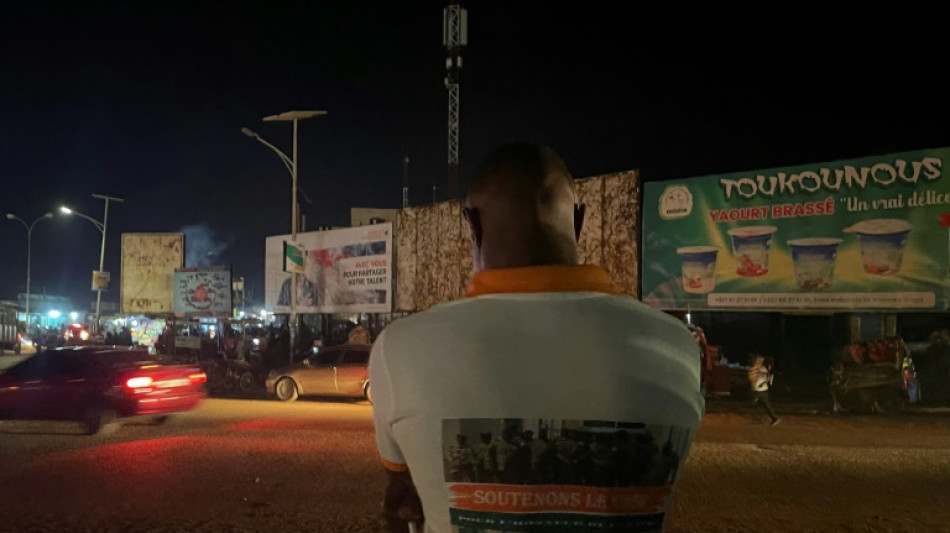
Coup sanctions plunge Niamey into the dark / Photo: - - AFP

 Judge orders Meta to pay $25 bn to New Mexico in Cambridge Analytica case
 Champagne puts cork in project to expand production area

 Canadian publisher says novelist Orelien used AI to write novel

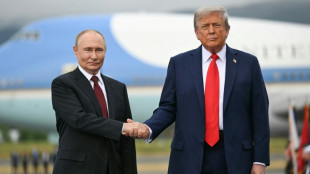 Trump faces fresh questions over ties to 'humanitarian' Putin
 Hansen back in Ireland squad for Nations Championship
 Kremlin sees little 'substance' in Ukraine peace ideas

 Top Arab-Israeli election candidate tells AFP Netanyahu win would be 'catastrophe'
 South African rugby player's death due to 'aortic dissection'
 France's Macron lands in Riyadh on surprise 'solidarity' visit
 Around the world, far right blames immigrants for French protests
 South Africa eases fuel pain as growth slows

 Woody Allen shoots new movie in Madrid

 Nvidia's Huang urges Europe to go all in on AI

 Five things to know as French bond yield tops 5%
 'Complete threat' Ngumoha excites Liverpool captain Van Dijk

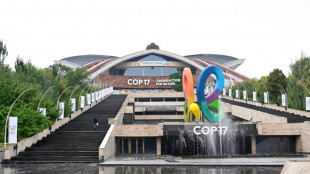 'The fishing's terrible': Deforestation devastates C.Africa river
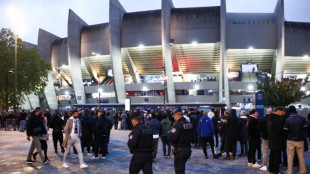
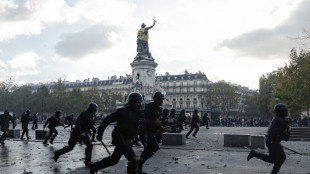 France's tourism sector worried about impact of riots

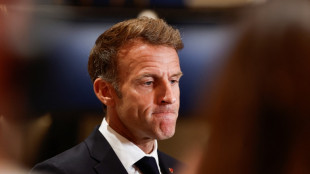 Macron takes aim at Trump for using France riots for election gain
 North Korea says 'new firepower units' in place, loudspeakers to return

 Indonesia leader hits out at market downgrade warning

 Macron slams 'stupid' comments based on AI videos by leaders on France riots
 'Public health crisis': Indonesians seek fire relief from state

 British Museum sells second set of Bayeux exhibition tickets
 Australian lawmaker loses both legs after 'targeted' attack

 UK approves drilling in controversial Jackdaw gas field
The long-suffering people of Niger's capital, Niamey, are used to intermittent power cuts. But since the coup d'etat one week ago, interminable blackouts have tested their patience to the limit.
Faced with hours of enforced downtime every day, the poorer districts of the capital erupt into cheers of relief when lights, fridges and tools finally hum back into life.
In the Dan Zama area, the electric sewing machines in Issa Adamou's workshop are silent. Their owner idly swats at mosquitoes with a fan while he settles in for the long wait.
A group of young people while away the time at a "fada" ("club") down the street, sipping tea in the half-dark, while a chorus of frogs serenades them from the gloom of a nearby pond.
After the military took power on July 26, Niger's neighbours not only slapped financial sanctions on the coup leaders, they stopped transmitting electricity to the poverty-stricken Sahel country.
Given that 70 percent of Niger's power comes across the border from Nigeria, that has been a major blow.
Not that the Nigerian network was reliable. Blackouts there had a knock-on effect on Niger, one of the poorest countries in the world.
But now the state power company Nigelec has only its meagre domestic generation plants to rely on and their output is far from sufficient to supply the capital and its two million inhabitants.
Fada owner Kadi Moukaila is not impressed.
"Customers complain because they can't get chilled drinks here any more," she grumbles.
Elhadj Tidjani, a 70-year-old resident of Gawaye, on the other bank of the Niger river from Dan Zama, is also fuming.
"You can't hear the call to prayer from the loudspeaker at the mosque because of these damned power cuts," he complains.
- 'We can hold out for ages' -
The daily blackout is heralded, in the wealthier parts of the city, by the roar of an army of generators firing up shops, service stations, chemists and plush villas.
In districts like Dan Zama and neighbouring Lazaret, street vendors gather around solar-powered streetlamps when darkness falls, or tout their wares under the light of Chinese-made torches which are becoming costlier by the day.
Aziz Hama, one of the tea-sipping coterie in the fada, thinks Niger will carry on coping as usual.
"We're used to blackouts. We can hold out for ages. Nigeria will have to find another way if it wants to put pressure on our country," he says.
Mohamed, a barber from Dan Zama, also tries to remain sanguine.
"Sourou, sourou ("Be patient")," he tells the restless gaggle of children waiting for him to shave their heads.
He has invested in rechargeable solar-powered shavers so he can carry on working regardless but business is much slower.
And, a mechanic by trade, he worries how long Niger can hold on.
"For the moment the power cuts last about four to five hours. We can cope with that.
"But what if one of the (Nigerelec) turbines goes?" he says.
- Difficult times ahead -
"These cuts come at a bad time. Prices are going through the roof because of the attacks," says Moukaila, referring to the jihadist insurgencies plaguing sections of the Sahel belt spanning Africa from west to east.
"They're making it hard to source supplies."
Moussa Abba, who owns a chemist in Niamey, is not taking any chances.
"We bought a new generator as backup. These aren't ordinary power cuts," he explains.
Halidou Jika, who sells frozen foods, says he now only keeps the minimal amount of stock "so I don't have to throw loads away" if the cold chain breaks.
Niger has played a key part in Western strategies to combat the jihadist attacks that have undermined the Sahel since 2012, with France and the United States stationing troops there.
But hostility to France is growing in former West African colonies such as Niger, Mali and Burkina Faso, while Russian influence, often via the Wagner mercenary group, is on the rise.
Niamey warehouse handler Souley Kanta thinks the people of Niger "are prepared to pay the ultimate sacrifice to get rid of neo-colonialism".
And coup leader Abdourahamane Tiani used the anniversary of Niger's independence from France to warn that the coming weeks and months "will be difficult for our country".
Nigelec hopes things will become easier for its customers once a new 30-megawatt solar power plant near Niamey comes on stream at the end of August.
It was built with a grant from the European Union and a loan from France.
Z.Ramadan--SF-PST