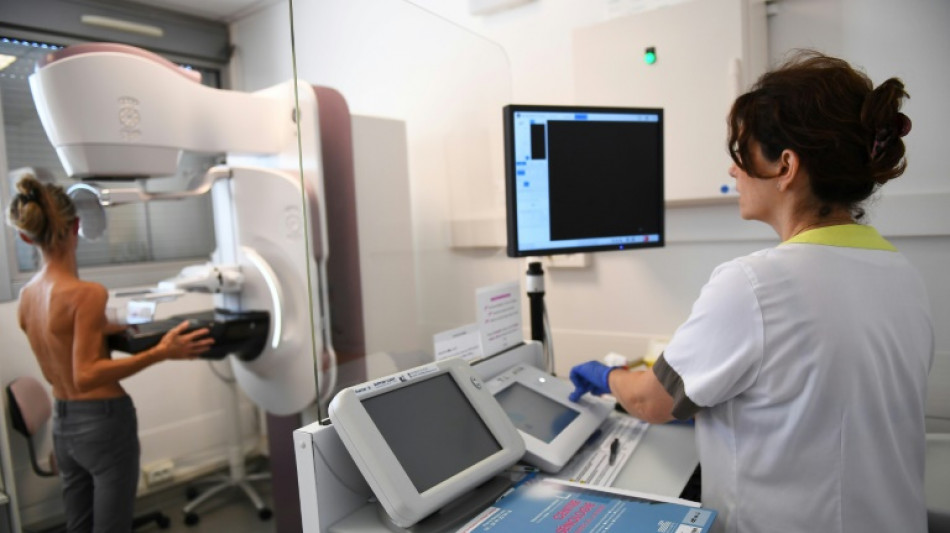
AI could halve time reading breast cancer scans, study suggests / Photo: ANNE-CHRISTINE POUJOULAT - AFP/File

 Judge orders Meta to pay $25 bn to New Mexico in Cambridge Analytica case
 Champagne puts cork in project to expand production area

 Canadian publisher says novelist Orelien used AI to write novel
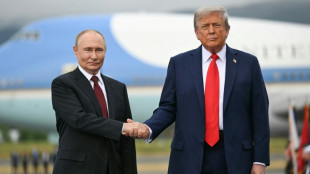 Trump faces fresh questions over ties to 'humanitarian' Putin
 Hansen back in Ireland squad for Nations Championship

 Kremlin sees little 'substance' in Ukraine peace ideas

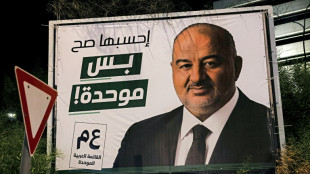 Top Arab-Israeli election candidate tells AFP Netanyahu win would be 'catastrophe'

 South African rugby player's death due to 'aortic dissection'
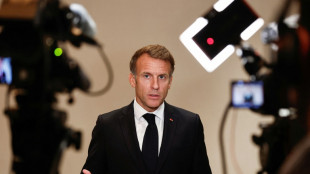 France's Macron lands in Riyadh on surprise 'solidarity' visit
 Around the world, far right blames immigrants for French protests
 South Africa eases fuel pain as growth slows

 Woody Allen shoots new movie in Madrid
 Nvidia's Huang urges Europe to go all in on AI

 Five things to know as French bond yield tops 5%
 'Complete threat' Ngumoha excites Liverpool captain Van Dijk

 'The fishing's terrible': Deforestation devastates C.Africa river

 France's tourism sector worried about impact of riots

 Macron takes aim at Trump for using France riots for election gain
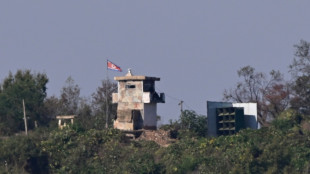 North Korea says 'new firepower units' in place, loudspeakers to return
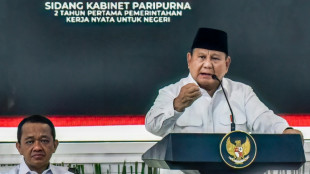 Indonesia leader hits out at market downgrade warning
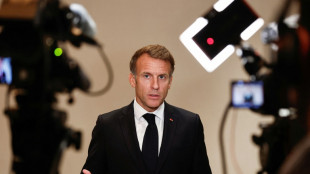 Macron slams 'stupid' comments based on AI videos by leaders on France riots

 'Public health crisis': Indonesians seek fire relief from state

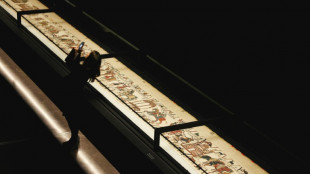 British Museum sells second set of Bayeux exhibition tickets
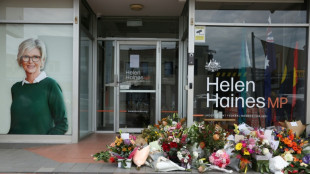 Australian lawmaker loses both legs after 'targeted' attack

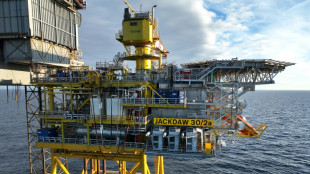 UK approves drilling in controversial Jackdaw gas field

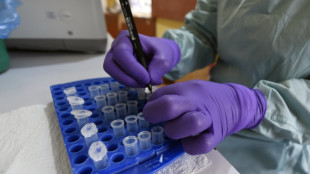
Artificial intelligence could help almost halve the workload of radiologists when it comes to searching routine scans for signs of breast cancer, a large Swedish study suggested on Wednesday.
The interim results of the trial were hailed as promising, but the authors cautioned that more research was needed before AI can be used to screen for breast cancer on a wider scale.
While increasingly convincing chatbots such as ChatGPT have driven speculation about the future potential applications of AI, one area in which the technology has already shown proficiency is in reading medical scans.
With many countries suffering from a shortage of radiologists, there are hopes that AI could make the time-consuming job of analysing routine scans quicker and more accurate.
This could have a particularly large impact for breast cancer. More than 2.3 million women were diagnosed with the cancer in 2020 alone, according to the World Health Organization, and it caused 685,000 deaths.
Regular screening is vital to identifying early signs of cancer. In Europe, women aged 50 to 69 are advised to get a mammogram every two years, with the resulting scan analysed by two radiologists.
The study in Sweden involved the scans of 80,000 women who had mammograms at four sites in southwest Sweden between April 2021 and July last year.
- 'Considerable importance' -
Their scans were randomly divided for analysis to either an AI-supported system or two human radiologists, who served as the control group.
The AI algorithm read the scans and predicted the risk of cancer out of 10. Its predictions were then checked by a radiologist.
The AI-supported system spotted 20 percent more cancers, the study said, which worked out to be an additional case for every thousand women screened.
When it came to false positives -- when a mammogram is first thought to look suspicious but is later cleared -- both the AI-supported system and the two humans spotted the same rate: 1.5 percent.
And the workload for radiologists was reduced by 44 percent for the AI group, because only one person was required to read the scans rather than the normal two.
"The greatest potential of AI right now is that it could allow radiologists to be less burdened by the excessive amount of reading," said Kristina Lang, a radiologist at Sweden's Lund University and lead author of the study.
But Lang said the "promising interim safety results" were "not enough on their own to confirm that AI is ready to be implemented in mammography screening," she said in a statement.
It will take two more years before the trial can say whether using AI leads to a reduction in what are called interval cancers, which are detected between routine screenings, the researchers cautioned.
Stephen Duffy, a professor of cancer screening at Queen Mary University of London who was not involved in the study, pointed out that the AI algorithm may have over-diagnosed certain forms of early breast cancer called ductal carcinoma in situ.
Nonetheless, he praised the "high-quality study", saying that reducing the burden on radiologists' time was "an issue of considerable importance in many breast screening programmes".
L.AbuAli--SF-PST