US family reaches deal over cells harvested in 1950s / Photo: Dimitrios Kambouris - GETTY IMAGES/AFP

 Judge orders Meta to pay $25 bn to New Mexico in Cambridge Analytica case
 Champagne puts cork in project to expand production area

 Canadian publisher says novelist Orelien used AI to write novel
 Trump faces fresh questions over ties to 'humanitarian' Putin

 Hansen back in Ireland squad for Nations Championship

 Kremlin sees little 'substance' in Ukraine peace ideas

 Top Arab-Israeli election candidate tells AFP Netanyahu win would be 'catastrophe'
 South African rugby player's death due to 'aortic dissection'
 France's Macron lands in Riyadh on surprise 'solidarity' visit
 Around the world, far right blames immigrants for French protests

 South Africa eases fuel pain as growth slows

 Woody Allen shoots new movie in Madrid
 Nvidia's Huang urges Europe to go all in on AI

 Five things to know as French bond yield tops 5%
 'Complete threat' Ngumoha excites Liverpool captain Van Dijk

 'The fishing's terrible': Deforestation devastates C.Africa river

 France's tourism sector worried about impact of riots

 Macron takes aim at Trump for using France riots for election gain
 North Korea says 'new firepower units' in place, loudspeakers to return
 Indonesia leader hits out at market downgrade warning
 Macron slams 'stupid' comments based on AI videos by leaders on France riots
 'Public health crisis': Indonesians seek fire relief from state

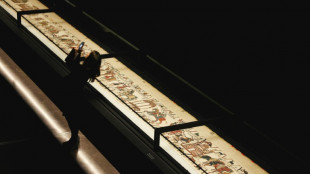 British Museum sells second set of Bayeux exhibition tickets

 Australian lawmaker loses both legs after 'targeted' attack

 UK approves drilling in controversial Jackdaw gas field

A US biotechnology company has reached a settlement with the family of Henrietta Lacks, an African-American woman whose cells were used for groundbreaking medical research without her consent.
Civil rights attorney Ben Crump, who filed a lawsuit in 2021 on behalf of the Lacks' estate, announced on Tuesday that the family had agreed a confidential deal with Massachusetts-based firm Thermo Fisher Scientific.
"The parties are pleased that they were able to find a way to resolve this matter outside of court," Crump said, noting that Tuesday would have been Lacks' 103rd birthday.
Crump, who has represented the family of George Floyd and other Black victims of US police violence, said the settlement provides "some measure of justice for Henrietta Lacks, 70 years later."
The 31-year-old Lacks, a tobacco farmer from Virginia and mother of five, died of cervical cancer in 1951 at Johns Hopkins Hospital in Baltimore.
During attempts to cure her shortly before she died, Lacks' abnormally resilient cancer cells were removed from her tumor and were used for decades by researchers without her family's knowledge.
The cells, dubbed HeLa for the first letters of her first and last names, were the first-ever human cells to grow endlessly in the lab -- all others harvested up to that point died.
- Nobel Prizes -
Research using the cells led to Nobel Prize-winning discoveries, and laboratories worldwide used them to develop vaccines -- notably against polio -- as well as in cloning, in-vitro fertilization and many medicines, fueling an industry now worth billions of dollars.
The family knew nothing of Lacks' role until the 1970s, and only came to understand its full scope thanks to the work of Rebecca Skloot, author of the 2010 bestseller "The Immortal Life of Henrietta Lacks."
Lacks' story was also the subject of an HBO movie starring Oprah Winfrey.
"They treated her like a specimen, like a lab rat," her grand-daughter Kimberly Lacks said in 2021, describing the cell theft as racism.
Thermo Fisher Scientific confirmed the settlement, using the same language as the family lawyers Crump and Chris Seeger.
In filing the lawsuit in 2021, Seeger said that Thermo Fisher was the first of many companies that could face legal action for having "profited from the use" of the HeLa cells.
On its website, Johns Hopkins Hospital said that it has never sold or benefited from the discovery or distribution of HeLa cells, and does not own the rights to them.
"HeLa cells were offered freely and widely by Johns Hopkins for scientific research," it said.
"Johns Hopkins has worked in close coordination with several members of the Lacks family over the past decade to recognize and honor Henrietta Lacks, including scholarships, engagement with local schools and annual symposia," it added.
V.Said--SF-PST