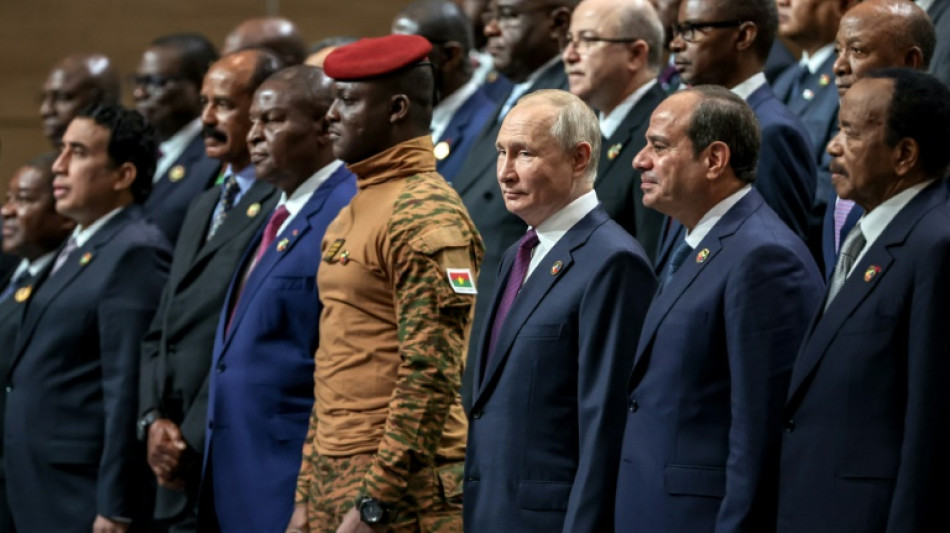
Russia retains allies, despite the Ukraine conflict / Photo: Mikhail TERESHCHENKO - TASS Host Photo Agency/AFP

 Quebec separatist premier sworn in without royal presence
 UAE nominates official to lead UN
 NFL boss Goodell welcomes probe into Hurts medical care
 Musk threatens Democrats teeing up congressional probes
 In the Mexican town that makes emblematic Day of the Dead garlands
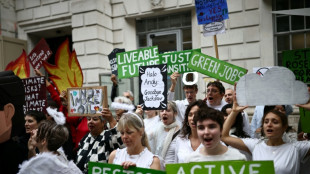
 Protests banned in parts of Paris as Macron swipes at Trump
 Judge orders Meta to pay $25 bn to New Mexico in Cambridge Analytica case
 Champagne puts cork in project to expand production area

 Canadian publisher says novelist Orelien used AI to write novel
 Trump faces fresh questions over ties to 'humanitarian' Putin
 Hansen back in Ireland squad for Nations Championship
 Kremlin sees little 'substance' in Ukraine peace ideas

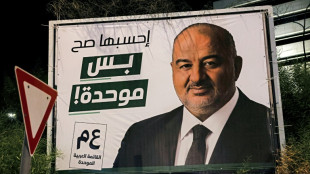 Top Arab-Israeli election candidate tells AFP Netanyahu win would be 'catastrophe'
 South African rugby player's death due to 'aortic dissection'
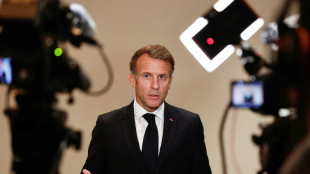 France's Macron lands in Riyadh on surprise 'solidarity' visit
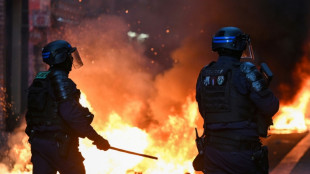 Around the world, far right blames immigrants for French protests
 South Africa eases fuel pain as growth slows
 Woody Allen shoots new movie in Madrid
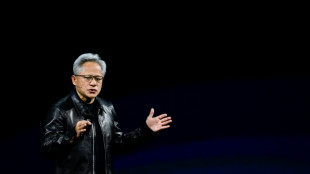 Nvidia's Huang urges Europe to go all in on AI
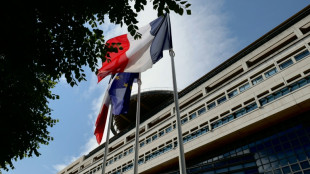 Five things to know as French bond yield tops 5%
 'Complete threat' Ngumoha excites Liverpool captain Van Dijk

 'The fishing's terrible': Deforestation devastates C.Africa river
 France's tourism sector worried about impact of riots
 Macron takes aim at Trump for using France riots for election gain
 North Korea says 'new firepower units' in place, loudspeakers to return

Despite the military intervention in Ukraine and efforts by the West to paint Russia as a pariah state, Moscow can still count on support from several African, Latin American and Asian governments, including that of heavyweight China.
Visibly satisfied, Russian President Vladimir Putin stood shoulder to shoulder on Friday with a score of African heads of state at a Russia-Africa summit in Saint Petersburg.
The message from the family photo was, he said, that Moscow was working hand in hand with the continent and its one billion people.
"Russia's attention to Africa is steadily growing," Putin said on Friday.
He added the relations with each country on the African continent, where the Soviet Union had already forged strong ties, "have a bright future in the emerging multipolar world".
The previous day, Putin had pulled a diplomatic rabbit out of his hat, offering free grain to six African countries, just as the latter were wondering how to cope with the consequences of Russia's withdrawal from a Ukraine grain deal.
That pact enabled Ukraine to export its cereal crops to global markets despite the war, thus easing pressure on food prices in Africa and elsewhere.
Putin's overtures to Africa go back long before the Ukraine conflict.
For several years now, the Kremlin has openly engaged in diplomatic and economic offensives on the continent and offered "security" in the form of the Wagner mercenary army to African governments fending off jihadist insurgencies.
But in recent months, Russia has had to speed up its quest for alternatives to its European partners.
Foreign Minister Sergey Lavrov has toured Africa twice since January, seeking to draw it into Moscow's camp and presenting Russia as a bulwark against Western "imperialism" and "neocolonialism".
- Opposition to the West -
Moscow also continues to enjoy the backing of several Latin American and Asian leaders, including several criticised for their authoritarian rule.
Historic allies of Moscow, like Venezuela and Cuba, refused to condemn Russia's military offensive in Ukraine during this month's summit between Latin America and the European Union.
In their joint declaration, the leaders merely expressed their "deep concern on the ongoing war against Ukraine", without once mentioning Russia, Moscow, the Kremlin or Putin.
Even this lowest-common-denominator phrasing failed to garner unanimous support, faced with Nicaragua's refusal to endorse it.
While not going so far as to back Moscow, Brazilian President Luis Ignacio "Lula" da Silva refused to send weapons to Ukraine or to impose sanctions on Russia, calling instead for Europe and the United States to stop "encouraging" the offensive.
"Russian isolation is a construction invented in the West," Fyodor Lukyanov, a political analyst close to the Kremlin, told AFP.
"Russia is perceived as a country that might be right or might be wrong but is, in any case, opposed to the West," he said.
"In this new international environment, this standpoint is more efficient and more attractive than one could have imagined."
- Tell-tale silence -
Certain countries prefer to remain silent, which speaks volumes.
On February 24, the anniversary of Russia's military operation in its pro-western neighbour, a majority of countries at the United Nations urged Russia to withdraw its troops from Ukraine.
Moscow's historic allies -- Belarus, North Korea and Syria -- voted against the motion.
Around 30 others abstained.
Chinese President Xi Jinping was received with great pomp in Moscow in March for a visit designed to usher in a "new era" of Sino-Russian relations.
Since then Russian and Chinese armies have conducted a string of joint military exercises.
In another sign of a partnership designed to counter US hegemony, Putin is scheduled to visit China in October, his first trip to a G20 country since the start of the conflict in Ukraine.
In recent months the Russian leader has travelled to Iran and Central Asia.
But an international arrest warrant against him, issued by the International Criminal Court, may hinder future movements.
It has already forced him to abandon plans to take part in the BRICS summit of emerging economies, due to be held in South Africa in late August.
O.Salim--SF-PST