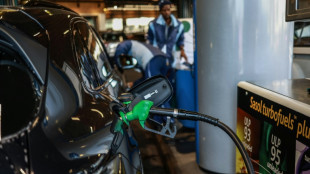
As West fears Tunisia collapse, hopes of IMF bailout fade / Photo: FETHI BELAID - AFP/File

 Websites go dark as AI exposes critical security flaws

 Man Utd humiliated as Arsenal deny Bayern in Champions League
 Low-budget Brewers and Rays seek first World Series title

 Pitiful Man Utd display heaps pressure on Carrick

 Ohtani surgery 'not on the table': Dodgers chief

 eBay to slash 1,000 more jobs, around 9% of workforce

 Villa tame Viking to stay perfect in Champions League

 Tesla profits drop but top analyst estimates

 Angels drop Suzuki as manager after club's worst MLB season
 Washington orders US embassy staff, families to leave Saudi Arabia
 Musk's SpaceX results lift global stock markets

 NFL boss Goodell: Comfort level 'very high' for Paris game
 Fernandes laments 'mood of defeat' as Man Utd crumble in Como
 Maradona doctor was made 'scapegoat' for his death, Argentine court told
 Man Utd thrashed by Como in Champions League horror show

 UN experts urge Meta to safeguard political expression in Brazil election

 Websites go dark worldwide as AI exposes critical security flaws
 Defense in Maradona death trial seeks acquittal of doctor
 Jansen, Rabada put South Africa in sight of win over Australia

 Low Rhine weighed on German growth: central bank
 OpenAI says its AI agents disabled their own safety monitors
 Alldritt returns as France call up seven newcomers for Nations Championship

 UN issues call to arms to combat off-the-charts El Nino
 Nigeria Ebola case matches DR Congo strain
 Musk's SpaceX helps launch stock market gains
Western nations fear an economic collapse in Tunisia could trigger even greater migrant flows to Europe and have offered financial assistance. Yet prospects of Tunisia's sealing the biggest deal of all -- a $1.9-billion bailout from the International Monetary Fund -- seem increasingly remote.
The inflation-ravaged and heavily indebted country reached a tentative deal for the loan from the Washington-based IMF in October.
It would require Tunis to undertake what the IMF calls a "comprehensive economic reform programme" that would phase out subsidies on fuel and electricity.
But President Kais Saied has repeatedly rejected "foreign diktats that will lead to more poverty".
In March, US Secretary of State Antony Blinken warned Tunisia urgently needs to reach an IMF deal because its economy "risks falling off the deep end".
That followed European Union foreign policy chief Josep Borrell's concern that a collapse "economically or socially" in Tunisia would trigger a new flow of migrants to Europe -- an assessment rejected by Tunis.
Italy says migrant arrivals by sea have surged this year, most of them from Tunisia and Libya.
"Tunisia is a nation that is in extreme distress and clearly leaving it to its fate can have consequences that are very serious," Italian Prime Minister Giorgia Meloni told reporters in Rome on Sunday at a conference with Saied and other Mediterranean leaders.
Beyond the economic situation, the European Union and Washington have been troubled by Saied's increasing authoritarianism.
He has seized far-reaching powers since sacking the government in July 2021. He later dissolved parliament and pushed through a constitution to replace one approved in 2014 following the country's Arab Spring revolution.
- Almost 'buried' -
Struggling with joblessness and inflation exacerbated by the fallout from Russia's invasion of Ukraine, many Tunisians have joined sub-Saharan Africans in an exodus from Tunisia, which lies just 130 kilometres (80 miles) from the Italian island of Lampedusa.
The European Union in June said it could offer a long-term loan of around 900 million euros ($1 billion) to the country "following (the) IMF-supported reform programme".
But Aram Belhadj, a lecturer and researcher at Tunisia's University of Carthage, said the IMF agreement "is blocked" because Saied "rejects the reforms proposed", particularly on fuel subsidies as that would lead to higher costs for public transport and deliveries.
Tunisian consumer prices are already projected to rise 10.9 percent this year, according to the IMF.
"If by the end of August there is no clarification on the position of Tunisia, the IMF agreement will be buried once and for all," Belhadj said.
According to economist Ezzedine Saidane, the president saw "things which would penalise him politically" in the required reforms.
Under the IMF deal Tunisia would also have to restructure 100 state-owned firms that hold monopolies over many parts of the economy and are often heavily indebted.
"It's Tunisia which blocked" the agreement, Saidane said, and now, "negotiations are completely stalled."
- 'Increasingly difficult' -
IMF regional director Jihad Azour indicated in mid-April that he had not received "any request from Tunis for the revision of its programme".
Since then, Saied has reiterated his defence of subsidies and continued his attacks on the international financial system.
At the Rome conference, Saied again called for "a new global financial institution", to establish "a new human order where hope replaces despair".
He has floated the idea of "taking surplus money from the rich to give to the poor", but it would not be easy.
The budget deficit of eight percent in 2022 came entirely as a result of state subsidies, mostly for energy, after Russia's invasion of Ukraine pushed up global prices.
The state's fuel subsidies bill soared 370 percent on-year in the first half of 2022, official figures show.
"There is nothing much that can replace the gradual increase in pump prices foreseen by the IMF programme," a source close to the negotiations said.
Saidane advised against a tax hike since the country is already under "the most elevated fiscal pressure in Africa".
Debt is around 80 percent of gross domestic product.
Belhadj said that without an IMF deal "the situation is going to become increasingly difficult" with a "very large" risk of debt default in 2024 and 2025.
In Saidane's view, the Tunisian state "seems to have made the choice to favour debt repayment. But at the expense of providing basic goods".
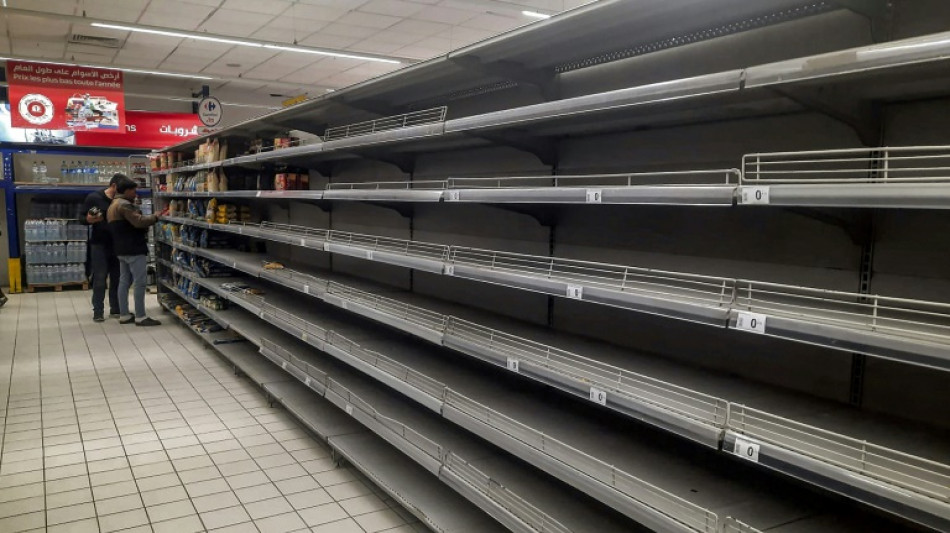
In the past few months sporadic shortages of flour, rice, sugar and fuel have led to empty shelves or long queues.
Russia's exit last week from a deal allowing Black Sea grain exports has renewed fears of shortages or price hikes that could hit vulnerable countries.
In Tunisia, where flour is among basic food ingredients subsidised by the state, this could only add to budgetary pressure.
The government has turned increasingly to local banks for financing, contributing to a downgrade in the ratings on four of the country's financial institutions earlier this year by global agency Moody's.
W.AbuLaban--SF-PST