
US on 'very narrow path' to avoid recession: IMF chief economist / Photo: Bastien INZAURRALDE - AFP

 Websites go dark as AI exposes critical security flaws

 Man Utd humiliated as Arsenal deny Bayern in Champions League

 Low-budget Brewers and Rays seek first World Series title

 Pitiful Man Utd display heaps pressure on Carrick

 Ohtani surgery 'not on the table': Dodgers chief

 eBay to slash 1,000 more jobs, around 9% of workforce

 Villa tame Viking to stay perfect in Champions League

 Tesla profits drop but top analyst estimates

 Angels drop Suzuki as manager after club's worst MLB season

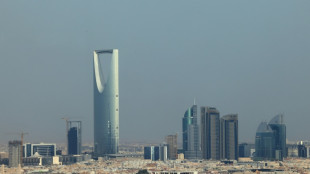 Washington orders US embassy staff, families to leave Saudi Arabia

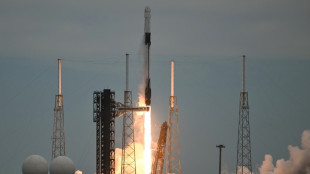 Musk's SpaceX results lift global stock markets

 NFL boss Goodell: Comfort level 'very high' for Paris game
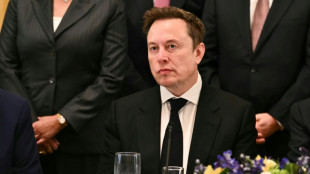
 Fernandes laments 'mood of defeat' as Man Utd crumble in Como

 Maradona doctor was made 'scapegoat' for his death, Argentine court told
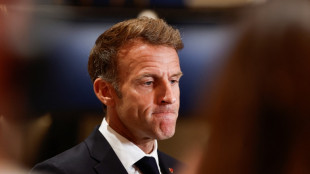
 Man Utd thrashed by Como in Champions League horror show

 UN experts urge Meta to safeguard political expression in Brazil election

 Websites go dark worldwide as AI exposes critical security flaws
 Defense in Maradona death trial seeks acquittal of doctor
 Jansen, Rabada put South Africa in sight of win over Australia

 Low Rhine weighed on German growth: central bank
 OpenAI says its AI agents disabled their own safety monitors

 Alldritt returns as France call up seven newcomers for Nations Championship

 UN issues call to arms to combat off-the-charts El Nino
 Nigeria Ebola case matches DR Congo strain
 Musk's SpaceX helps launch stock market gains

The US economy is on a "very narrow path" to avoiding a recession, the International Monetary Fund's chief economist says, while warning of risks to China's strong post-pandemic recovery.
"A recession is not in our baseline," Pierre-Olivier Gourinchas told AFP during an interview at the IMF's headquarters in Washington, ahead of the publication of its updated global growth projections on Tuesday.
"We are cautiously prudent that the US economy could avoid a recession and, you know, glide towards its inflation target without having a recession in its future," he said.
"But it's a very, very narrow path," he warned.
On Tuesday morning, the IMF raised its forecast for global growth in 2023 to 3.0 percent, up 0.2 percentage points from its previous forecast in April, citing resilient service sector activity in the first quarter of the year.
The IMF still expects much of the growth this year and next to come from emerging and developing economies, with countries like the United States, Germany and Japan due to grow at a much slower pace than China and India.
But the IMF report also noted there are growing risks to China's economy following its post-pandemic reopening, especially in its troubled real estate sector.
- 'Slack' in Chinese economy -
The IMF continues to predict that China's economy will grow by 5.2 percent this year, up sharply from last year.
But there are now signs that China's rapid economic rebound from the Covid-19 pandemic could be "weakening faster than maybe was anticipated," Gourinchas told AFP, while noting "some concerns about the strength of the Chinese economy going forward."
"Maybe there's still a certain amount of slack in the Chinese economy that is not going away and that is weighing on prices," he said.
This slack has had a positive impact on the global inflation outlook: The IMF now forecasts consumer price increases will slow from 8.7 percent in 2022 to 6.8 percent this year, due largely to the decline in Chinese inflation.
But while it may be good news for the global economy, it could pose challenges for Chinese policymakers, Gourinchas told AFP.
"It might require some stronger policies by the Chinese authorities both in terms of monetary policy -- maybe a little bit more supportive easing monetary policy -- and also in terms of fiscal policy," he said.
- Russia still weathering sanctions -
Russia's economy is expected to grow significantly faster this year than the IMF forecast back in April, due largely to stronger-than-expected domestic demand, and continued government spending.
The IMF now sees Russian growth this year of 1.5 percent, up by 0.8 percentage points since April.
"There is a strong component coming from fiscal spending in the context of the Russian invasion of Ukraine," Gourinchas said.
"There is a strong defense and military effort, and that is providing some stimulus to the domestic economy," he added.
The IMF now expects the Russian government's budget deficit will grow to 6.1 percent this year, up from 1.4 percent last year, said a spokesperson for the fund.
Export revenues have also remained resilient despite a series of US-backed sanctions in response to the invasion of Ukraine, and a G7 price cap on Russian oil.
"So far, export revenues coming from especially crude oil have remained fairly strong," he said.
"There is some softening on refined products, this is a little bit harder, but on crude oil, they certainly the oil revenues have been have been quite sustainable," he added.
Over the medium term, the IMF still expects the Russian economy to slow significantly compared with its projections before the war in Ukraine began.
"Our projections for medium term growth for Russia are below one percent," he told AFP, adding that the Russian government's increased fiscal spending have "dimmed" the country's long-term growth prospects.
Z.AlNajjar--SF-PST