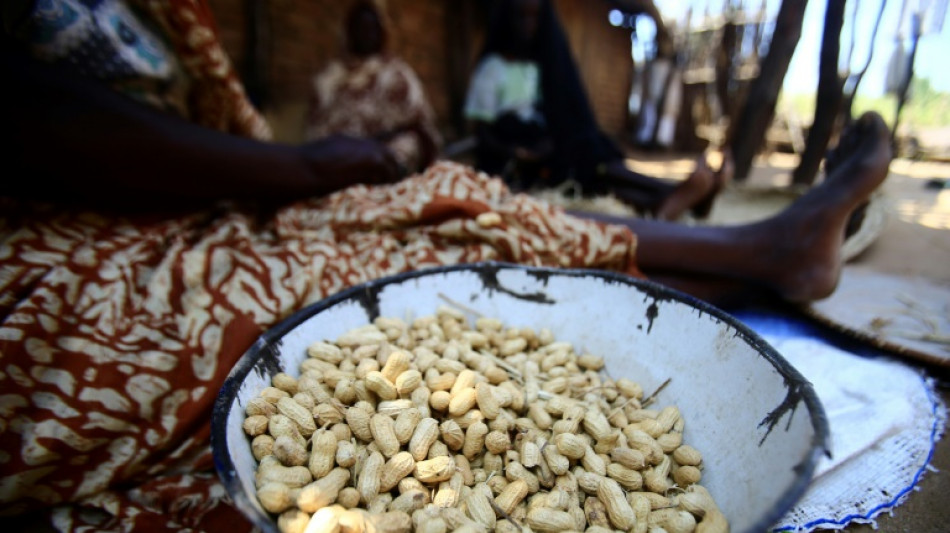
Adding peanuts to young children's diet can help avoid allergy: study

 'Glad it's over': Kim powers to Games gold and military exemption

 After 11 World Cups, football finally comes home for one Indian fan

 Marc Marquez wins sprint at Japan MotoGP, Martin grabs pole

 Alcaraz fends off Arnaldi to reach Japan Open quarters

 Antonelli tops times in final practice at Bahrain GP

 Gauff digs deep to beat Osorio in China Open second round

 Fresh protests to hit Spain after housing measures defeated

 'He's here with me': Japan cycle queen dedicates gold to late brother

 Japan Olympic chief says 'lot more' athletes at Games than expected

 Asian carmakers besting US rivals at home, China poised to strike

 Widgets & Web Offers All-Inclusive Investor Relations Websites for Public Companies, IPOs and SPACs

 Adams named new US captain to 2030 World Cup

 China a better influence in Latin America than US: poll

 Judge pauses construction of border project in Texas national park

 Belgium's De Bruyne fires double to sink Turkey, France held by Italy

 US jobs data boosts stocks as oil prices dip

 US Supreme Court to hear high-stakes climate case

 Trump expected to name intel chief Clayton as AI czar: reports

 Argentina unveils passports-for-investment scheme

 Brazil election debate chaos sparks censorship row

 England's Carse charged by cricket body over nightclub incident

 Amazon vows $1 bn for data center towns, decries 'myths'

 Oil prices drop on G7 fuel release, US jobs data boosts stocks

 G7 agrees deal to ease global energy supply concerns

 Spain's government dealt blow as lawmakers reject housing bills

Including peanuts in children's diets early in life could help stave off allergies against the legume, which can be fatal and affect swathes of youngsters globally, according to a new study Friday.
Researchers found that introducing peanut products to babies and infants, and gradually increasing exposure, led to greater tolerance for the common allergen.
The peer-reviewed study, published in The Lancet, involved 146 peanut-allergic children aged between zero and three over two-and-a-half years.
Of the group, 96 were given peanut protein powder every day, with the dose increasing progressively to the equivalent of six peanuts. The other children received a placebo of oat flour.
Twenty of the children who received peanut powder showed allergy remission, meaning no allergic reaction occurred six months after the therapy ended.
One child in the placebo group showed remission.
Six months after the treatment, the children in remission could tolerate a dose equivalent to 16 peanuts.
An additional 20 children who received peanut powder were considered 'desensitised', meaning they had a higher allergic threshold but were not considered in remission.
These children could tolerate a dose equivalent to between six and 12 peanuts six months after the treatment ended.
The youngest children in the study experienced remission the most often, and the best results were in those under 12 months.
"Very early interventions may provide the best opportunity to achieve remission", said co-author Stacie Jones.
- 'Considerable burden' -
Peanut allergies affect two percent of children in Western countries, according to the study, and can last a lifetime.
Affected children must avoid eating peanuts and have self-injectable adrenaline available to fight allergic shocks, which can be fatal if they are accidentally exposed.
Exposure can even occur when a child hugs someone who has just consumed peanuts.
"There are no treatment options, resulting in a considerable burden on allergic children and their caregivers to avoid accidental exposure," said co-author Wesley Burks.
"In severe cases, this can restrict peanut-allergic children's freedoms, particularly when it comes to navigating daycare or schools and public spaces where access to a safe diet is in jeopardy," he added.
Previous studies have produced similar results but the length of the latest studies makes it unique.
Although it provided important results, it may not reflect the behaviour of the children's bodies in real-world conditions.
The study was conducted under close medical supervision, and adrenaline injections were administered on 21 children during the trial.
D.Khalil--SF-PST