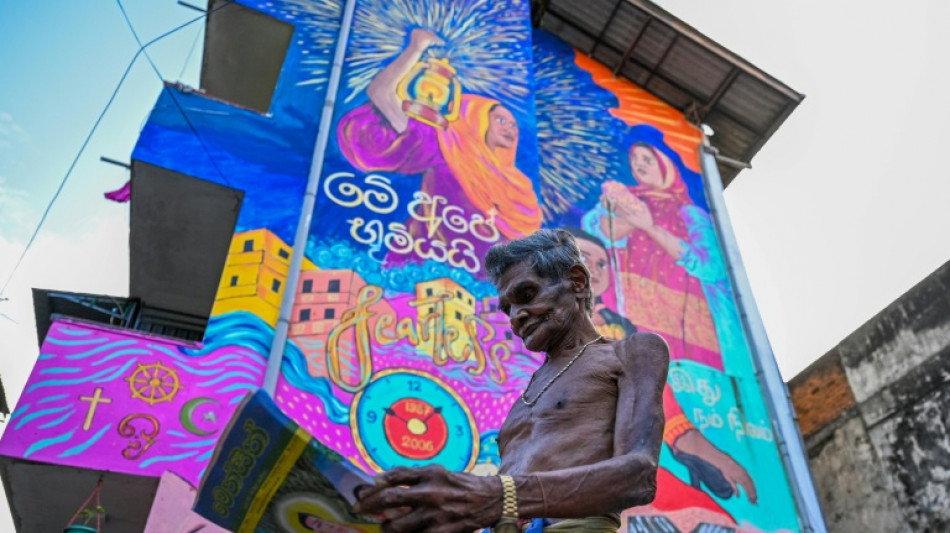
A year after Sri Lanka unrest, Slave Island hungers / Photo: Ishara S. KODIKARA - AFP

 Monet's 'Iris' fetches 50 mn euros at Paris auction
 L'Oreal sees double-digit sales growth

 Sri Lanka stun England with huge chase after Brook's 202

 Guatemala sentences former police officers in gay couple's killings
 Nelson's erotic dream letter features in London auction
 Canada opens free trade talks with Turkey
 Swiss, Austrian women freed after Niger kidnap ordeal
 Austrian-born French resistance fighter dies aged 105: regional official
 Paris shop-owners and residents prepare for fresh protests
 French, Japanese authors try to write novel on one-day train ride
 Pentagon, Lockheed announce agreement for 850 F-35 jets over 10 years
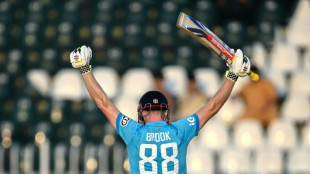 Brook scores fastest double century in ODI history in rampant England's 429-4
 Top-ranked Rybakina into Ningbo quarter-finals on return from injury

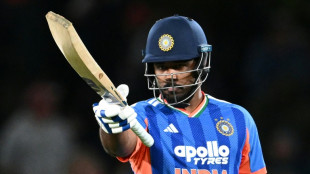 Samson superb as India mark record T20 chase in win over New Zealand
 Nvidia boss criticises 'cheap' AI doomsday warnings

 Philippines trailblazer Eala ousted in Ningbo last 16
 Stocks retreat as tech mood sours, oil prices jump
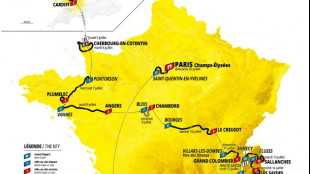 Northern start and finale in the Pyrenees for 2027 Tour de France
 Handful of Micron workers strike in Taiwan
 Zelensky says fresh Russian strikes show 'no change' in Kremlin position
 China slams 'Cold War mentality' after new EU Arctic plan
 Алекс Боди и ръководителят на BlackRock Лари Финк в Берлин: инвестиции в Германия и Румъния?

 Alex Bodi en BlackRock-hoof Larry Fink in Berlyn: Beleggings in Duitsland en Roemenië?

 Ageing Japanese village turns to Peru in search of new residents

 Targeted by Trump, ICC in running for top EU rights prize

As Sri Lankans flocked to a jubilant street party celebrating their president's ouster, retired accountant Milton Perera sat at home pondering whether his family could afford to eat the next morning.
Before his dramatic toppling last year, Gotabaya Rajapaksa was blamed for an economic crisis that brought food and fuel shortages, blackouts and runaway inflation to the island nation.
But Perera told AFP at the time that with the once-loved leader out of office, the hardships his country had endured to that point would get worse.
A year later, with millions of his compatriots struggling to put enough food on the table, the 75-year-old says his prediction has proved correct.
"Last year we had money, but no goods," Perera told AFP inside his rundown government flat, a short distance from the seafront protest site where Rajapaksa's toppling was orchestrated last year.
"Now there are goods, but we don't have money."
His home in Slave Island -- a working-class pocket of Colombo where the Portuguese housed African slaves during the colonial period -- is damp from a leaking water main.
Municipal authorities have not come around to repair it because they no longer have money for maintenance.
With sunken cheeks and veins protruding from his gaunt limbs, Perera wheezes as he moves gingerly around his kitchen, the product of his chronic asthma.
Before the crisis, medication to treat his condition was provided free by public hospitals -- a government programme that has now been scrapped.
Two months ago Perera's welfare payments were stopped as part of other spending cuts, meaning he is no longer able to afford an inhaler to treat his symptoms.
His family's water and electricity bills have doubled thanks to the removal of government utility subsidies.
The economic crisis had already forced Perera, his wife, his two children and their extended families to regularly skip meals when AFP first visited their home.
A year later, supermarkets are again fully stocked with the kitchen staples that disappeared from the shelves during last year's chronic shortages -- but Perera's family can't buy them.
"We can't afford meat, fish and eggs," B. M. Pushpalatha, Perera's wife, told AFP as the couple shared an unadorned meal of rice and lentils. "They are too expensive."
- 'You won't starve' -
Sri Lanka defaulted on its $46 billion foreign debt in April 2022 as its economy went into a tailspin unprecedented in its history as an independent nation.
Petrol queues at pumping stations stretched for miles and motorists -- several of whom died in queue -- spent days waiting to top up their tanks.
Families had no gas to cook food, farm yields fell dramatically due to a ban on fertiliser imports, and hospitals were empty of life-saving pharmaceuticals.
Months of angry protests culminated in the July 9 storming of Rajapaksa's presidential palace, a short walk from Perera's home, with its occupant forced into a brief but humiliating exile.
Rajapaksa's departure did not conclude Sri Lanka's economic woes, with inflation peaking at 70 percent in September. Petrol rationing also remains in force.
His successor Ranil Wickremesinghe secured a $2.9 billion IMF bailout in March by agreeing on a tough austerity regimen to plug the country's black hole of debt.
"Many of the decisions I have been compelled to take since assuming the presidency have been unpopular," Wickremesinghe said in a February address to the nation.
"However, because of those decisions, today no citizen of this country will die of dehydration in oil queues. You won't starve without gas or fertiliser."
- Seven million in poverty -
But the steep cuts to government spending and welfare programmes have exacerbated hardship across the country.
An additional four million Sri Lankans had fallen below the poverty line since the crisis began, said Dhananath Fernando, chief executive of the Colombo-based Advocata Institute think-tank.
"That means about seven million people in a country of 22 million are earning less than 14,000 rupees ($46) a month," he told AFP.
Of those, nearly four million Sri Lankans did not have the means to adequately feed themselves, the United Nations said in June.
Fernando said the figures showed a sharp deterioration in living standards across the country in the past year with no prospect of a quick recovery.
Unless the austerity measures began to bear fruit, the island risked a return to the sustained social unrest that broke out last year, he added.
"If we really fail to take Sri Lanka to a growth trajectory in the future, I'm not completely ruling it out," Fernando said.
L.Hussein--SF-PST