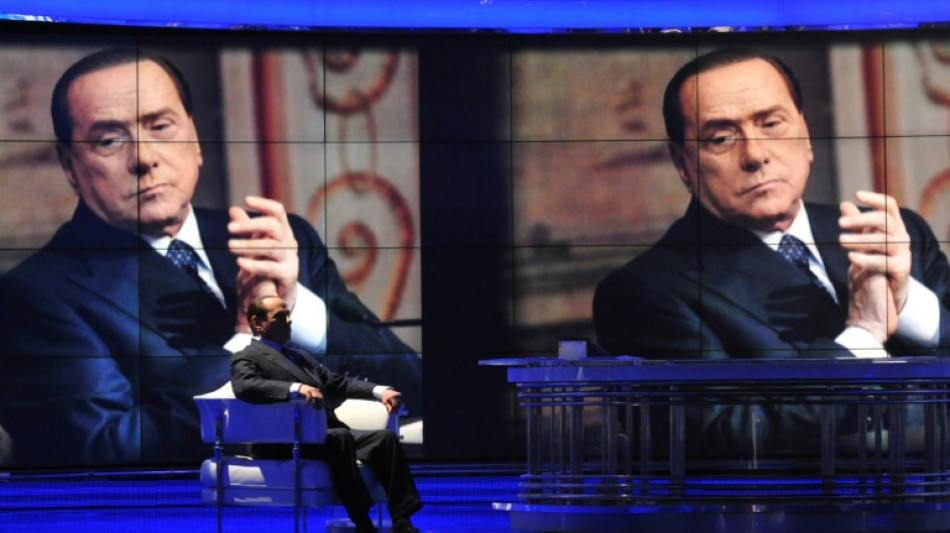
From property to TV, Berlusconi the entrepreneur / Photo: Tiziana FABI - AFP/File

 Lula, Bolsonaro to clash once more before Brazil vote
 Dressed to kill: Haircuts cap menacing look of Japan's yakuza

 Napa Valley's wineries feel Trump's tariff squeeze
 Venezuela protests demand return of Nobel winning leader Machado
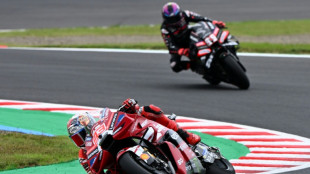 Marquez tops incident-packed opening practice for Australian MotoGP
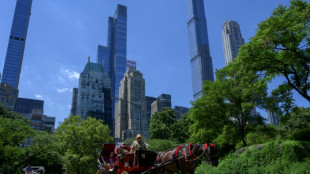 New York votes to ban Central Park horse carriages after decades of debate
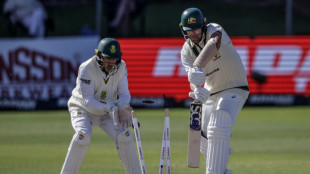 Australia face selection headaches after 'shambolic' South Africa defeat

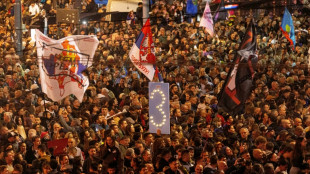 Around 150,000 rally in Belgrade as Serbia heads to pivotal poll
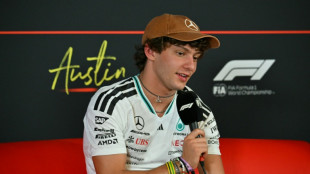
 Hamilton sets sights on racing in African grand prix
 Bournemouth hammer 10-man Milan, Juventus denied at the death
 Judge orders Trump to give deposition in BBC lawsuit by Dec 11
 'Fake' pollsters hit US midterms
 Global markets retreat as tech mood sours, oil prices jump

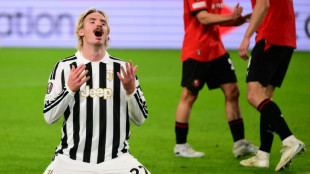 Juventus denied at the death, Sunderland make point in Poland in Europa League
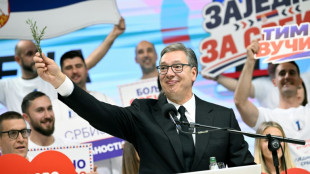 Tens of thousands rally as Serbia heads to pivotal poll
 Monet's 'Iris' fetches 50 mn euros at Paris auction
 L'Oreal sees double-digit sales growth
 Sri Lanka stun England with huge chase after Brook's 202

 Guatemala sentences former police officers in gay couple's killings
 Nelson's erotic dream letter features in London auction
 Canada opens free trade talks with Turkey
 Swiss, Austrian women freed after Niger kidnap ordeal
 Austrian-born French resistance fighter dies aged 105: regional official
 Paris shop-owners and residents prepare for fresh protests
 French, Japanese authors try to write novel on one-day train ride
Silvio Berlusconi's career may have been dogged by scandal but he showed genuine innovation in building his real estate and media empires -- even if the late billionaire missed out on the digital revolution.
Before reaching high office, the flamboyant Italian tycoon shook up the television market with private channels filled with scantily-dressed young women, game shows and American TV series.
"Silvio Berlusconi invented commercial television in Europe, at the same time as the British, while the rest of the continent was still living under national public television monopolies," said Carlo Alberto Carnevale Maffe, associate professor of strategy and entrepreneurship at Milan's Bocconi School of Management.
He created a style that was "very popular, on the same model as English tabloids, bringing daily life onto the small screen", the expert told AFP.
In the 1970s, national private TV channels were banned in Italy but Berlusconi got round this rule by buying up local channels, on which he broadcast the same programmes simultaneously.
The result was the appearance of a national channel, "which allowed him to attract many more advertisers", explained Umberto Bertele, professor emeritus at Milan Polytechnic's School of Management.
This sleight of hand was only made possible thanks to serious political support, however, notably from the Italian Socialist Party and its leader Bettino Craxi, as well as the banks.
- Visionary urban planner -
Their support also smoothed the path of Berlusconi's real estate career, notably his large residential developments on the outskirts of Milan, northern Italy.
Berlusconi, who died Monday at age 86 just weeks after doctors revealed he had leukemia, started out as a cruise-ship entertainer and door-to-door salesman.
But it was the property industry that brought "Il Cavaliere" his first successes in the early 1960s.
The "Milano 2" project was one of the highlights, a 700,000-square-metre (173-acre) residential district built during the 1970s.
It broke new ground by including green spaces, routes not just for cars but also pedestrians and bikes, with essential services such as banks, shops and schools close to houses.
"He had great intuition, he made a smart city 50 years before everyone else," said Carnevale Maffe.
"Berlusconi was genuinely innovative -- he gave the best of himself as an urban planner, he had an extraordinary concept of public space. It's an aspect of him that people have slightly forgotten."
Berlusconi then launched into television, and from the 1980s onwards sought to go global with channels in France, Germany and Spain, but efforts to create a pan-European broadcaster floundered.
In 2021, his TV empire, Mediaset, was renamed MFE-MediaForEurope.
Berlusconi also invested in publishing, in 1990 buying Italy's main publisher of books and magazines, Mondadori, and in cinema with the production company Medusa. He invested in Mediolanum Bank and football, notably owning Milan AC for 31 years, before buying lower league club Monza.
They were all grouped together under the umbrella group Fininvest, which found itself on the verge of collapse in 1993 due to huge debts linked to another residential development, "Milano 3".
But it recovered -- after Berlusconi decided that year to go into politics.
- 'Incredible salesman' -
One of Berlusconi's greatest talents, according to Carnevale Maffe, was being "an incredible salesman".
He defied conventional wisdom by creating an advertising agency, Publitalia '80, with a linked television group, Mediaset.
"He was among the first in Europe to invent the concept of convergence between advertising and editorial content, creating programmes adapted for advertisers, not the other way around," Carnevale Maffe said.
From the beginning of his foray into television he had the innovative idea of telling entrepreneurs, "don't pay me now, pay me a percentage of the increase in your turnover", according to Bertele.
His business success made him the richest person in Italy in 2004, according to Forbes, and ranked 169th in the world, with a fortune estimated at $12 billion.
His wealth and that of his family shrank to $6.8 billion in 2023, making him the third wealthiest person in Italy and 352th in the world.
"His biggest flaw was failing to understand either digital or pay-TV like Sky and Netflix", which left him out of a major revolution in television, Carnevale Maffe said.
K.AbuTaha--SF-PST