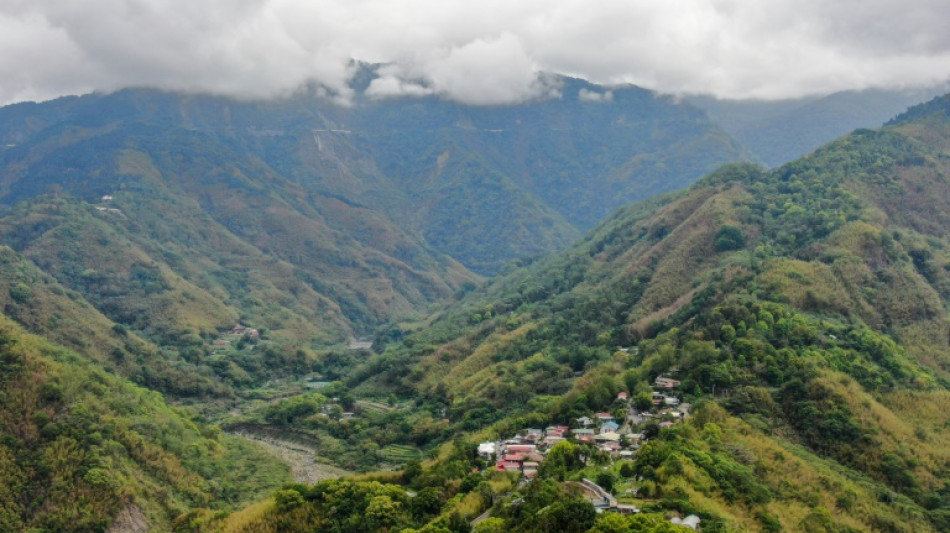
Taiwan tribe despairs as drought shrinks bamboo crop / Photo: Sean Chang - AFP

 India stirs up its gastronomy with French cooking schools

 Williams, Santos lead Bears over Patriots

 China's first AI film hits cinemas but ticket sales lag

 Barcelona aiming to put Real Madrid out of sight in Clasico

 Taiwan shuts down as Typhoon Champi approaches
 370 books in 20 months: S.African author defends her use of AI

 76ers rally to stun Cavs in James's first home game for Philadelphia

 How are Ukraine strikes, Mideast war driving US fuel prices?
 Colombia's Indigenous Guard up in arms over new president's agenda
 From tech giants to anonymous nonprofits, the biggest donors in US midterms
 Israel's far-right Ben Gvir seeks new ground in election

 Trump slams NBA's LeBron James for national anthem actions
 Australia sanctions North Koreans over 'fraudulent' IT work, cybercrime

 UK singer-songwriter Raye wins Mercury Prize for second album

 Antonelli needs ‘perfect weekend’ to realise title dream

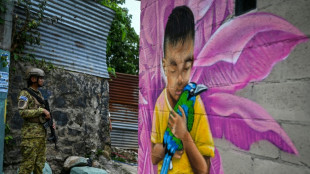 Reclaiming the walls in a former Salvadoran gang hotspot

 Musk wants to merge SpaceX and Tesla: Here's what to know

 Musk's wants to merge SpaceX and Tesla: Here's what to know

 Hashimoto sweeps to gymnastics world all-around title

 Super Bowl MVP Walker returns to Seattle with unbeaten Chiefs

 Red Bull advisor Marko slams Horner memoir as 'collection of untruths'

 France reports first human Shamonda virus case, says no health risk

 Rekindled Gucci desirability fails to light flame under Kering sales

 Thousands rally as Serbia heads to pivotal poll

 Marathon star Aga banned six years for doping and misleading investigation

Hacking at a bamboo plant with a machete, Avayi Vayayana peels back the shoot's stiff bark as he scans southern Taiwan's mountains, anxious for more of the money-making crop his Indigenous tribe increasingly struggles to find.
Generations of the Tsou tribe have lived off Alishan township's bamboo forests, which Vayayana says were planted by his forefathers and typically harvested in April and May.
But "the weather in the last few years has really been out of whack", the 62-year-old tribal chief tells AFP.
"The rainfall has been delayed and the bamboo shoots' growth is noticeably affected."
In the Indigenous village T'fuya, the dark-brown cones of the island's native stone bamboo -- or phyllostachys lithophila -- have become harder to spot.
"The little young shoots will not sprout if there's no rain. After a while, they will die inside the ground," Vayayana says.
The February-to-April rains are crucial to the growth of bamboo shoots, but since late last year, there have not been any significant downpours.
The Tsou tribe, which has a population of 7,000 in Alishan, has seen their bamboo shoot harvest steadily decline.
On a misty May morning, a welcome drizzle finally blankets the bamboo forest Vayayana is working in, but he tells AFP it is too late.
This year, his haul is one-third of 2022's harvest.
Worse, Vayayana and his family must now also contend with crop-raiding monkeys, he explains after an airgun shot rings out in the distance: his cousin trying to scare away the marauders.
"Because many surrounding bamboo forests have died, now where there are bamboo shoots, all the monkeys will go," he says.
- 'Frontline victims' -
Southern Taiwan is experiencing its worst drought in decades.
Water levels in the Tsengwen reservoir serving the southern Tainan and Chiayi regions plummeted below 10 percent this year, the third such drop since 2018, leaving reservoir beds cracked and exposed.
The Tsengwen serves as a primary water source for a massive foundry making the island's precious semiconductors -- soaring in demand globally -- and also supplements the region's rice-growing plains.
But for the third year in a row, the government is providing subsidies to farmers not to plant their crops -- a sign of the severe water needs.
An hour's drive from the reservoir, Alishan too is experiencing drastic weather changes.
From January to April, rainfall declined to 226.5 millimetres (8.9 inches), a more than 50 percent drop compared to the same period last year, according to Taiwan's Central Weather Station.
For the Tsou -- whose lifestyle is entwined with nature -- the impact is "comprehensive", says Greenpeace Taiwan's Lena Chang.
"They are the frontline victims of climate change," Chang tells AFP.
Data compiled by Greenpeace Taiwan shows the drop-off in rain to be persistent. In the past three decades, Alishan has lost an average of 2.6mm of rainfall per year in February and 1.2mm in March -- a vital period for bamboo shoot growth.
At T'fuya's crop collection point, villagers offload sacks of bamboo shoots from trucks, weighing them before sending them to factories.
"This year, the rain came too late and many bamboo trees are sick. The harvest is very bad," Voyu Baniana, 24, tells AFP.
"In my family's plantation, we have none. I can only work for other people this year."
- New cash crop -
Those who returned to their villages after a period of working in cities are finding it harder to live off of crops they grew up cultivating.
Voyo Yulunana, 43, still remembers the long days he spent as a child harvesting bamboo shoots, the sale of which bolstered the community's living standards.
"Buying a car or building a house, we counted on the bamboo," he says.
Since Yulunana returned from a brief stint in the city working in construction, he has noticed "the rains don't come when they should".
Luckily, his grandfather made a switch to growing coffee beans, which Yulunana and other younger Tsou have shifted toward in the past decade.
"Coffee is slowly replacing bamboo shoots as the cash crop" in Alishan, says Yulunana.
But even it is not immune to climate change -- a late spring rain affects the plant's flowering season, and the erratic weather last year nearly devastated his family's 400-shrub crop, he said.
"At this point, I can get by with just growing coffee," Yulunana said. "Who knows what new crops will appear after coffee?"
J.Saleh--SF-PST