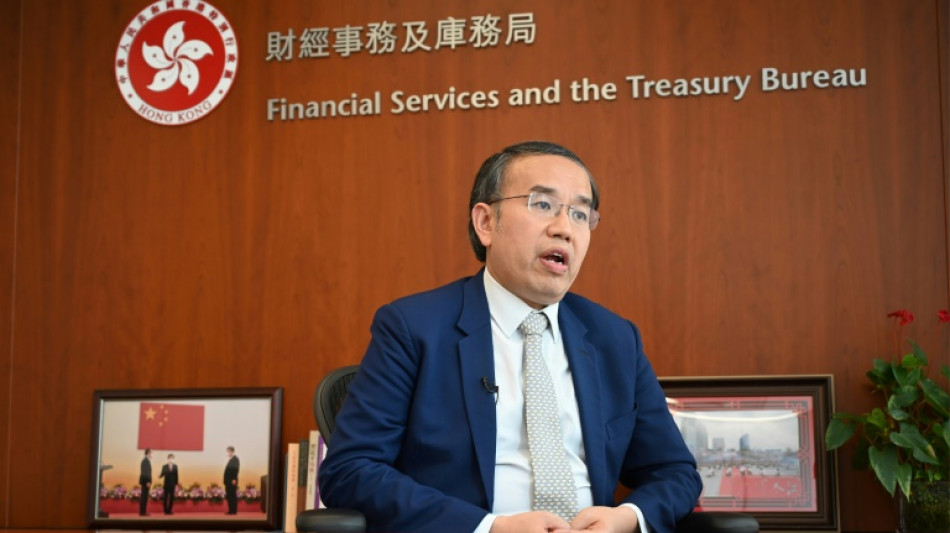
Crypto here to stay, must be regulated: Hong Kong treasury chief / Photo: Peter PARKS - AFP

 South Korea proposes holding border talks with North

 Ukraine's young figure skaters twizzle on despite Russian threat

 Asian football endorses Infantino re-election as FIFA president

 Complete Kane hopes for 'special night' as Ballon d'Or rumours swirl
 Rooney calls United squad 'selfish babies' after Fernandes criticism

 Teddy Wilson, son of World Cup-winner David, gets Wallabies call-up

 New Zealand military chief resigns over 'inappropriate relationship'

 Man Utd's Carrick on borrowed time, free-scoring Brighton face Liverpool

 Asian stocks head into weekend on a low as tech extends losses

 'Generational rage': Young Europeans fight to be heard

 Lula, Bolsonaro to clash once more before Brazil vote

 Dressed to kill: Haircuts cap menacing look of Japan's yakuza

 Napa Valley's wineries feel Trump's tariff squeeze
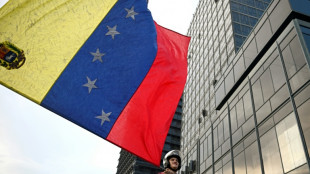 Venezuela protests demand return of Nobel winning leader Machado
 Marquez tops incident-packed opening practice for Australian MotoGP

 New York votes to ban Central Park horse carriages after decades of debate

 Australia face selection headaches after 'shambolic' South Africa defeat

 Around 150,000 rally in Belgrade as Serbia heads to pivotal poll

 Hamilton sets sights on racing in African grand prix

 Bournemouth hammer 10-man Milan, Juventus denied at the death
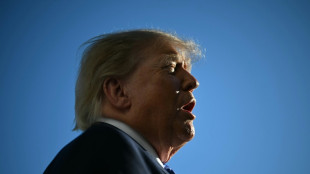 Judge orders Trump to give deposition in BBC lawsuit by Dec 11
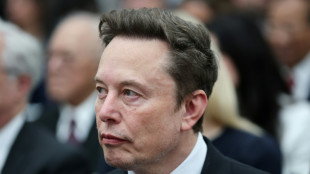
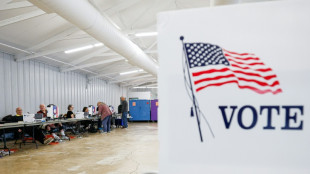 'Fake' pollsters hit US midterms

 Global markets retreat as tech mood sours, oil prices jump

 Juventus denied at the death, Sunderland make point in Poland in Europa League

 Tens of thousands rally as Serbia heads to pivotal poll

Hong Kong has decided to let retail investors trade cryptocurrency under its new regulatory regime because "virtual assets are going to stay", the city's minister overseeing financial services said Tuesday.
Cryptocurrencies have been banned in mainland China since 2021, but the former British colony, which has a separate financial system and regulators, has announced plans to become a major digital asset hub.
From June 1, authorities will begin accepting applications for licences from cryptocurrency exchanges that will allow them to sell major tokens including bitcoin and ether to individual traders.
"Despite the potential risks involved, (virtual assets) also carries with it fundamental value," Christopher Hui, Hong Kong's secretary for financial services and the treasury, told AFP in an interview.
"So for these positive elements to be harnessed, these activities have to be allowed in a regulated way."
Regulators around the world are examining cryptocurrencies with renewed urgency following the collapse of trading platform FTX last year and other high-profile failures in the sector.
Hong Kong was initially hesitant to allow crypto exchanges to take on retail clients, but Hui acknowledged that there was "considerable interest" in trading.
Asked whether Beijing backed Hong Kong's plans to open up crypto trading, Hui said the finance hub charts its path by following the emerging global consensus.
"Different jurisdictions will adopt the right approach to their own market, and Hong Kong is no exception," he said.
"We are an open market... So while different jurisdictions have different laws and requirements, I think what we should do is based on what we are good at."
The government's pivot toward crypto and fintech coincides with Hong Kong's recent reopening following three years of tough Covid policies that isolated it internationally and drove talent away.
Hong Kong's international business reputation also took a hit as Beijing cracked down on political freedoms after mass democracy protests in 2019.
The promise of fresh crypto exchange regulations has attracted more than 80 enquiries with the city's investment promotion agency, the treasury chief told AFP.
"One thing that has been very obvious is that Hong Kong is back to usual," he said. "We are back to business."
- 'Right guardrails' -
During a public consultation that ended in March, some crypto firms bemoaned stringent proposals that made compliance potentially costly.
One concession made by regulators was to lower the insurance coverage requirement down to 50 percent for virtual assets held by clients in "cold storage" -- a more secure way of storing crypto offline.
"For technical reasons, of course cold storage presents lesser risk for hacking," Hui said, saying the shift was to reflect risks in a proportional way.
Under the new rules, crypto exchanges must assess a client's risk tolerance and knowledge of cryptocurrencies, and impose risk-exposure limits.
"Investors have to be in the know in terms of what they are going into," Hui said, adding that education is a priority.
But authorities have yet to specify the exact threshold for crypto knowledge needed for a retail investor to trade -- one of several implementation details left up in the air.
Hong Kong's securities regulators will issue guidelines later, Hui said.
Crypto-related scams are a burgeoning problem in Hong Kong, with the city last year recording more than 2,300 such cases with total losses of HK$1.7 billion ($217 million), according to police.
"We understand the risk, we at the same time put in the right guardrails," Hui told AFP.
K.AbuTaha--SF-PST