The second life of Hiroshima's origami cranes / Photo: Richard A. Brooks - AFP

 Melania Trump says secured ceasefire in Ukrainian city of Oleshky
 Carrick 'confident' he can turn around Man Utd slump
 PSG v Lyon French Ligue 1 game postponed due to Paris protests

 Meghan Markle 'distressed' over claims father had child abuse images

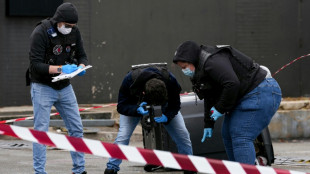 Gunman kills one, wounds four in town outside Paris

 France to deploy 70,000 police ahead of new protests
 Mekies hails Verstappen as Red Bull's driving force amid revival

 Tanker with Russian diesel heads to New York under Trump deal

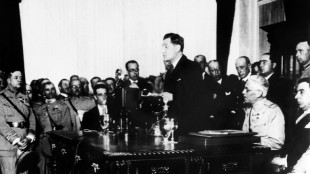 New centre puts focus on Portuguese dictator Salazar's legacy

 Oil nears $115 with stocks mixed on earnings, AI
 Asian football endorses Infantino re-election in apparent U-turn

 Ukraine says two soldiers died after arrested girl sent Russian poison

 New Greece law bans social media for under-15s

 Netanyahu orders West Bank closure as attack wounds Israelis before election
 Asian stocks mixed ahead of weekend as tech recovers early losses
 How five Boeing 777s linked Madagascar's power elite to Iran

 South Korea proposes holding border talks with North
 Ukraine's young figure skaters twizzle on despite Russian threat
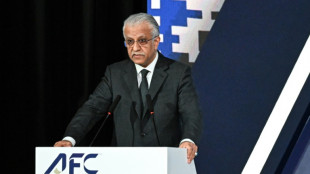 Asian football endorses Infantino re-election as FIFA president

 Complete Kane hopes for 'special night' as Ballon d'Or rumours swirl
 Rooney calls United squad 'selfish babies' after Fernandes criticism

 Teddy Wilson, son of World Cup-winner David, gets Wallabies call-up

 New Zealand military chief resigns over 'inappropriate relationship'

 Man Utd's Carrick on borrowed time, free-scoring Brighton face Liverpool
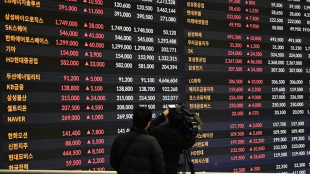 Asian stocks head into weekend on a low as tech extends losses

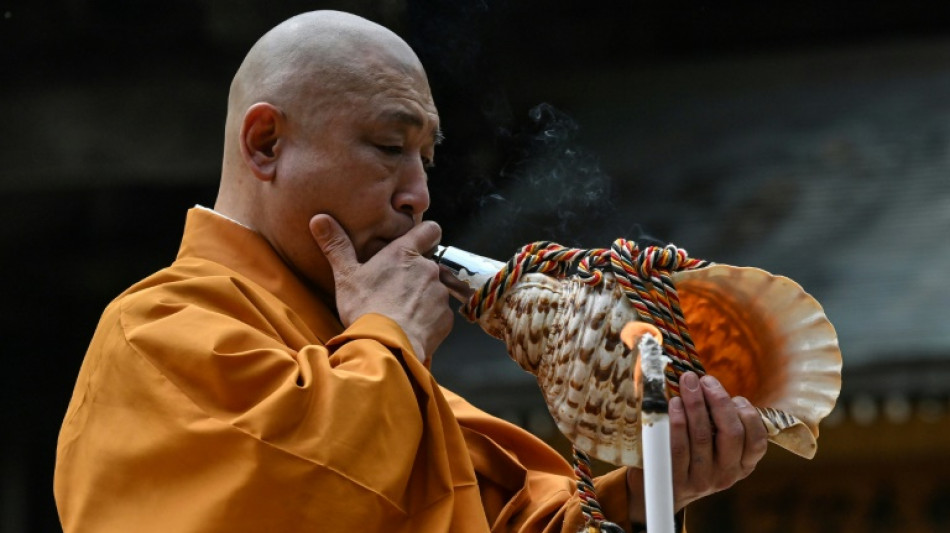
At a hillside temple, a monk in saffron robes blows a refrain on a conch and begins chanting prayers as thousands of origami cranes donated to Hiroshima burn.
For a decade, the Daisho-in Buddhist temple on Miyajima island, facing Hiroshima, has held ritual burnings of the millions of origami cranes sent to the city each year.
The ceremony is intended to honour the sentiments folded into each of the miniature paper birds.
And since 2015, the ash from the burned cranes has been used to glaze ceramic incense burners and candle holders, including one given to Ukrainian President Volodymyr Zelensky by Japan's prime minister on a trip to Kyiv.
Cranes have arrived in Hiroshima for decades, inspired by Sadako Sasaki, who was just two when the United States dropped an atomic bomb on the city on August 6, 1945.
She developed leukaemia and in hospital began folding cranes in keeping with a tradition that holds folding 1,000 can make a wish come true.
She died aged 12, one of about 140,000 people killed by the bomb immediately or in the aftermath, and has become a powerful symbol of the bomb's effects and a popular way to educate children about the attack.
For years, the cranes sent to Hiroshima were simply left at memorials, with municipal cleaners occasionally disposing of them.
It wasn't until 2012, as the city searched for a better way to handle the cranes, that Kinya Saito of the Nagomi Project, a peace group, proposed ritually burning them.
"I thought about the idea of emotions being released with smoke and sent up to the victims of the atomic bomb," the Hiroshima native told AFP.
- 'Message of peace from Hiroshima' -
Yoyu Mimatsu, a monk at Daisho-in, has led the burning ceremony for the past decade.
After blowing the conch, he sits at a table in front of the fire pit and strikes a prayer bowl before beginning chants for the souls of bomb victims.
He also prays "for the emotions and prayers of people from all over the world, the prayers for peace folded into each of the paper cranes, to reach the heavens," the 57-year-old told AFP.
While Daisho-in was willing to burn the cranes, they weren't sure what to do with the leftover ash.
They found a solution in Taigendo, a pottery studio that for more than 100 years has produced ceramics using sacred sand from under a Miyajima shrine.
The third-generation potter running the studio -- Kosai Yamane -- was already using ash from an eternal flame burning on Miyajima to glaze his ceramics and was open to using the crane ash in a similar way.
It was an artistic project, but also deeply personal for Yamane, whose mother was 14 at the time of the bomb attack.
"She had burn scars on her elbows, and as a child, I never saw her wear anything except long sleeves," Yamane told AFP.
"She never talked about it. I felt she was trying everything to avoid being noticed, to avoid talking about it."
Yamane knew immediately the crane ash could not be used to glaze everyday items like cups or bowls.
"I wanted to make something that would convey a message of peace from Hiroshima," he said.
- 'Listen to what people say' -
He settled first on a delicate crane-shaped incense burner, and later began producing candle holders.
They have a dome-like top modelled on the shape of the Children's Peace Memorial and are etched with cranes.
The candle sits under the dome on a plate glazed with the ash, the glaze helping reflect the light to produce a warm orange glow.
Yamane was shocked but delighted to learn Japanese Prime Minister Kishida had presented Zelensky with one on his March visit.
"I felt that people's message of peace was in the right place," the 60-year-old said.
"This message gathers in Hiroshima, but it does not come only from Japan, it comes from all over the world, and is brought together when the cranes are burned."
Group of Seven leaders, including US President Joe Biden, are expected to visit peace sites in Hiroshima during this week's summit, where Kishida will push for action on nuclear disarmament.
"Hiroshima is now a synonym for peace," said Saito.
But it is also "a place that directly illustrates how terrifying and horrifying nuclear weapons are."
"I want the leaders to understand what happened, to listen to what people say."
X.AbuJaber--SF-PST