
EU lawmakers eye ambitious AI regulation / Photo: Lionel BONAVENTURE - AFP/File

 Macron condemns 'racist terrorist attack' after deadly shooting near Paris

 Shiffrin sidesteps slalom in 'exploration' season
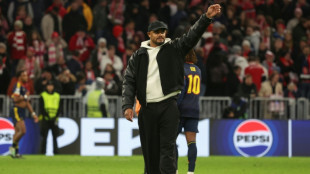 Bayern Munich coach Kompany in hospital after collapsing: club

 Alonso sees Courtois similarities in Chelsea's Penders

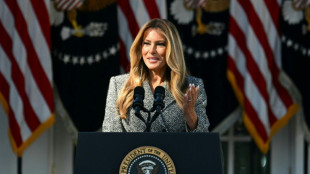 Melania Trump announces truce in Ukrainian city 'on brink of disaster'

 Saka to be carefully managed after latest injury setback, says Arteta

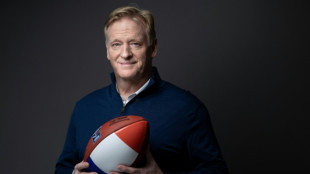 Goodell says NFL's France debut 'just the beginning'
 Singapore widens haze probe to local firms linked to Indonesian fires

 Hundreds of Syrians protest repeated Israeli incursions
 El Salvador sends troops to Haiti to find 4 missing soldiers
 Liverpool must go 'full gas' despite injury issues, says Iraola
 Oil hits $115 with stocks mixed on earnings, AI

 Casualties feared as multi-storey building collapses in Nairobi

 Man Utd defeat to Como 'unacceptable', says Carrick
 Hurzeler 'focused' on Brighton job despite Man Utd links
 Hammer blow for Kenya as world marathon champ Jepchirchir suspended for doping
 Latin America's right-wing swing looms large over nature summit

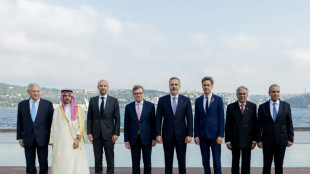
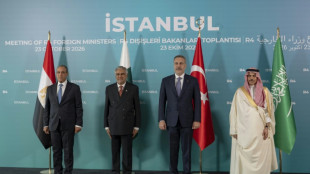 European, Mideast foreign ministers hold talks in Istanbul
 World marathon champion Peres Jepchirchir suspended for doping: AIU

 Romania blames Russia for new deadly attack on ship
 Waze rejects Malaysia's data security claims after civil servant ban
 'Call of Duty' seeks to win back fans with warfare spectacle

 Volvo Cars shares plunge on losses, job cuts
 France braces for new protests as Macron seeks to restore order

 Kering shares tumble as Gucci fails to reassure investors
The sudden popularity of ChatGPT and other AI tools is injecting urgency into Europe's drive to regulate the sector, which this week gets rolling seriously with an ambitious text to be voted on by EU lawmakers.
The European Union aims to be the global pioneer in creating a comprehensive legal framework that would rein in possible online harm while still protecting innovation in the field of artificial intelligence.
The massive complexity of the systems, and their ability to produce text and images that at times mimic human output, is proving as fascinating as it is concerning.
Faced with the risk of AI being used to make dangerous content, manipulate opinion, conduct mass surveillance or other perils yet to emerge, even tech leaders such as Twitter boss Elon Musk have called for a pause in its development.
The burgeoning use of AI by the public and corporations is outstripping action by Brussels, which two years ago proposed initial draft legislation to tackle the issue.
EU member states only fixed their position in that process at the end of 2022 -- just as ChatGPT was taking off.
- Generative AI -
Now MEPs will set out their own stance in a committee vote on Thursday, after which the parliament, the commission and the member states will begin what promises to be thorny negotiations to reach agreement on a revised draft law.
"I really hope that we can have the first meeting of the political negotiation before summer so that we can end it this year," Commission Vice President Magrethe Vestager said.
One MEP, Dragos Tudorache, co-reporter on the parliament's position document stressed that "it's a complex text and we added a new regime covering generative AI".
Lawmakers are seeking to require AI companies to put in place protections against illegal content and to reveal what copyright-protected materials their systems are using to learn from.
Some experts believe that the risk posed by generative AI -- of which ChatGPT and the image-producing systems DALL-E and Midjourney are the best known -- don't need to be addressed separately.
"I don't see what the parliament's motive is. I don't get how the risks are any different from what was already set out," Pierre Larouche, said a specialist in digital rights at the University of Montreal and a researcher at the Centre on Regulation in Europe think tank.
The commission's proposal already calls for a framework around AI systems interacting with humans, notably informing the user that they are in contact with a machine, and requiring image-producing applications to state that their output was created artificially.
- 'High risk' -
The draft legislation is modelled on existing EU law on product safety that imposes checks and controls on manufacturers.
In it, outright bans are largely avoided, except where AI butts up against values dear to Europe, for example against a rating designation for citizens of mass surveillance as practised by China.
The EU parliament, though, wants to also add prohibitions on AI recognising emotions, and to get rid of exceptions that would allow remote biometric identification of people in public places by law enforcement.
They also want to prevent the mass ingestion of photos posted on the internet for learning algorithms unless the authorisation of the people concerned is obtained.
The core of the legislative outline is a list of rules that would apply to "high-risk" applications, according to criteria set out in the law.
The commission is suggesting that designation cover systems in sensitive domains such as critical infrastructure, education, human resources, public order and migration management.
Some of the proposed rule obligations would be to ensure human control over the AI, providing technical documentation, and a system of risk management, with a supervising authority in each EU member state in charge of activity on its territory.
MEPs however want stricter criteria around what constitutes "high risk" so that it only covers AI applications deemed to threaten safety, health or fundamental rights.
U.AlSharif--SF-PST