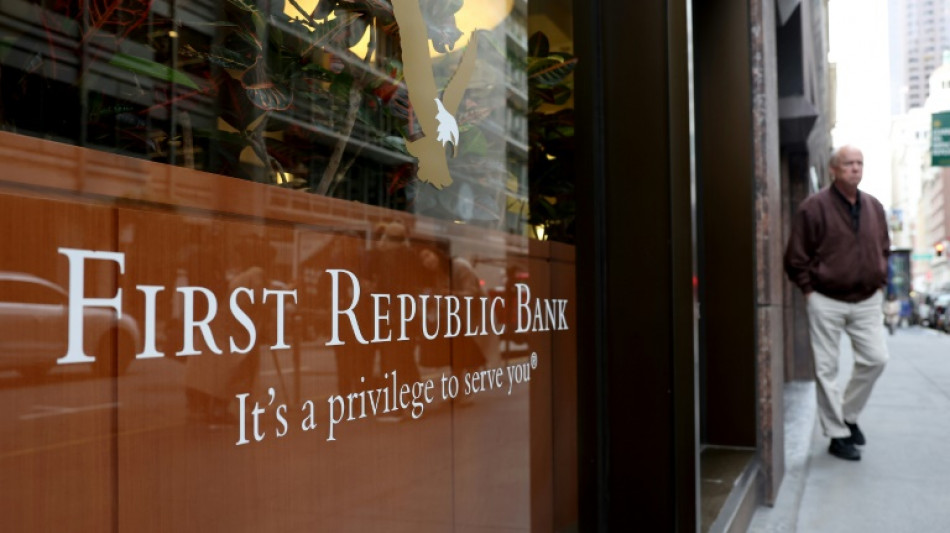
Fresh rout of US regional banks despite First Republic deal / Photo: JUSTIN SULLIVAN - GETTY IMAGES NORTH AMERICA/AFP/File

 Rubio urges Cubans to work with CIA, but warns: be discreet

 Leclerc tops times for Ferrari in practice for US Grand Prix

 Lula, Bolsonaro lock horns in final debate before Brazil vote

 Poulter and Hatton leave LIV Golf

 Blakely vaults out of the shadow of Biles for all-around world title

 Oil tops $116 with stocks mixed on earnings, AI

 Trump orders lawsuit to block Alaska Senate result if Republicans lose

 Ebola patient in Nigeria is Swiss, had not visited DR Congo: Bern

 Messi receives top Spanish award from heir to throne

 Macron condemns 'racist terrorist attack' after deadly shooting near Paris

 Shiffrin sidesteps slalom in 'exploration' season

 Bayern Munich coach Kompany in hospital after collapsing: club
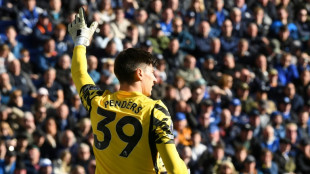 Alonso sees Courtois similarities in Chelsea's Penders

 Melania Trump announces truce in Ukrainian city 'on brink of disaster'

 Saka to be carefully managed after latest injury setback, says Arteta

 Goodell says NFL's France debut 'just the beginning'

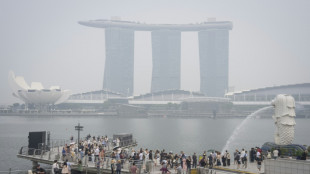 Singapore widens haze probe to local firms linked to Indonesian fires

 Hundreds of Syrians protest repeated Israeli incursions

 El Salvador sends troops to Haiti to find 4 missing soldiers

 Liverpool must go 'full gas' despite injury issues, says Iraola

 Oil hits $115 with stocks mixed on earnings, AI

 Casualties feared as multi-storey building collapses in Nairobi

 Man Utd defeat to Como 'unacceptable', says Carrick

 Hurzeler 'focused' on Brighton job despite Man Utd links

 Hammer blow for Kenya as world marathon champ Jepchirchir suspended for doping

Shares of US regional banks suffered deep losses on Wall Street Tuesday, dashing hopes that the resolution of First Republic's woes would end the crisis.
While large banks like Citigroup and Bank of America fell, the ugliest losses came at the same regional banks that have seen pressure since the March demise of Silicon Valley Bank the risks facing the group.
These include Los Angeles-based PacWest Bancorp (-24 percent), Western Alliance Bancorporation (-16 percent) of Phoenix, Zions Bancorporation (-11 percent) of Utah and Cleveland-based KeyCorp (-9 percent).
The declines came on a turbulent day for global markets that saw oil prices slump on recession worries amid growing worries of a US debt default due to a standoff between Democratic President Joe Biden and the Republican-led House of Representatives.
But the performance of bank stocks was a source of angst.
"There is clearly worry that this bank situation is not going to calm down after First Republic," said LBBW's Karl Haeling. "It's just going to get worse."
Haeling said the latest selloff poses challenges to the Federal Reserve, which is expected to lift interest rates again Wednesday.
"The market is saying today that they are just looking to other banks to go after," Haeling said.
- Fleeting relief -
The battering on Wall Street comes a day after JPMorgan Chase acquired most of First Republic in a deal engineered by the Federal Deposit Insurance Corporation, which had seized control of the weakened smaller institution.
While the FDIC move prompted a sigh of relief, leading regional banks notably suffered losses on Monday in what turned out to be a forerunner of Tuesday's much worse session.
At a briefing with reporters, Goldman Sachs analyst Ryan Nash said Tuesday there is "going to continue to be pressure" on bank deposits in the wake of the shift in Fed policy..
The Fed's pivot to suddenly higher interest from a lengthy period of low or near-zero rates has forced banks to increase the interest they pay customers in order to avoid a loss of deposits.
That dynamic means banks must compete with each other for deposits, cutting into profits. But Nash also said the role of deposit runs in the failures also affected bank clients.
"If you're a corporate treasurer, you have to be asking yourself, particularly after yesterday, does it make sense to leave my deposits in a bank where I might have to deal with any sort of resolution, whether it's being bought by a larger bank, or going through the FDIC process?" Nash said.
The resolution of the First Republic crisis also underlined the disadvantage of smaller banks next to a giant like JPMorgan, the nation's biggest bank by assets.
While three other midsized banks -- PNC Financial Services, Fifth Third Bancorp and Citizens Financial Group -- participated in the FDIC bidding process, the agency picked JPMorgan because it offered more money and could more easily integrate the branches into its network, according to reports in US financial media.
"JPMorgan winning the deal shows that regulators will be willing to allow banks to fail and allow them to fall in the hands of big banks, which obviously is a negative for regional banks," Nash said.
"The FDIC is telling you, what all regional banks and regional bank analysts have known and feared for a while is that whether the regulator wants it or not, the JPMorgan and the like is the winning business mode and that does leave the regional at a big disadvantage."
R.Shaban--SF-PST