
EU to revamp budget rules to spur growth / Photo: PETER MUHLY - AFP/File

 Tatum delivers as Celtics down winless Knicks

 Romantasy fans ready for sleepless night as 'Court of Thorns and Roses' returns

 De Goede hat-trick as Canada defeat England again

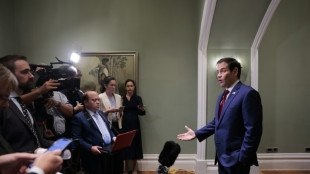 Rubio urges Cubans to work with CIA, but warns: be discreet

 Leclerc tops times for Ferrari in practice for US Grand Prix

 Lula, Bolsonaro lock horns in final debate before Brazil vote

 Poulter and Hatton leave LIV Golf

 Blakely vaults out of the shadow of Biles for all-around world title

 Oil tops $116 with stocks mixed on earnings, AI

 Trump orders lawsuit to block Alaska Senate result if Republicans lose
 Ebola patient in Nigeria is Swiss, had not visited DR Congo: Bern

 Messi receives top Spanish award from heir to throne

 Macron condemns 'racist terrorist attack' after deadly shooting near Paris

 Shiffrin sidesteps slalom in 'exploration' season
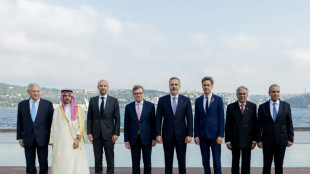
 Bayern Munich coach Kompany in hospital after collapsing: club

 Alonso sees Courtois similarities in Chelsea's Penders

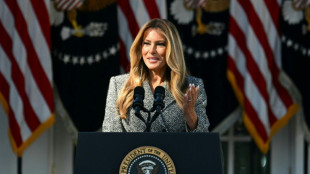 Melania Trump announces truce in Ukrainian city 'on brink of disaster'

 Saka to be carefully managed after latest injury setback, says Arteta

 Goodell says NFL's France debut 'just the beginning'

 Singapore widens haze probe to local firms linked to Indonesian fires

 Hundreds of Syrians protest repeated Israeli incursions

 El Salvador sends troops to Haiti to find 4 missing soldiers

 Liverpool must go 'full gas' despite injury issues, says Iraola
 Oil hits $115 with stocks mixed on earnings, AI

 Casualties feared as multi-storey building collapses in Nairobi

The EU will unveil an overhaul of its fiscal rules on Wednesday, a long-awaited reform that has bitterly divided member states over how to encourage investment while strengthening scrutiny of government spending.
The European Commission, the EU's executive arm, wants to reform the rules, known as the Stability and Growth Pact, that limit how much the bloc's 27 member states can borrow.
But the proposals have split the bloc between the more frugal northern countries, including Germany, and the southern states like Italy.
Germany, a staunch defender of fiscal discipline, fears Brussels will overly relax the EU's budgetary straitjacket and undermine fairness within the bloc. Italy and others argue the rules constrain their ability to invest.
The pact currently stipulates that states' public deficits should not go above three percent of gross domestic product, and debt should stay below 60 percent of GDP.
The European Union suspended the rules in 2020 to allow member states to pour money into their economies during the coronavirus pandemic.
That was extended last year to let states raise spending to protect households and businesses from sky-high energy prices from Russia's war in Ukraine, and to avoid recession.
EU member states' debts have since rocketed, and the only thing every country agrees on is the need to reform the pact.
The rules were due to come back into force again next year but last month, Brussels said there would be a gradual return as it told members to rein in spending in 2024.
When the commission first announced plans for reform in November 2022, it said the three-percent deficit and 60-percent debt targets would stay, but there would be more flexibility through individual plans for debt reduction tailor-made for each country.
- Greater leeway -
The EU wants to give wiggle room for countries to invest in digital and green transitions as Brussels tackles the challenge from the United States and China, where energy costs are cheaper and lavish subsidies risk luring businesses away from Europe.
The commission will likely allow countries more leeway in budget recovery and give them more time to reduce their debt in exchange for reforms and investments.
The pact currently says any debt level above 60 percent must be reduced by one-twentieth each year, but that measure is considered unworkable as it could force painful austerity on indebted countries. In fact, it has never been applied.
EU countries' debt soared after the 2008 financial crisis and following the Covid pandemic. Today, Italy's debt is almost 150 percent, while France's is around 110 percent, well above the bloc's limits.
After the proposals are presented Wednesday there will ensue months of likely rancorous negotiations between member states and the European Parliament because different countries want changes for different reasons.
Andreas Eisl, a researcher at Jacques Delors Institute, pointed to several reasons for the divisions, including significant differences in the members' economic models.
"Some countries, such as Germany, function very much according to an export-oriented model, while others, such as France, have long achieved growth more through domestic consumption. These different models have different demands for the role of fiscal policy-making," he told AFP.
I.Yassin--SF-PST